Important questions class12th physics.
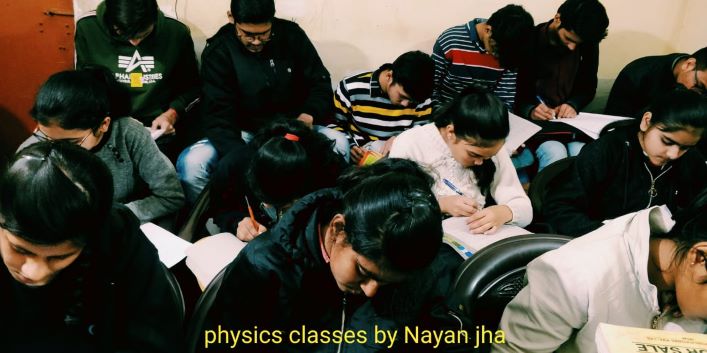
Physics classes by nayan jha providing important questions for class 12th physics . For board examination.
Students preparing for board examination class 12th must solve all these questions . To perform batter in board examination.
Important questions physics class 12th board examination chapterwase.
Class 12 Physics – Chapter-wise Important Questions for CBSE Board Examination
Here is a chapter-wise collection of important Physics questions for the CBSE Class 12 Board Examination 2027.
I have given special importance to NCERT concepts, important derivations, numerical problems and frequently tested board-level concepts.
Section A – Chapter-wise Important Questions
1. Electric Charges and Fields
Important 3-mark and 5-mark questions
- State and explain Coulomb’s law. Write its vector form.
- Explain the principle of superposition of electric forces.
- Derive an expression for the electric field intensity due to an electric dipole at an axial point.
- Derive an expression for the electric field intensity due to an electric dipole at an equatorial point.
- Derive the expression for torque acting on an electric dipole placed in a uniform electric field.
- Define electric flux. State and explain Gauss’s theorem.
- Using Gauss’s theorem, derive the electric field due to an infinitely long straight uniformly charged wire.
- Using Gauss’s theorem, derive the electric field due to an infinite plane sheet of charge.
- Using Gauss’s theorem, derive the electric field due to a uniformly charged thin spherical shell (inside and outside).
Important conceptual questions
- Why do electric field lines never intersect?
- Can two electric field lines form a closed loop? Explain.
- What is the physical significance of electric dipole moment?
- Calculate the net electric field due to two or more point charges.
- Calculate electric flux through a given surface.
2. Electrostatic Potential and Capacitance
Important derivations
- Derive the expression for electric potential due to a point charge.
- Derive the expression for electric potential due to an electric dipole.
- Establish the relationship between electric field and electric potential.
- Derive the expression for capacitance of a parallel plate capacitor.
- Derive the expression for capacitance when a dielectric slab is inserted between the plates.
- Derive the equivalent capacitance of capacitors connected in series.
- Derive the equivalent capacitance of capacitors connected in parallel.
Important conceptual questions
- What are equipotential surfaces? Write their important properties.
- Why is the electric field always perpendicular to an equipotential surface?
- Explain the behaviour of a conductor in electrostatic equilibrium.
- What is dielectric polarization?
- Explain the effect of inserting a dielectric between capacitor plates.
- Two capacitors are connected in series and parallel. Calculate their equivalent capacitance.
- A capacitor is charged and then disconnected from the battery. What happens to its potential difference when a dielectric is inserted?
- Write the formulae for energy stored in a capacitor. Explain the symbols.
Board syllabus note: Energy stored in a capacitor is prescribed through formulae; its derivation is not required.
3. Current Electricity
Important derivations
1. Derive the relation between electric current and drift velocity:
- Derive the expression for drift velocity of free electrons.
- Establish the relation between current density and electric field.
- Derive the relation between resistance and resistivity.
- Derive the equivalent resistance of resistors connected in series.
- Derive the equivalent resistance of resistors connected in parallel.
- State and explain Kirchhoff’s two laws.
- Derive the condition for a balanced Wheatstone bridge.
Important conceptual questions
- Define mobility and relaxation time.
- Differentiate between EMF and terminal potential difference.
- Why does the resistance of a metallic conductor increase with temperature?
- Explain the V-I characteristics of ohmic and non-ohmic conductors.
- What is the internal resistance of a cell?
- Derive the expression for terminal voltage of a cell.
- Solve numerical problems based on Kirchhoff’s laws.
- Calculate the current through a Wheatstone bridge circuit.
4. Moving Charges and Magnetism
Important derivations
- State and explain Biot-Savart law.
- Derive the magnetic field at the centre of a circular current-carrying loop.
- State Ampere’s circuital law and derive the magnetic field due to an infinitely long straight current-carrying conductor.
- Derive the expression for the force acting on a moving charged particle in a uniform magnetic field.
- Derive the expression for the radius of the circular path of a charged particle moving perpendicular to a uniform magnetic field.
- Derive the expression for force between two parallel current-carrying conductors.
- Derive the expression for torque on a rectangular current loop placed in a uniform magnetic field.
- Explain the principle, construction and working of a moving coil galvanometer.
- Explain how a galvanometer is converted into an ammeter.
- Explain how a galvanometer is converted into a voltmeter.
Important conceptual questions
- Why does a charged particle move in a circular path in a uniform magnetic field?
- Why does a magnetic field do no work on a moving charged particle?
- What is the Lorentz force?
- What happens when a charged particle enters a magnetic field parallel to the field?
- Define current sensitivity of a galvanometer.
- Explain the principle of a cyclotron.
5. Magnetism and Matter
Important questions
- Explain the properties of a bar magnet.
- Show qualitatively that a bar magnet is equivalent to a solenoid.
- Draw magnetic field lines of a bar magnet.
- Explain the properties of magnetic field lines.
- Differentiate between diamagnetic, paramagnetic and ferromagnetic substances with examples.
- Define magnetic susceptibility and magnetisation.
- Explain the effect of temperature on magnetic properties.
- Why are magnetic field lines always closed curves?
- Why can two magnetic field lines never intersect?
- Explain the torque acting on a magnetic dipole placed in a uniform magnetic field.
6. Electromagnetic Induction
Important derivations
- State and explain Faraday’s laws of electromagnetic induction.
- State and explain Lenz’s law.
- Using Faraday’s law, derive the expression for induced EMF.
- Derive the expression for motional EMF in a straight conductor moving in a uniform magnetic field.
- Derive the expression for self-inductance of a long solenoid.
- Define mutual induction and explain mutual inductance.
- Explain the principle and working of an AC generator.
Important conceptual questions
- What is electromagnetic induction?
- Why does induced current oppose the change in magnetic flux?
- What is eddy current? Mention its applications.
- Define magnetic flux and write its SI unit.
- Differentiate between self-induction and mutual induction.
- What factors affect the magnitude of induced EMF?
- Solve numerical problems based on Faraday’s law and magnetic flux.
7. Alternating Current
Important derivations
- Derive the relationship between peak value and RMS value of alternating current.
- Explain AC through a pure resistor with a phasor diagram.
- Explain AC through a pure inductor with a phasor diagram.
- Explain AC through a pure capacitor with a phasor diagram.
- Derive the expression for impedance in a series LCR circuit.
- Explain resonance in a series LCR circuit and derive the resonant frequency.
- Explain the principle, construction and working of a transformer.
- Derive the expression for average power in an AC circuit.
Important conceptual questions
- What is power factor?
- What is wattless current?
- Why is the current maximum at resonance?
- Why does a transformer work only on alternating current?
- Differentiate between step-up and step-down transformers.
- Calculate inductive reactance and capacitive reactance.
- Solve numerical problems based on RMS values, impedance and resonance.
8. Electromagnetic Waves
Important questions
- What is displacement current?
- Why did Maxwell introduce the concept of displacement current?
- What are electromagnetic waves?
- Explain the important characteristics of electromagnetic waves.
- Why are electromagnetic waves transverse in nature?
- Write the relationship between electric and magnetic fields in an electromagnetic wave.
- Explain the electromagnetic spectrum in increasing order of frequency.
- Write two uses each of radio waves, microwaves, infrared rays, ultraviolet rays, X-rays and gamma rays.
- Why can electromagnetic waves travel through vacuum?
- Which electromagnetic waves are used in satellite communication and medical diagnosis?
9. Ray Optics and Optical Instruments
Important derivations
- Derive the mirror formula for a spherical mirror.
- Derive the relation between object distance, image distance and radius of curvature.
- Derive the refraction formula at a spherical surface.
- Derive the thin lens formula.
- Derive the lens maker’s formula.
- Derive the expression for equivalent focal length of two thin lenses in contact.
- Derive the expression for magnifying power of a compound microscope.
- Derive the expression for magnifying power of an astronomical telescope in normal adjustment.
- Explain total internal reflection and derive its critical-angle relation.
Important conceptual questions
- What are the necessary conditions for total internal reflection?
- Explain the working of optical fibres.
- Why does a diamond sparkle?
- Define power of a lens. Write its SI unit.
- Explain refraction through a prism and define angle of deviation.
- Draw the ray diagram of a compound microscope.
- Draw the ray diagram of an astronomical telescope.
- Solve numerical problems based on lens formula and magnification.
- Calculate the angle of deviation and refractive index of a prism.
10. Wave Optics
Important derivations and diagrams
- What is a wavefront? Explain its different types.
- State and explain Huygens’ principle.
- Using Huygens’ principle, prove the laws of reflection.
- Using Huygens’ principle, prove the laws of refraction.
- Explain Young’s double-slit experiment.
- Write the expression for fringe width in Young’s double-slit experiment.
- Explain constructive and destructive interference.
- What are coherent sources of light? Why are two independent sources not coherent?
- Explain diffraction of light through a single slit.
- Draw the intensity distribution curve for single-slit diffraction and explain the central maximum.
Important conceptual questions
- Differentiate between interference and diffraction.
- Why is the central maximum wider in single-slit diffraction?
- What happens to fringe width if the distance between the slits is increased?
- What happens to fringe width if the wavelength of light is increased?
- Why are coherent sources necessary for sustained interference?
Board syllabus note: For YDSE, the final fringe-width expression is prescribed; its derivation is not required. Single-slit diffraction is treated qualitatively.
11. Dual Nature of Radiation and Matter
Important questions
- What is the photoelectric effect? Explain its experimental observations.
- Explain Hertz’s observations related to the photoelectric effect.
- Explain Hallwachs’ observations.
- Explain Lenard’s observations.
- State Einstein’s photoelectric equation and explain its significance.
- Explain the important features of the photoelectric effect.
- Draw the graph of maximum kinetic energy versus frequency.
- Draw the graph of photoelectric current versus applied potential.
- Draw the graph of photoelectric current versus intensity of incident radiation.
- Explain stopping potential and threshold frequency.
- What is de Broglie wavelength?
- Derive the expression for de Broglie wavelength of an electron accelerated through a potential difference.
- Explain the wave-particle duality of matter.
- Solve numerical problems based on Einstein’s photoelectric equation.
12. Atoms
Important derivations
- Explain Rutherford’s alpha-particle scattering experiment.
- Write the conclusions of Rutherford’s scattering experiment.
- Explain the limitations of Rutherford’s atomic model.
- State Bohr’s postulates of the hydrogen atom.
- Derive the expression for the radius of the nth orbit of an electron.
- Derive the expression for the velocity of an electron in the nth orbit.
- Derive the expression for the total energy of an electron in the nth orbit.
- Explain the origin of the hydrogen spectrum.
Important conceptual and numerical questions
- What is the distance of closest approach?
- Define impact parameter.
- Why is the energy of an electron negative in a hydrogen atom?
- What happens when an electron jumps from a higher energy level to a lower energy level?
- Calculate the wavelength and frequency of radiation emitted during an electronic transition.
13. Nuclei
Important questions
- What is nuclear force? Write its important properties.
- Define mass defect.
- Define binding energy and binding energy per nucleon.
- Draw the graph of binding energy per nucleon versus mass number.
- Explain the significance of the binding energy curve.
- Why is energy released during nuclear fission?
- Why is energy released during nuclear fusion?
- Explain nuclear fission with a suitable diagram.
- Explain nuclear fusion with a suitable diagram.
- Establish the relation between mass and energy using Einstein’s equation.
- Explain the variation of nuclear density with mass number.
- Solve numerical problems based on mass defect and binding energy.
- Calculate the energy released in a nuclear reaction.
14.Semiconductor Electronics: Materials, Devices and Simple Circuits
Important questions
- Explain the energy-band theory of solids.
- Differentiate between conductors, insulators and semiconductors on the basis of energy-band diagrams.
- What are intrinsic and extrinsic semiconductors?
- Differentiate between p-type and n-type semiconductors.
- Explain the formation of a depletion layer in a p-n junction diode.
- What is potential barrier? Explain its formation.
- Explain forward biasing and reverse biasing of a p-n junction diode with diagrams.
- Draw and explain the V-I characteristics of a p-n junction diode.
- Explain the working of a p-n junction diode as a half-wave rectifier.
- Explain the working of a full-wave rectifier with a circuit diagram.
- Differentiate between forward bias and reverse bias.
- Why does a diode conduct current easily in forward bias but not in reverse bias?
Section B – Important Weightage According to CBSE 2026–27
The official CBSE syllabus groups marks by units, not individual chapters. The following is the official unit-wise distribution.
| Units | Chapters | Marks |
|---|---|---|
| Electrostatics + Current Electricity | 1–3 | 16 |
| Magnetism + EMI + AC | 4–7 | 17 |
| EM Waves + Optics | 8–10 | 18 |
| Dual Nature + Atoms + Nuclei | 11–13 | 12 |
| Semiconductor Electronics | 14 | 7 |
| Total | 14 chapters | 70 |