Quantum Computing – Easy Explanation
Quantum computing is a new type of computing that uses the principles of quantum mechanics to solve certain problems in ways that can be very different from ordinary computers.
Hello everyone, I am Nayan Jha, a Physics teacher from South Delhi. Today, I am going to explain one of the most fascinating developments in modern science — Quantum Computing.
In this discussion, we will explore how quantum computers work, what makes them different from classical computers, and how concepts such as superposition, entanglement, and quantum interference are transforming our understanding of computation.
So, let us begin this exciting journey into the world of quantum physics and discover the technology that may shape our future.
To read /download the complete topic click here-
Introduction
We live in an age where computers have become an essential part of our daily lives. From smartphones and laptops to artificial intelligence and space exploration, classical computers have transformed the modern world. However, as scientific problems become more complex, researchers are exploring a new form of computation based on the fundamental laws of nature: quantum computing.
Quantum computing is a revolutionary field of technology that combines computer science with quantum mechanics. Unlike conventional computers, which process information using classical bits, quantum computers use quantum bits, or qubits. These qubits can exhibit fascinating physical phenomena such as superposition, entanglement, and quantum interference.
To understand how quantum computing works, we must first understand the basic principles of quantum physics.
1. What is quantum computing?
Quantum computing is a method of processing information using the principles of quantum mechanics, the branch of physics that describes the behavior of matter and energy at atomic and subatomic scales.
A classical computer represents information using bits. Each bit can have one of two values: 0 or 1. These bits are processed using electronic circuits and logic gates to perform calculations.
A quantum computer, on the other hand, uses qubits. A qubit can exist in a quantum superposition of the states 0 and 1. By carefully controlling these quantum states, a quantum computer can perform certain types of calculations in ways that are fundamentally different from classical computation.
It is important to understand that quantum computers are not simply faster versions of ordinary computers. Their advantage lies in their ability to exploit quantum phenomena to solve particular classes of problems more efficiently.
2. Difference between a classical computer and a quantum computer
Classical computer
- Uses bits: 0 or 1.
- Uses conventional electronic circuits.
- Excellent for everyday tasks, such as browsing, gaming, and programming.
Quantum computer
- Uses qubits.
- Uses quantum-mechanical properties.
- May outperform classical computers on certain specialized problems.
3. Three important principles of quantum computing
A. Superposition
A classical bit is either 0 or 1. A qubit can exist in a quantum superposition of the states 0 and 1 until it is measured.
Mathematically, a qubit can be represented as
Ψ= α|0| +β|1|
Here, α and β are probability amplitudes, and
|α|2 +|β2 = 1
When measured, the qubit gives either 0 or 1, with probabilities determined by these amplitudes.
B. Entanglement
Entanglement is a quantum phenomenon in which two or more qubits share a joint quantum state that cannot be described as independent states of the individual qubits.
This allows quantum computers to use correlations that have no direct equivalent in ordinary classical bits.
C. Quantum interference
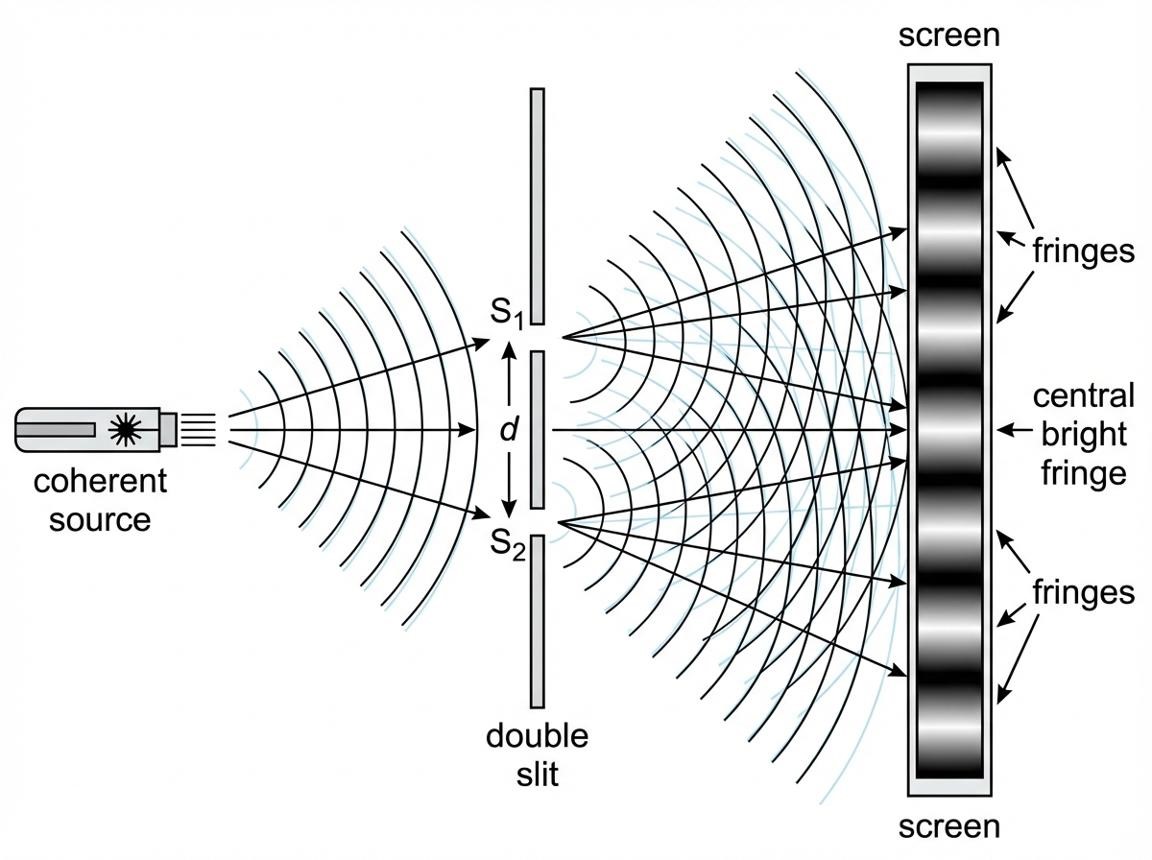
Quantum states have probability amplitudes that can interfere with one another.
- Constructive interference: amplitudes reinforce one another.
- Destructive interference: amplitudes cancel one another.
Quantum algorithms use interference to increase the probability of useful outcomes and reduce the probability of unwanted outcomes.
4. How does a quantum computer work?
A quantum computer operates through a carefully controlled sequence of quantum operations.
Step 1: Initialization
The qubits are prepared in known initial states.
Step 2: Application of quantum gates
Quantum gates manipulate the states of qubits. These operations are the quantum equivalents of certain operations used in classical circuits, although their mathematical properties are different.
Step 3: Quantum computation
A sequence of quantum gates creates superpositions, entanglement, and interference as required by the algorithm.
Step 4: Measurement
At the end of the computation, the qubits are measured to obtain classical results, usually represented by 0s and 1s.
Step 5: Interpretation of results
The measurement results are analyzed to obtain the answer to the problem. Some quantum algorithms require repeated runs to estimate the desired probabilities accurately.
Unlike a classical computer, which can store and process classical bits relatively robustly, quantum computers must carefully protect their qubits from environmental disturbances. These disturbances can cause decoherence and computational errors.
5. Applications of quantum computing
Drug discovery and chemistry
Simulating molecules and quantum interactions to help researchers understand chemical processes.
Cryptography
Certain quantum algorithms could break widely used public-key cryptographic systems, while quantum-resistant cryptography aims to protect against these threats.
Optimization
Researchers are exploring whether quantum methods can improve certain scheduling, routing, and resource-allocation problems.
Materials science
Studying materials that could lead to better batteries, catalysts, and other technologies.
Most of these applications are still being researched. Today’s quantum computers are not universally faster than classical computers.
This is a theoretical comparison under specific assumptions, not a guarantee of real-world speed. Quantum operations also have costs and are sensitive to errors.
Challenges in Quantum Computing
Despite its enormous potential, quantum computing faces significant scientific and engineering challenges.
Qubits are highly sensitive to environmental disturbances. Noise and decoherence can destroy quantum information before a calculation is completed.
Quantum error correction can protect information by encoding logical qubits across multiple physical qubits, but it requires substantial additional resources.
Building large-scale, reliable quantum computers therefore requires improvements in hardware, error correction, control systems, and algorithms.
Furthermore, quantum computers are not expected to outperform classical computers on every task. For ordinary activities such as word processing, browsing the internet, and many routine calculations, classical computers remain highly effective.
Conclusion
Quantum computing represents one of the most exciting applications of modern physics. By exploiting superposition, entanglement, and quantum interference, it offers new approaches to solving selected computational problems.
For physics students, quantum computing provides a practical connection between abstract quantum-mechanical principles and emerging technology. It demonstrates how fundamental discoveries about the microscopic world can lead to entirely new ways of processing information.
Although large-scale practical quantum computing remains a major engineering challenge, continued research may transform fields such as molecular simulation, materials science, and cryptography.
The central message is simple: quantum computing does not replace the laws of classical computation in every situation; rather, it expands the possibilities of computation by using the laws of quantum mechanics.