Category: Uncategorized

  • Uses of artificial intelligence for students

    Uses of artificial intelligence for students

    When students should use AI and when shouldn’t

    What is artificial intelligence? to know the answer click here-

    Using AI in your studies is a double-edged sword. Recent research—including findings from the global OECD PISA reports—shows that students who rely on AI to generate answers or bypass reading often perform worse on exams, while those who use it strategically to test themselves gain a significant edge.

    To get the most out of AI without dulling your own critical thinking, here is when you should and shouldn’t use it.

    Nayan Jha Sir’s perspective aligns closely with core pedagogical principles, especially for conceptual subjects like Physics. His advice highlights the essential distinction between verification/quick utility and deep, foundational learning.

    1. Where AI Works Well (As a Quick Reference & Verification Tool)

    • Checking Correctness & Confirming Answers: Once you have solved a numerical problem on your own, using AI to check whether your final answer or calculation steps match is an efficient use of technology.
    • Quick Definitions & Short Topics: For fast factual queries (e.g., “What is the standard value of Permittivity of Free Space?” or “Define Lenz’s Law in two lines”), AI acts like a smart dictionary saving you time.
    • Saving Time on Minor Clarifications: When you are stuck on a minor unit conversion, a specific formula variable, or a quick definition, AI prevents you from breaking your workflow to search through textbooks.

    2. Why AI Fails as a “Full-Time Teacher” for Deep Physics Concepts

    • Formula Derivations Require Step-by-Step Logic: Physics derivations are not about memorizing lines; they are built on fundamental laws (like Gauss’s Law, Conservation of Energy, or Newton’s Laws). Seeing an AI output a derivation instantly deprives your brain of following the step-by-step physical logic.
    • Lack of Intuition: Physics requires spatial and physical intuition (understanding vectors, field lines, motion under gravity, etc.). An AI can display equations, but a human teacher or active problem-solving builds the mental model of why a force acts in a certain direction.
    • Practice-Based Skills Need Muscle Memory: Mastering Physics—especially for exams like CBSE Boards, JEE, or NEET—comes from struggling through multi-step numericals yourself. AI provides answers instantly, creating a false sense of understanding (“illusion of competence”) that crumbles during an actual exam.

    The Practical Rule

    Treat AI as a sanity check after you have put in the work. Use it for quick fact-checking and answer verification, but rely on teacher-led instruction, textbooks, and personal problem-solving when tackling new concepts, derivations, and practice numericals.

    When to Use AI (As a Tutor or Assistant)

    Use AI when it acts as an active learning accelerator—a tool that pushes you to think harder, test yourself, or organize your workload.

    • Generating Active Recall Quizzes: Paste your own study notes into AI and ask it to write a 10-question multiple-choice practice quiz or flashcards to test your retention.
    • Breaking Down Complex Concepts (Feynman Technique): Ask AI to explain a tough topic using an analogy. For example: “Explain quantum superposition like I’m 12 years old.”
    • Structuring Study Plans & Time Management: Use AI to draft realistic daily revision schedules, break large projects into smaller tasks, or format messy study notes into clean tables.
    • Feedback and Editing Assistant: Draft an essay or response on your own first, then ask AI to critique your argument, check for grammar, or point out logical gaps.
    • Socratic Problem Solving: Tell the AI: “Do not give me the answer. Ask me step-by-step questions to help me solve this math problem myself.”

    When NOT to Use AI (As a Shortcut or Substitute)

    Avoid AI when it replaces the mental effort required to build brain connections. If the tool does the thinking, you won’t retain the knowledge when exam day arrives.

    • First-Pass Reading & Summarization: Don’t rely on AI to summarize a textbook chapter or research paper before you’ve read it. The act of reading and picking out core ideas yourself is where retention happens.
    • Drafting Assignments or Homework Responses: Writing is how you structure your thoughts. Having AI generate full paragraphs or complete assignments bypasses the primary goal of learning.
    • Fact-Checking Without Verification: AI chatbots can hallucinate incorrect facts, citations, or formulas. Never use AI as a primary source for historical data, citations, or precise calculations without double-checking against trusted textbooks.
    • Solving Math/Physics Problems directly: Copy-pasting a problem to instantly get the final step-by-step solution creates a false sense of mastery. You need to struggle through the steps yourself to build problem-solving stamina.

    The Golden Rule: Use AI to test your understanding, clarify sticking points, and organize your time—never to replace the physical act of reading, writing, and problem-solving.
  • What is String theory?

    What is String theory?

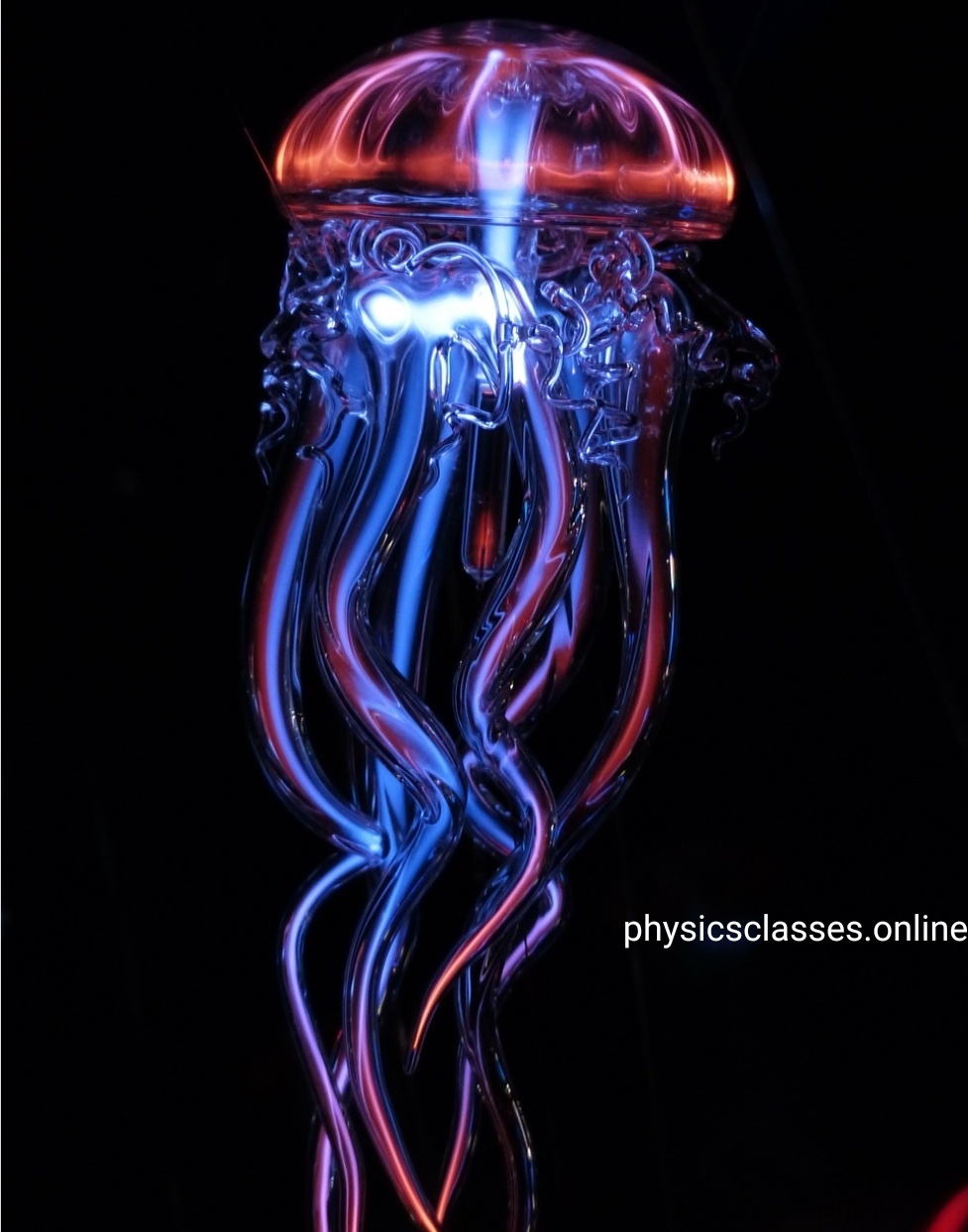
    What is string theory? Simple explanation of string theory in physics

    Now these days as the need of science increasing , the students are excited to know about the  universe, , related to the atomic and sub atomic particles. String theory is one of them .

    Now in this block we will discuss about the one of the most excited and fundamental concept of physics, known as the string theory.

    String theory is a theory in modern physics that tries to explain what the smallest building blocks of the universe really are.

    Questions may be asked on the basis of string theory which are –

    (i) How does a string produces particles?

    (ii)What are the purpose of string theory?

    (iii) Why extra dimensions involved ?

    (iv) Is the string theory proven ?

    String theory is a proposed framework in physics that tries to explain the fundamental particles and forces of nature—including gravity—within one mathematical theory.

    The central idea is surprisingly simple: instead of treating fundamental particles as infinitely small points, string theory proposes that they are tiny, one-dimensional vibrating strings.

    Normally we think of particles such as electron ,quarks as point like particles. But according to string theory ,at most fundamental level these particle may actually be made of extremely small , one dimensional objects called ‘string’.

    Different ways a string vibrates would appear to us as different particles. You can think of it somewhat like a guitar string: one string can produce different notes depending on how it vibrates. In string theory, one vibration might behave like an electron, another like a photon, and another like a different particle.

    One reason physicists are interested in string theory is that it naturally produces a particle with the properties expected of the graviton, the hypothetical quantum particle associated with gravity. This makes string theory a candidate for reconciling quantum mechanics with general relativity, two extremely successful theories that are difficult to combine under extreme conditions such as the interiors of black holes or the very early universe.

    There are some unusual consequences. Most versions require more dimensions than the four we experience (three dimensions of space plus time). Superstring theories generally require 10 space time dimensions, with the additional dimensions thought to be curled up at extremely small scales. A broader framework called M-theory involves 11 dimensions and also includes higher-dimensional objects called branes.

    The major problem is that string theory has not been experimentally confirmed. The characteristic scales involved are thought to be far beyond what current particle accelerators can directly probe, and the theory allows many possible ways for the extra dimensions to be arranged. Consequently, string theory remains an active but speculative area of theoretical physics rather than an experimentally established description of nature.

    In one sentence: string theory proposes that everything—from electrons to the particles associated with forces—ultimately arises from different vibrations of extraordinarily tiny strings.

  • Similarities Between the Rigveda and Science

    Before reading this blog, I would like to inform you all that the views expressed here are based on my own understanding and knowledge. Your perspective may differ from mine.

    (Nayan Kumar Jha)

    The Rigveda contains certain material that can be viewed in the context of the history of modern science. However, an important point should be kept in mind: it would not be correct to describe the Rigveda as a textbook of Physics, Chemistry, or Biology in the modern sense. According to scholars, it contains observations of nature and numerical and astronomical references, along with primarily religious, poetic, and philosophical ideas.

    1. The Origin of the Universe — The Nasadiya Sukta

    One of the most fascinating examples is Rigveda 10.129, commonly known as the Nasadiya Sukta. It raises profound questions about the origin of creation.

    The opening conveys the idea:

    «“Then, there was neither existence nor non-existence…”»

    The hymn asks whether there was the sky, the atmosphere, or anything else at that time. Towards the end, it raises a profound question about how creation actually came into existence—and whether anyone can truly know the answer.

    This is interesting in relation to modern cosmology because both approach the origin of the universe as a fundamental question. However, it would not be scientifically correct to describe the Nasadiya Sukta as a direct description of the Big Bang Theory.

    The modern Big Bang model is based on mathematical models, astronomical observations, and physical evidence, whereas the Nasadiya Sukta presents a philosophical exploration of the origin of existence.

    2. Astronomy

    The Rigveda contains numerous references to the Sun, dawn (Ushas), stars, and celestial phenomena. According to an official Government of India portal related to Sanskrit, the Rigveda holds an important place among the early references to astronomical thought in India.

    However, an important distinction should be made here:

    Observation of the sky → Beginning of scientific curiosity

    Modern astronomy → Mathematics + Measurement + Observation + Testing

    Therefore, the two should not be considered exactly the same.

    3. Mathematics and Numbers

    The Rigveda contains numerous numerical expressions. According to historian Takao Hayashi, it would not be appropriate to derive fully developed mathematical theories from the Rigveda. However, it does contain scattered references related to whole numbers, fractions, and simple geometric forms.

    These references are interesting from the perspective of the history of mathematics, although they should not be interpreted as equivalent to modern mathematical theory.

    4. The Most Important Aspect — The Spirit of Scientific Thinking

    In my opinion, the most interesting aspect of the Rigveda from the perspective of science is not merely any particular “scientific fact,” but the willingness to ask questions.

    In the Nasadiya Sukta, the poet openly asks who truly knows the origin of creation. It reflects a form of epistemic humility—the ability to acknowledge what we do not know.

    This attitude is particularly interesting from the perspective of scientific thinking because science itself progresses by asking questions, examining evidence, testing ideas, and accepting uncertainty where evidence is insufficient.

    Conclusion

    Therefore, saying that modern scientific theories are directly written in the Rigveda would be an exaggeration.

    However, the Rigveda certainly contains serious observations and questions concerning the universe, nature, sky, time, numbers, and existence. This makes it an important subject for studying the history of human thought and the development of scientific curiosity.

    The Rigveda may not be a modern science textbook, but it demonstrates that human beings have been asking profound questions about the universe and existence for thousands of years.

    — Physics Classes by Nayan Jha 

  • METER-BRIDGE

    METER-BRIDGE

    METER-BRIDGE


    METER-BRIDGE
    METER-BRIDGE

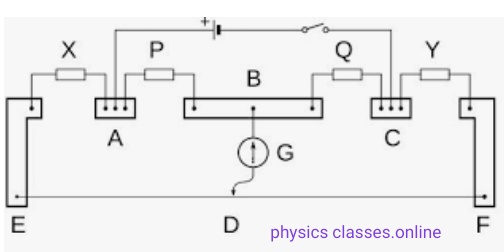
    Question based on meter-bridge may be asked as ; What is meter-bridge ? How does it work? find the expression to find the value of unknown resistance using meter bridge.

    Meter-bridge is a devise used to know the value of unknown resistance.

     Principle -its working based on the principle of wheat-stone-bridge .

    See  the  video of complete explanation of meter bridge HERE-

    expression for unknown resistance will be given as S/R = 100-l/ l

    where R=known resistance ; S= unknown resistance ; l is the length of the uniform wire.


  • HOW TO SELECT COACHING CENTER FOR JEE AND NEET/AIIMS PREPRATION

    THIS VIDEO HOW TO SELECT COACHING CENTER FOR JEE AND NEET/AIIMS PREPRATION WILL HELP THE STUDENTS THAT WHICH COACHING CENTER SHOULD HE JOIN OR SHOULDN’T HE JOIN . WHAT KIND OF STUDENTS SHOULD JOIN SUCH KIND OF CLASSROOM….

    TO VIEW THE VIDEO CLICK HERE

  • MAGNETIC EFFECT OF CURRENT

    MAGNETIC EFFECT OF CURRENT

    Magnetic effect of current– If current flows through a conductor setup magnetic field around it is first observed by Oersted in 1820 . After that Biot-savart  established a formula for magnetic field due to small current carrying conductor. Direction of magnetic field can be found using right hand thumb rule . If current is flowing through st. line  and thumb shows the direction of current flowing through it then curled finger gives the direction of magnetic field. If current flowing through a circular coil ,and curled finger shows the direction of current then thumbs gives the direction of magnetic field.

    COMPLETE ASSIGNMENT OF MAGNETIC EFFECT OF CURRENT

  • Posts 1

    Posts 1

    What is Lorem Ipsum?

    Lorem Ipsum is simply dummy text of the printing and typesetting industry. Lorem Ipsum has been the industry’s standard dummy text ever since the 1500s, when an unknown printer took a galley of type and scrambled it to make a type specimen book. It has survived not only five centuries, but also the leap into electronic typesetting, remaining essentially unchanged. It was popularised in the 1960s with the release of Letraset sheets containing Lorem Ipsum passages, and more recently with desktop publishing software like Aldus PageMaker including versions of Lorem Ipsum.

    Why do we use it?

    It is a long established fact that a reader will be distracted by the readable content of a page when looking at its layout. The point of using Lorem Ipsum is that it has a more-or-less normal distribution of letters, as opposed to using ‘Content here, content here’, making it look like readable English. Many desktop publishing packages and web page editors now use Lorem Ipsum as their default model text, and a search for ‘lorem ipsum’ will uncover many web sites still in their infancy. Various versions have evolved over the years, sometimes by accident, sometimes on purpose (injected humour and the like).

    Where does it come from?

    Contrary to popular belief, Lorem Ipsum is not simply random text. It has roots in a piece of classical Latin literature from 45 BC, making it over 2000 years old. Richard McClintock, a Latin professor at Hampden-Sydney College in Virginia, looked up one of the more obscure Latin words, consectetur, from a Lorem Ipsum passage, and going through the cites of the word in classical literature, discovered the undoubtable source. Lorem Ipsum comes from sections 1.10.32 and 1.10.33 of “de Finibus Bonorum et Malorum” (The Extremes of Good and Evil) by Cicero, written in 45 BC. This book is a treatise on the theory of ethics, very popular during the Renaissance. The first line of Lorem Ipsum, “Lorem ipsum dolor sit amet..”, comes from a line in section 1.10.32.