
Tag: units and measurement

  • Units and measurement

    Units and measurement

    Units and measurement

    In this topic we will discuss about, type of units, system of units ,  name and define of all fundamental units . Also the abbreviations in power of tens. one of the important thing given is chart of physicist and their discoveries.

    Units and measurement

    Physical quantity-

    All those quantities which can be measured in terms of which the laws of physics can be expressed are called physical quantity. Example- mass , speed, force , power etc.

    Physical quantities are of two types- fundamental and derived

    1. Fundamental quantities–

    The physical quantities which is independent of other physical quantities and are not usually defined in terms of other physical quantities are called fundamental quantities. These are  , mass, length, time, electric current, temperature ,luminous intensity and amount of substance.

    1. Derived quantities-

    The physical quantities which can obtained using other physical quantities are called derived units. Example – velocity, force , power etc. or we can say all the physical quantities other than seven fundamental quantities are derived units.

    UNITS-

    The standard amount of a physical quantity chosen to measure the physical quantity of the same kind are called physical unit.

    To represent a physical quantity we need numeric value and its units .i.e.

    Physical quantity  Q = n U ( where n represent numeric value and U is the unit) . So we can define unit is the thing used to identify and measure a physical quantity .

    There are two types of unit .Fundamental and derived units .


    Fundamental units–

    The physical unit which neither be derived from one another and it can not be resolved into more simpler units called fundamental units. There are seven fundamental units which are the units of These are  , mass, length, time, electric current, temperature ,luminous intensity and amount of substance .


    Derived units –  All the units can be expressed using fundamental units is called derived units .

    Example unit of speed = distance/time =m/s …etc .


    System of units – A complete set of units which is used to measure all kind of fundamental and derived quantities is called system of units.

    (i) cgs system- It is based on centimetre, gram and second as the fundamental unit of length, mass and time respectively.

    (ii) MKS system – – It is based on metre, kilogram and second as the fundamental unit of length, mass and time respectively.

    (iii) FPS system – – It is based on foot, pound and second as the fundamental unit of length, mass and time respectively.

    (iv)SI ( the international system of units) system .
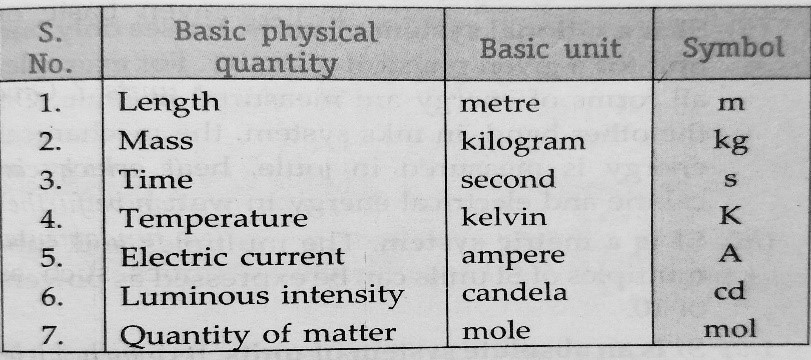
     

    Definition of basics units –

    1. Meter (m) – It is the SI unit of length, One meter is defined as the path travelled by light in vacuum in 1/ 299,792,458 seconds ,
    2. kilogram (kg) – It is the SI unit of mass .- It is the mass of prototype cylinder of platinum-iridium alloy .
    3. Second(s)- It is the SI unit of time . On e second is the duration of 9,192,631,770 period of the radiation between two levels of the ground state of the Cesium-133 atom.
    4. Ampere (A) – It is the unit of electric current. It is the force 2 x 10⁻⁷ Newton between two parallel current carrying wire placed 1m away is of unit length . To know more on Ampere click here-
    5. Kelvin (K) – It is the SI unit of temperature. One kelvin is the fraction 1/273 of the thermodynamic temperature of the triple point of water.
    6. Candela(cd)- It is the SI unit of luminous intensity. It is the intensity of a source that emits monochromatic radiation of frequency 540 x 1012 Hz , and that has the radiant intensity 1/683 watt per steradian in that direction.
    7. Mole (mol)- It is the unit of amount of substance . .It is the amount of substance which contain as many elementary entities as there are atom in 0.012 kg of C-12 isotopes.

    Supplementary SI units –

    (a). Radian (rad)-  It is the plane angle subtended at the centre of a circle by an arc equal in length to the radius of the circle . ϴ= arc/radius .

    (b). Steradian (sr)- It is defined as the solid angle subtended at the centre of the sphere by a surface of the sphere equal in area to that of a square , having each side equal to the radius of the sphere . sr= surface area / radius2 .


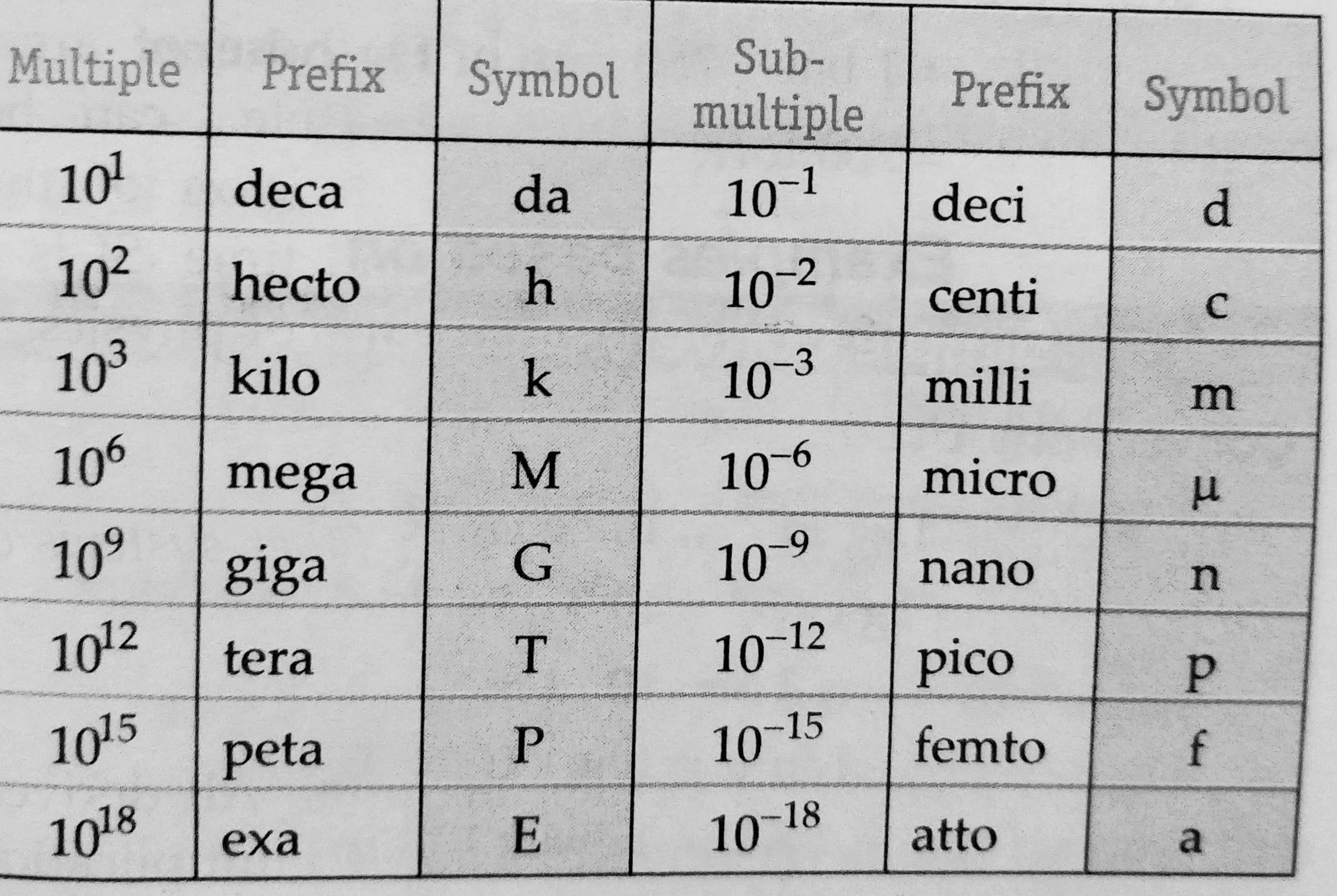
    Some important thing ( multiple , prefix and symbol) in the power of ten.
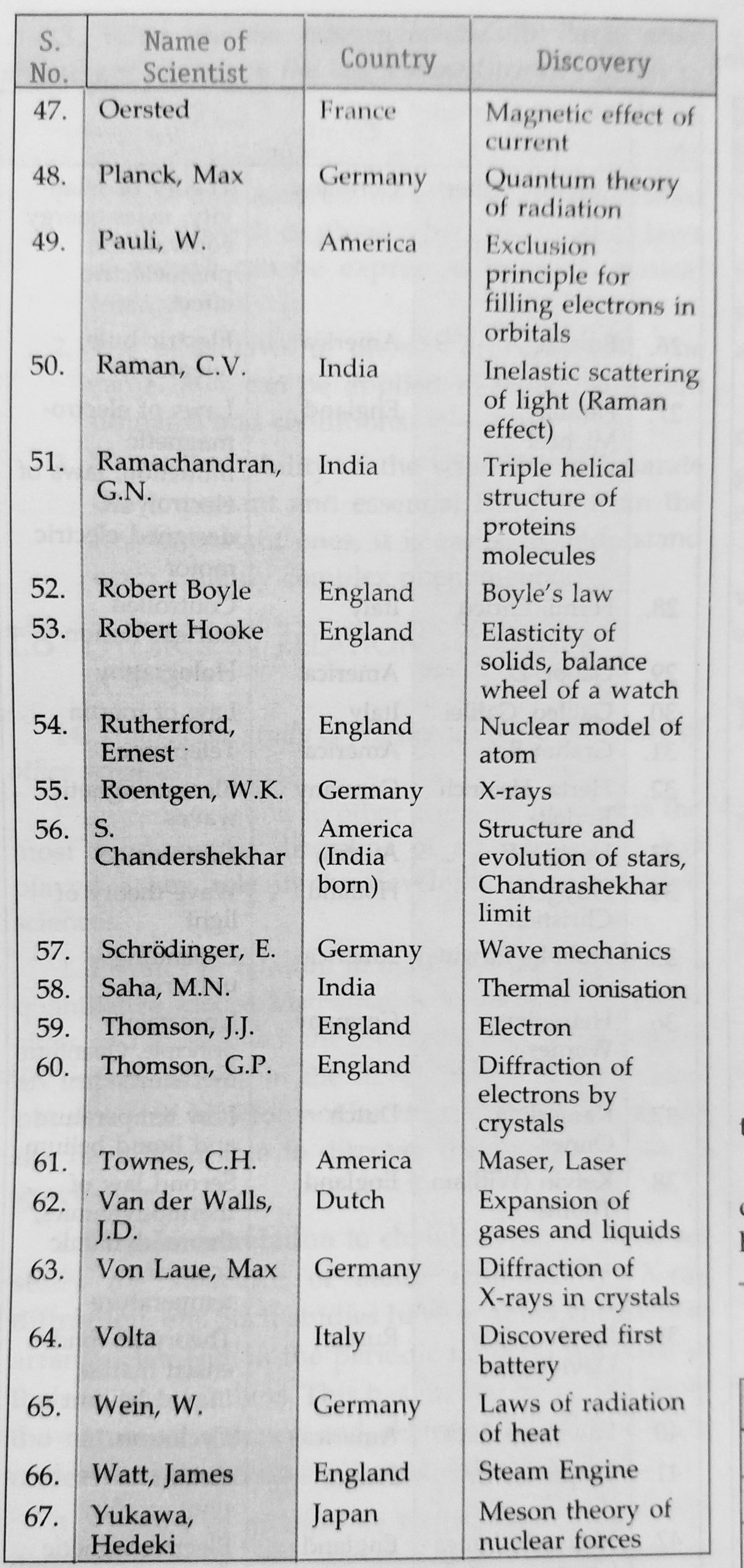
    Some great physicist and their discoveries ( This topic is important for objective point of view)-

    Next topic after this topic units and measurement students have to learn DIMENSIONS AND USES OF DIMENSIONS


  • Errors of measurement

    Errors of measurement

    Errors of measurement-

    generally it is seen the measured value of a quantity is different from its actual value . this difference in the measured value and and the true value of a quantity is called error of measurement. 

    Errors of measurement can be divided into following types-

    Systematic errors -Those errors whose causes are known and it can be corrected ( or ,  can be minimised). Like Instrumental errors, personal errors ,Error due to imperfection and errors due to external causes.

    Random errors-These errors may arise due to large variety of factors . some time it is also called ‘ chance error’ . random errors can be minimised by repeating the observation.

    Gross errors– These errors arises due to carelessness of the observer during the measurement of the values.

    Absolute errors– Absolute errors in the measurement is the difference between true value and measured value of the quantities . The absolute errors sometime may be positive and sometime negative .

    Mean absolute error-It is the arithmetic mean of magnitudes of absolute errors.

    Relative errors /Fractional errors-It is the ratio of mean absolute errors to the mean value or true value of the quantities measured.

    Permissible errors-It is the errors which arises due to limitations on the measuring abilities of various instruments use in the experiment.

    Accuracy– It is the extent to which a measurement approaches the true value of the quantities measured.

    Precision– It describes the limitations of the measuring instruments . It is the degree of correctness of a measurement.

    To  download important questions  on Errors  click here


  • Significant figure

    Significant figure

    Significant figure

    In this topic we will discuss what is a significant figure ?  how can we find the significant figure in the given values and what are the rules for counting significant figure ?

    Significant figure – It is the measured value of a physical quantity tell the number of digit in which we are confident . (  Larger the value of significant figure greater will be the accuracy and vice versa ).

    Number of significant figure in a physical quantity depends upon the least count of the instrument used for its measurement.

    Rules for counting significant figure –

    1. All non zero digits are significant figure , and all zeros occurring between the two non zero digits  are significant.
    2. In a number less than 1 , all zeros to the right of decimal point and to the left of a nonzero digit are not significant . But all the zeros on the right of the last non zero digit in the decimal part are significant.
    3. All zeros on the right of non zero digits are not significant . but all zeros on the right of the last non zero becomes significant when they come from a measurement.


    (Note- change in the unit of measurement of a quantity does not change the number of significant figures .)


  • PARALLAX METHOD

    PARALLAX METHOD –

    – Parallax method has been used for measuring distance of stars which are less than 100 light years away.(parallax is the name given to change in the position  of an object with respect to the back ground , when the object is seen from the two different positions .)

    PARALLAX METHOD
    PARALLAX METHOD FIGURE

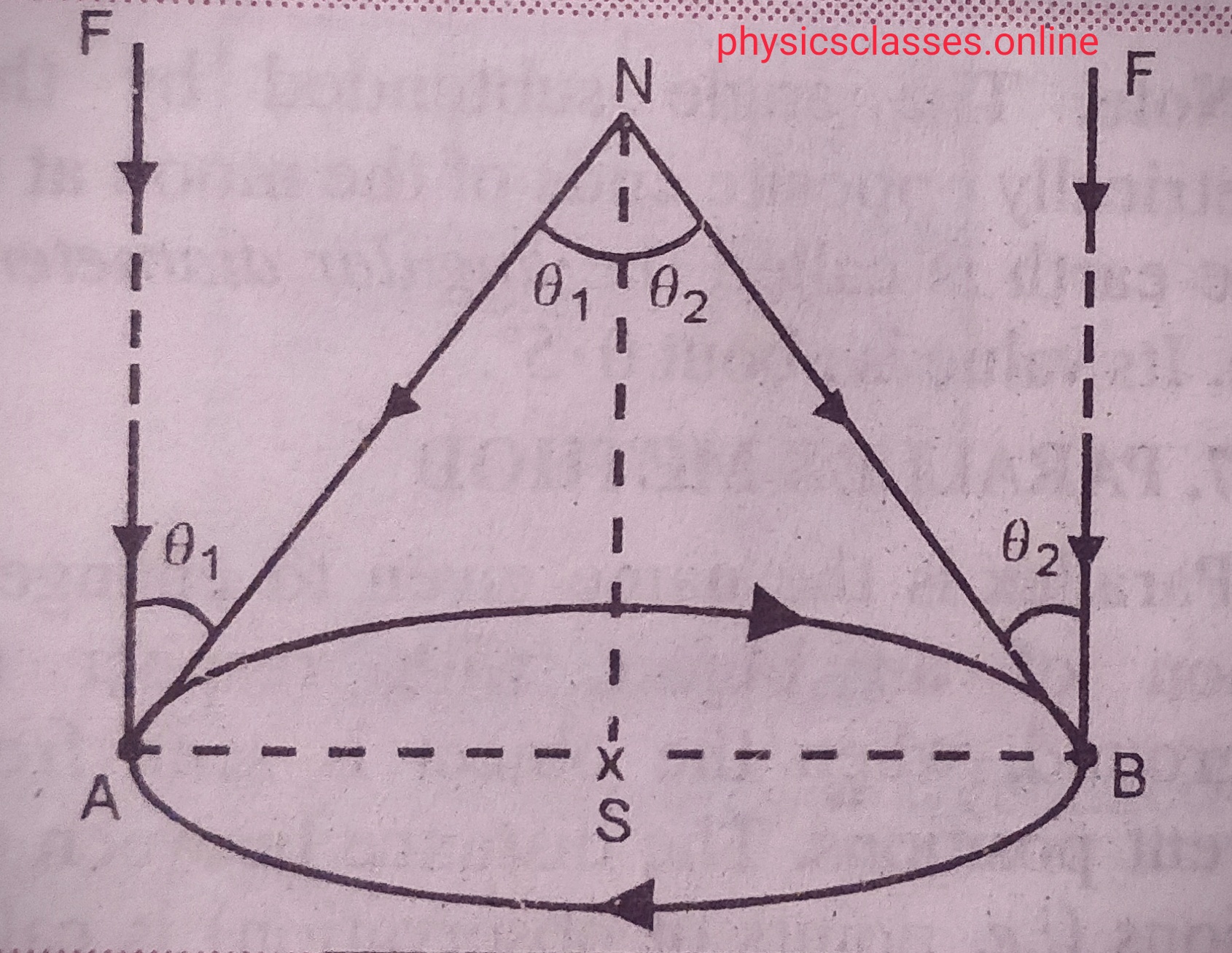
    The diameter AB  of earth’s orbit around the sun is chosen as the base line as shown in the fig. . N is the nearby star whose distance (d) from the earth is to be measured . F is a far off star whose direction is taken practically the same at all position of earth in its orbital motion .

    Suppose A is the position of earth in its orbital motion at any time . using an astronomical telescope we measure <FAN = θ1 , between the directions of light from distant star F and nearby star N . As it clear from the figure  <FAN = <ANS =θ1 .

    After six months earth is at B which is directly opposite to the point A , let < FBN =θ2, between the direction of light from distant star F and nearby star N is measured again   <FBN = <BNS = θ2

    Clearly , <ANB = <ANS +<BNS = θ1 + θ2 .

    As we know , angle = arc/ radius

    Therefore ,  θ1 + θ2  = AB/AN

    Or AN = AB / θ1 + θ2 .

    Clearly AB= 2AS = 2AU

    If θ1 and   θ2 is known then AN can be calculated.

    ( Note – the parallax method is used for measuring distance of nearby stars only. And parallax method is also used for determining distance of moon from earth ).