Circular motion
In this topic we will discuss about what is circular motion, angular displacement,angular velocity, angular acceleration, relation between angular velocity- linear velocity ,and angular acceleration-linear acceleration . Also we will discuss about centripetal acceleration.
Circular motion-
When during the motion body moves on a circular path then the such kind of motion of the body is called circular motion .
Some important topics of circular motion:-
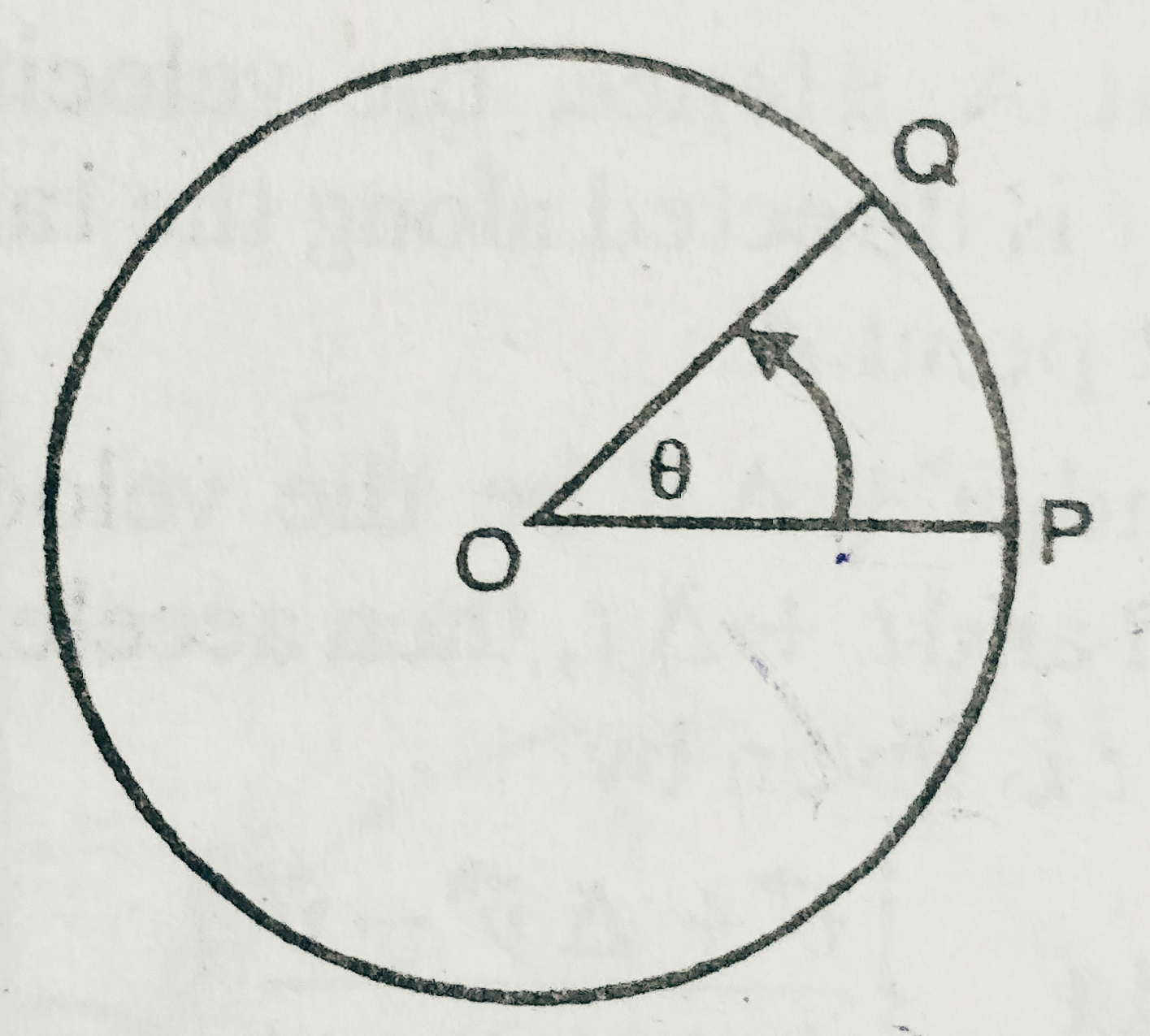
- Angular displacement – When a body moves on a circular path then the angle traced out by the radius vector at the axis of the circular path in a given time is called angular displacement .
Suppose a body is moving on a circular path of radius ‘r’ , in anticlockwise direction in the plane of paper , with center ‘O’ . let the position of the object changes from P to Q in time t . let <POQ = ϴ , as shown in figure .
Since, angle = arc/radius
So we can write ϴ=PQ/r .
Angular displacement is a vector quantity . Its unit is radian and it has no dimension.
- Angular velocity – When a body moves on a circular path then angular velocity is defined as the rate of change of its angular displacement . it is denoted by ‘ω’ (omega) .
Its unit is radian/second , and its dimension is [M0L0T-1]. It is a vector quantity.
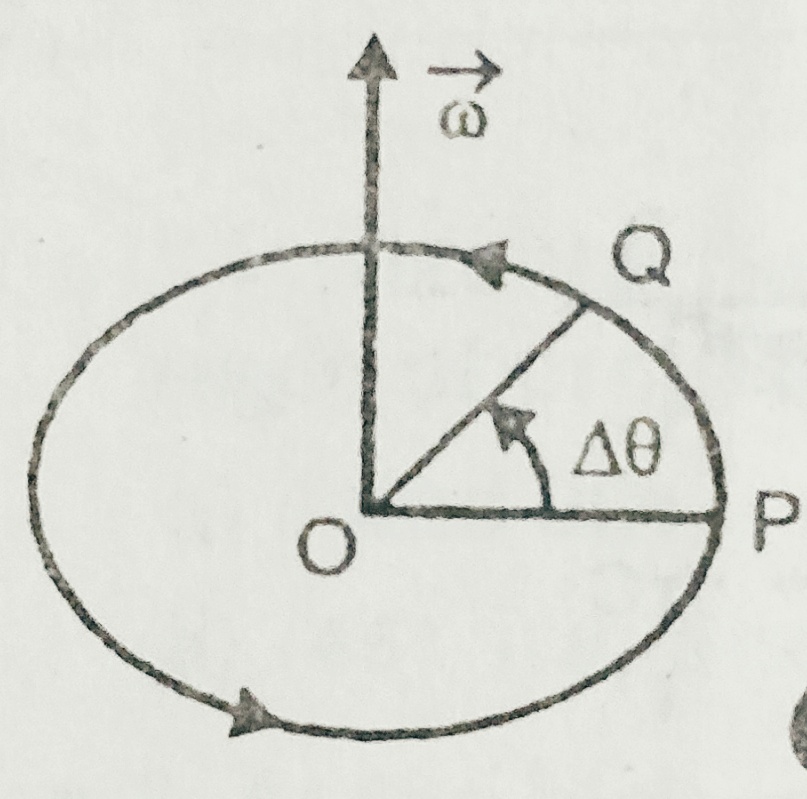
Suppose a point object moving along a circular path of radius r and centre O . let object moves from P to Q in time dt . and <POQ = dϴ .
Then angular velocity ω= dϴ/dt .
Relation between linear velocity and angular velocity –
Suppose an object is moving with uniform angular velocity ω and linear velocity v on a circular path of radius r with centre O .
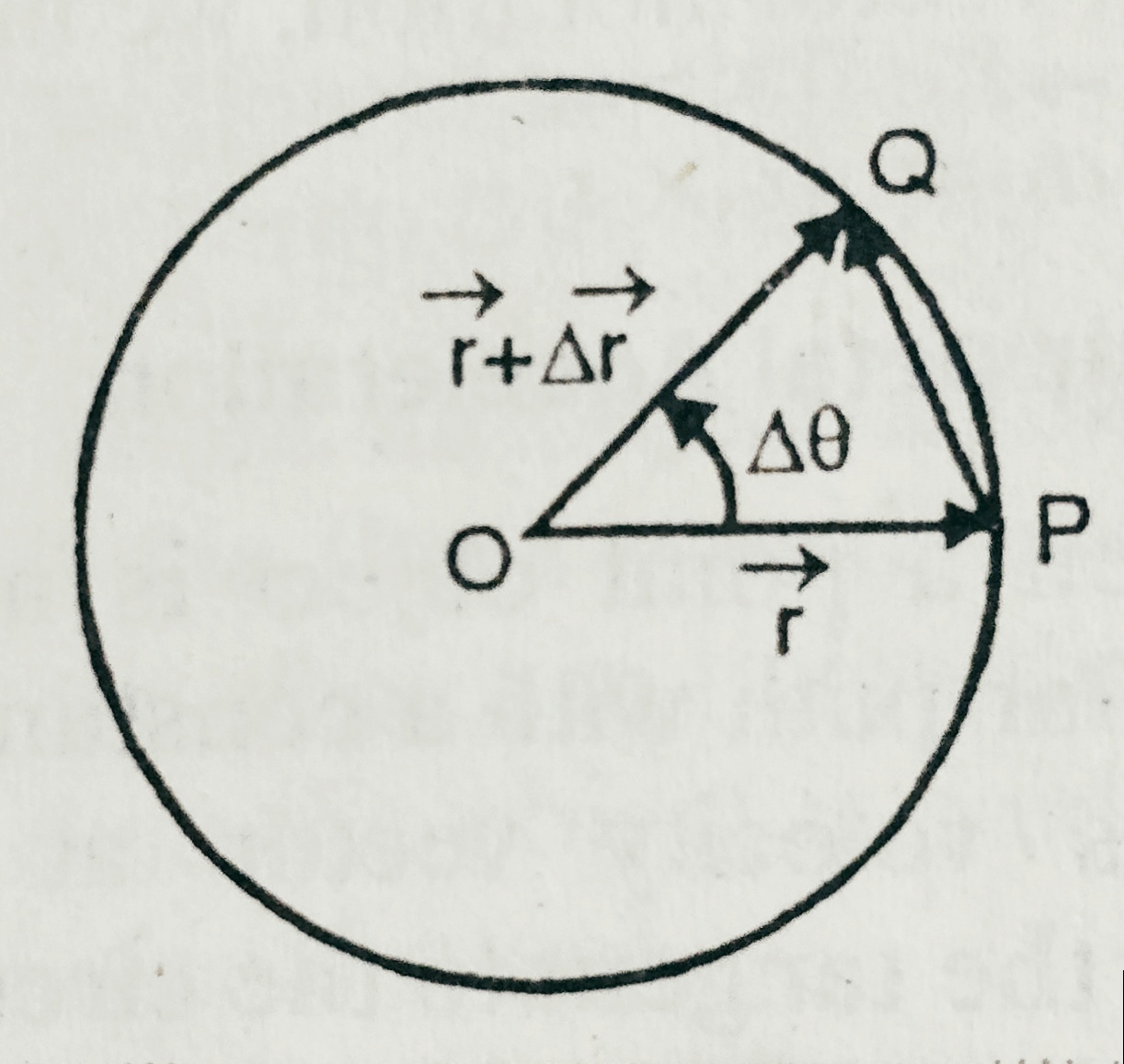
Object is at P at time t and after time Δt it reaches at Q . <AOP=Δϴ The length of PQ=Δl
Therefore v= Δl/Δt or, Δl=vΔt
But , angular velocity ω=Δϴ/Δt or, Δϴ=ωΔt ,
As we know angle = arc/redius
So, Δϴ=Δl/r or ωΔt=vΔt/r or v=ωr ;
Angular acceleration –
In a circular motion angular acceleration is defined as the time rate of change of its angular velocity .
it is denoted by α . Its unit is rad. S-2 . And its dimension is [M0 L0 T-2].
Relation between linear velocity and angular acceleration – as we know v=ωr
So angular acceleration α= dω/dt =d(v/r)/dt = dv/rdt= a/r ( a= angular acceleration a= dv/dt)
So , a= αr ;
Centripetal acceleration –
In a uniform circular motion , the velocity vector of the object is changing with time . it indicates that the uniform circular motion is the example of circular motion.
Acceleration acting on the object undergoing uniform circular motion is called centripetal acceleration . It always acts along the radius and towards the center.
Suppose a particle of mass m moving with a constant speed v and uniform angular velocity ω around a circular path of radius r .
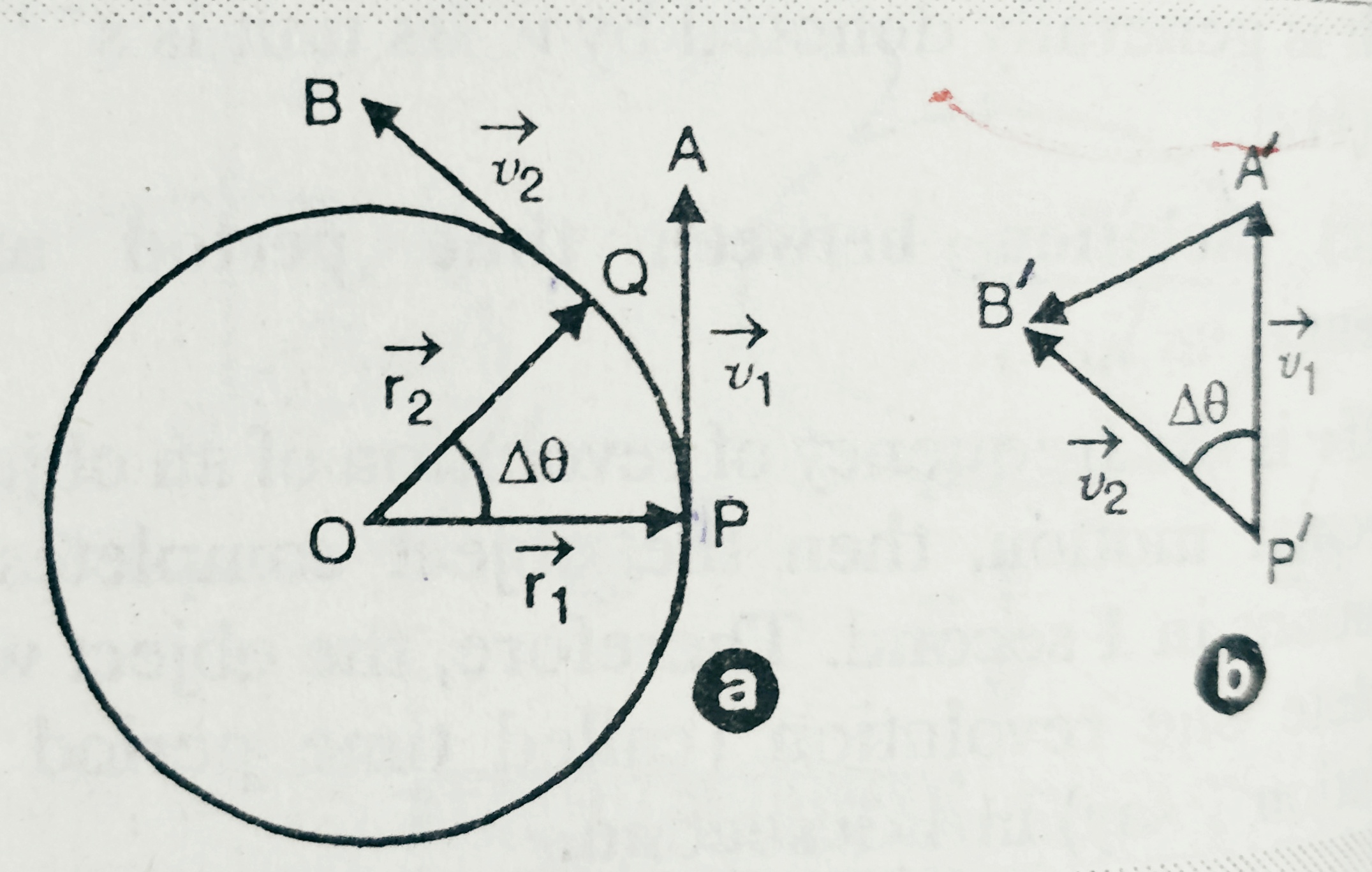
Let at time t the point is at p and after time Δt it reaches at Q .
Here OP=r1 and OQ = r2 and , <POQ = Δϴ
Here, angular velocity ω=Δϴ/Δt ;
Let v1 and v2 are the velocity at position P and Q respectively . as shown in figure (a) .
Here magnitude of PA and QB are equal which is equal to v.
To find the change in velocity in time interval Δt . we draw p’A’ and P’B’ respectively the velocity vector v1 and v2 as shown in above figure (b) .
Here A’B’ = Δv ,
From figure (b)
Δϴ=A’B’/P’A’ = Δv/v
ω Δt= Δv/v ;
ω v = Δv/Δt ;
(v/r)v = ac
ac = v2/r =ω2r