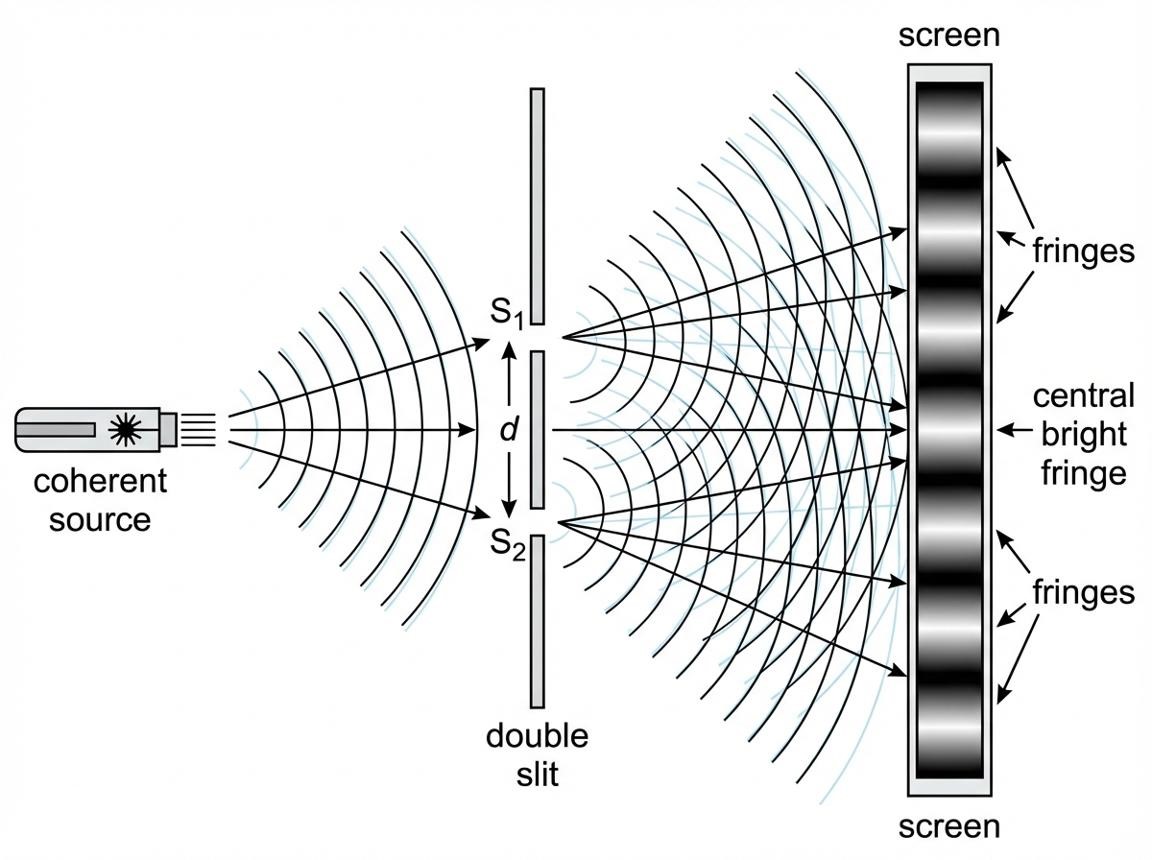
What is wavefronts?
It is the continuous locus of all such particles of the medium which are vibrating in the same phase at any instant . So we can say wavefronts is the surface of constant phase.( An arrow drown perpendicular to the wavefronts in the direction of propagation of wave is called ray.)
There are three types of wavefront
(i) spherical wavefront- When light rays coming out from a point source then the wavefront drawn is spherical wavefront.
To read and download the complete notes of this topic click here
Difference between Wavefront and Ray
| Wavefront | Ray |
| It is a surface joining points of the same phase. | It represents the direction of propagation of light. |
| It is perpendicular to the rays. | It is perpendicular to the wavefront. |
| It represents equal phase. | It represents the direction of energy transfer. |
Some important things to keep in mind about the wavefront are –
- A wavefront is a surface of constant phase.
- Two wavefronts never intersect each other.
- Light rays are always perpendicular to the wavefront.
- The distance travelled by light between two successive wavefronts in one time period is equal to one wavelength (λ).
- Huygens’ principle is based on the concept of wavefronts.
I
Question: Why are light rays always perpendicular to the wavefront?
Answer: Light rays represent the direction of propagation of light, whereas a wavefront is a surface of constant phase. Therefore, light rays are always normal (perpendicular) to the wavefront.
Next important topic: Huygens’ Principle and the construction of secondary wavelets from a given wavefront.
To get the complete notes of Huygens principle click here…
https://physicsclasses.online/very-important-questions-of-wave-optics
https://physicsclasses.online/important-numerical-of-wave-optics