Category: 11th assignment

  • Important questions of system of particles and rotational motion

    Important questions of system of particles and rotational motion

    Important questions of system of particles and rotational motion

    In this assignment we are providing for the students, Important questions of system of particles and rotational motion . Students who is already   completed the theory and derivation of entire  chapter should solve all the questions given in this assignment ” Important questions of system of particles and rotational motion”. Since numbers  of questions in this assignment is very less, so   it can be revised or solved in very short time .

    System of particle and rotational motion

    assignment


    1. Is it possible to open a pen cap with one finger? Why?
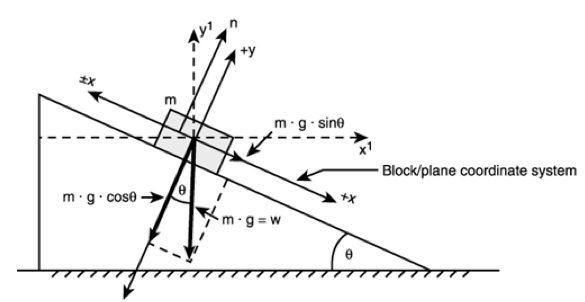
    2. When a sphere, ring, disc and spherical shell are coming down on an inclined plane, rolling without slipping, which will reach the ground first?
    3. How will you distinguish between a hard-boiled egg and a raw egg by spinning each on a table top?
    4. Find the torque of a force 7î-3jˆ-5kˆ about the origin which acts on a particle whose position vector is iˆ+jˆ-kˆ.
    5. What is torque? Write its formula in vector form. Handle, to open the door, is always provided at the free edge of a door. Why?
    6. Establish the relation between angular momentum and rotational kinetic energy?
    7. If earth were to shrink suddenly, what would happen to the length of the day?
    8. Derive the relations
    • L = I ω (ii) Ʈ =  Iα
    1. If angular momentum is covered in a system whose moment of inertia is decreased, will its rotational kinetic energy to be also conserved? Explain.
    2. Can a body in translatory  motion have angular momentum? Explain.
    3. A ring, a dice and a sphere all of the same radius and same mass roll down on an inclined plane from the same height h. Which of the three reaches the bottom

    (i)earliest             (ii) latest   ?

    1. Write an expression for the moment of inertia of a circular disc of a mass M and radius R

    (i)about an axis passing through its center, and a perpendicular to its plane.

    (ii) about its diameter.

    (iii)about a tangent to its own plane.

    (iv) about a tangent perpendicular to the plane of the disc.

    1. How much fraction of the K.E. of rolling is purely (i) translational (ii) rotational ?
    2. Obtain an expression for position vector of center of mass of a two particle system.
    3. What is the difference between rotational kinetic energy and rolling kinetic energy?

    Show that rolling kinetic energy of a rolling body is given by 1/2mv2(( K2/r2)+1) , where r is the radius of the body and K is the radius of gyration of the body.

    1. (i) Define moment of inertia. Write the parallel and perpendicular axis theorem.
    • Derive an expression for moment of inertia of a disc of radius r, mass m
    1. Prove that the rate of a change of the angular momentum of particle is equal the torque of acting on it.
    2. Define moment inertia. Write any two factors which it depends. When the diver leaves the diving board, why does he bring his hand and feet closer together in order to make a some result ?
    3. Derive an expression for moment of inertia of a thin circular ring passing through the centerrotational motionr and perpendicular to the plane of the ring.
    4. (I)Define moment of inertia .write the parallel and perpendicular axis theorem .(II)derive an expression for moment of inertia of a disc of radius r , mass m about the axis along its diameter.
    5. A rope of negligible mass is wound round a hollow cylinder of mass 3kg and radius 40cm . what is the angular acceleration of the cylinder if the rope is pulled by a force of 30N?what is the linear acceleration of the rope?
    6. From a uniform circular disc of diameter d , a circular hole of diameter d/6 and having its center at a distance of d/4 from the center of the disc is scooped out , find the center of mass of the remaining portion .
    7. A uniform ring of mass 10kg and diameter 0.40m rotate with the uniform speed of 2100 rpm, find the moment of inertia and angular momentum of the ring about its geometric axis
    8. A cylinder of mass 5kg and radius 30cm and free to rotate about its axis , receive an angular impulse of 3kg m2/s followed by a similar impulse after every 4 sec . what is the angular speed of the cylinder 30 sec. after the initial impulse ? the cylinder is at rest initially.
    9. Two particles of mass 2kg and 1kg are moving along the same line with speeds 2m/s and 5m/s respectively . what is the speed of the center of mass of the system if both the particles are moving (a) in the same direction (b) in opposite direction ?


    TO SOLVE IMPORTANT QUESTIONS ( ASSIGNMENT) OF GRAVITATION CLICK HERE-


  • Important questions of gravitation

    Important questions of gravitation

    Important questions of gravitation

    In this topic important questions of gravitation is given which will be very important for students studying in class 11th .

     This topic covers all important questions of gravitation

    Important question
    Gravitation
    *****Derivation /define/relations based questions
    1.State Newtons law of gravitation in vector form .(I)Haw can you find the mass of earth ,starting from the law of gravitation?)II) What are the factors affecting the value of G ? (III) If mass of two bodies are doubled and distance is halved , how will the gravitational force change ?
    2. Define gravitational acceleration , find the expression for it, also find its value on the surface of earth .Haw the value of g changes (I) With altitude (II)with the depth .A planet reduces its radius by 1% with its mass remaining same , haw acceleration due to gravity changes ?
    3. Define gravitational field and gravitational field intensity at a point , also find the expression for field intensity at a point.
    4. Define gravitational potential, and gravitational potential energy at a point ,derive the expression for gravitational potential at a point also find the relation with potential energy.
    5. Write the differences between                                                                                         (I) Inertial and gravitational mass,                                                                                 (II) G and g                                                                                                                           (III)escape velocity and orbital velocity on earth.
    6.What is escape velocity ? obtain the expression for the escape velocity on earth . why there is no atmosphere on moon? Explain.
    7.state and prove Kepler’s laws of planetary motion.
    8. what is geostationary satellite ? calculate the height of the orbit above the surface of the earth in which a satellite is placed , will appear stationary, and also write the conditions for the launching of geo stationary satellite.
    9.define the term orbital velocity , find the expression for (a) orbital velocity(b) time period and(c) total energy of the satellite . obtain the relation for orbital speed and escape velocity of the satellite from earth surface.
    ***numericals***
    10. A 10 kg mass is divided into two parts , such that the force of attraction between them is maximum , what is the mass of each portions?
    11. two stationary particles of masses M and m are separated by distance d apart . a third particle of mass m1 is placed on the line joining the two particles , experience no resultant gravitational force , what is the distance of the particle from m ?
    12. haw far above the earth’s surface does the value of g becomes 20% of its value on the surface of earth ?
    13. find the relation between height h above the earth surface with the depth from the earth surface where the value of g will be same.
    14. what is the percentage increase in velocity for moon to escape from the gravitational pull of the earth ?
    15.Two masses each of mass 100 kg are separated by distance 1m , find the gravitational (a) field and (b) potential at the mid point of the line joining them.
    16.A satellite of mass 2000kg is raised from a circular orbit of radius 2R to a circular orbit of radius 3R . what is the approximate work done ?
    17.  If the earth supposed to be a uniform sphere , suddenly contract and its radius becomes half of its original value , what will be the duration of day (or what will be time of rotation of earth on its own axis/ what will be the %change in duration of day)?
    18. The weight of a body on the surface of earth is 250 N . calculate its weight at the distance equal to half of radius of earth below the surface of earth ( radius of earth =6400 km)
    19. A rocket is launched from the surface of earth vertically with an initial speed of 10 m/s . haw far above the surface of earth would it go ? radius of the earth is 6400 km.
    20. A satellite of mass 200 kg is rotating in an orbit at a height of 400 km from the surface of earth , haw much energy must be given to the rocket to take the satellite out of the earth ‘s gravitational influence? Mass of earth=6.0 x 10^24 kg; radius of earth=6400 km.
    21. Three particles each of mass m are placed at the vertices of an equilateral triangle of side l . Find the work which should be done on this system to increase the sides of triangle 2l.
    22. At what rate should the earth rotate so that the apparent g on the equator becomes zero? What will be the length of day in this situation? Find the energy required to launch a satellite of mass 1000 kg from the surface of earth to the height 2000 km above the earth surface.
    23. Find the potential energy of a system of four particles placed at the vertices of a square of side l . also obtain the gravitational potential and gravitational field intensity at the center of the square.
    24. Why space craft usually launched from west to east ? why is it more advantageous to launch rockets in the equatorial plane?

    To solve important questions of system particles and rotational motion click here-

  • OBJECTIVE QUESTIONS OF KINEMATICS

    OBJECTIVE QUESTIONS OF KINEMATICS

    KINEMATICS  ( OBJECTIVE QUESTIONS)

    KINEMATICS
    KINEMATICS


    THIS ASSIGNMENT IS USEFUL FOR THE STUDENTS FOR CLASS XI ,NEET/ AIIMS AND JEE( MAIN / ADVANCE)OBJECTIVE QUESTIONS OF KINEMATICS IS DESIGNED FOR THE MULTI EXAMINATIONS PAPER  FOR THE STUDENTS . THIS QUESTION PAPER CONTAINS ALL KIND OF QUESTIONS LIKE ACCELERATED MOTION , PROJECTILE ETC….SINCE NUMBER OF QUESTIONS ARE VERY LESS SO STUDENTS CAN USE THIS ASSIGNMENT FOR QUICK REVISION.

    TO DOWNLOAD COMPLETE ASSIGNMENT KINEMATICS ( OBJECTIVE QUESTIONS ) CLICK HERE

    Here is practice paper for NEET/ JEE and class 12th which is selected from Akash study package .

     TO DOWNLOAD COMPLETE ASSIGNMENT OF motion in st. line Akash CLICK HERE-


  • LAWS OF MOTION

    LAWS OF MOTION

    LAWS OF MOTION
    LAWS OF MOTION

    Laws of motion assignment deals with the questions based on  the topic , Inertia, newton’s first ,second and third laws,momentum ,impulse,linear momentum all kind of friction , and circular motion.

     TO DOWNLOAD THE ASSIGNMENT CLICK HERE- LAWS OF MOTION (1)

  • MOTION IN A PLANE

    MOTION IN A PLANE
    MOTION IN A PLANE

    IN THIS CHAPTER BODY TRAVELS IN ONE, TWO AND THREE DIMENSIONAL DIRECTION.

    IN THIS CHAPTER BODY COVERS BOTH UNIFORM AND NON UNIFORM MOTION.

    . A particle starts form origin at t=0 with a velocity 5 m/s and moves in X Y-plane under the action of a force, which produces a constant acceleration of 3i+2j m/s2.

    (a) what is the y-coordinate of the particle at the instant its x coordinate is 84 m?

    (b) what is speed of the particle at this time?


    TO DOWNLOAD THE COMPLETE ASSIGNMENT CLICK BELOW…..

     DOWNLOAD MOTION IN A PLANE ASSIGNMENT

  • VECTOR

    VECTOR

    VECTOR
    VECTOR


    A PHYSICAL QUANTITY HAVING BOTH MAGNITUDE AND DIRECTION KNOWN AS A VECTOR QUANTITY.

    TO DOWNLOAD THE COMPLETE ASSIGNMENT OF VECTOR CLICK BELOW

      DOWNLOAD VECTOR ASSIGNMENT

  • MOTION IN ONE DIMENSION

    MOTION IN ONE DIMENSION

    When a body changes its position with respect to its surroundings in a single direction , then the motion is said to be in one dimension. read more about MOTION IN ONE DIMENSION

    MOTION IN A STRAIGHT LINE –

    • State the condition when the magnitude of velocity and speed of an object are equal.


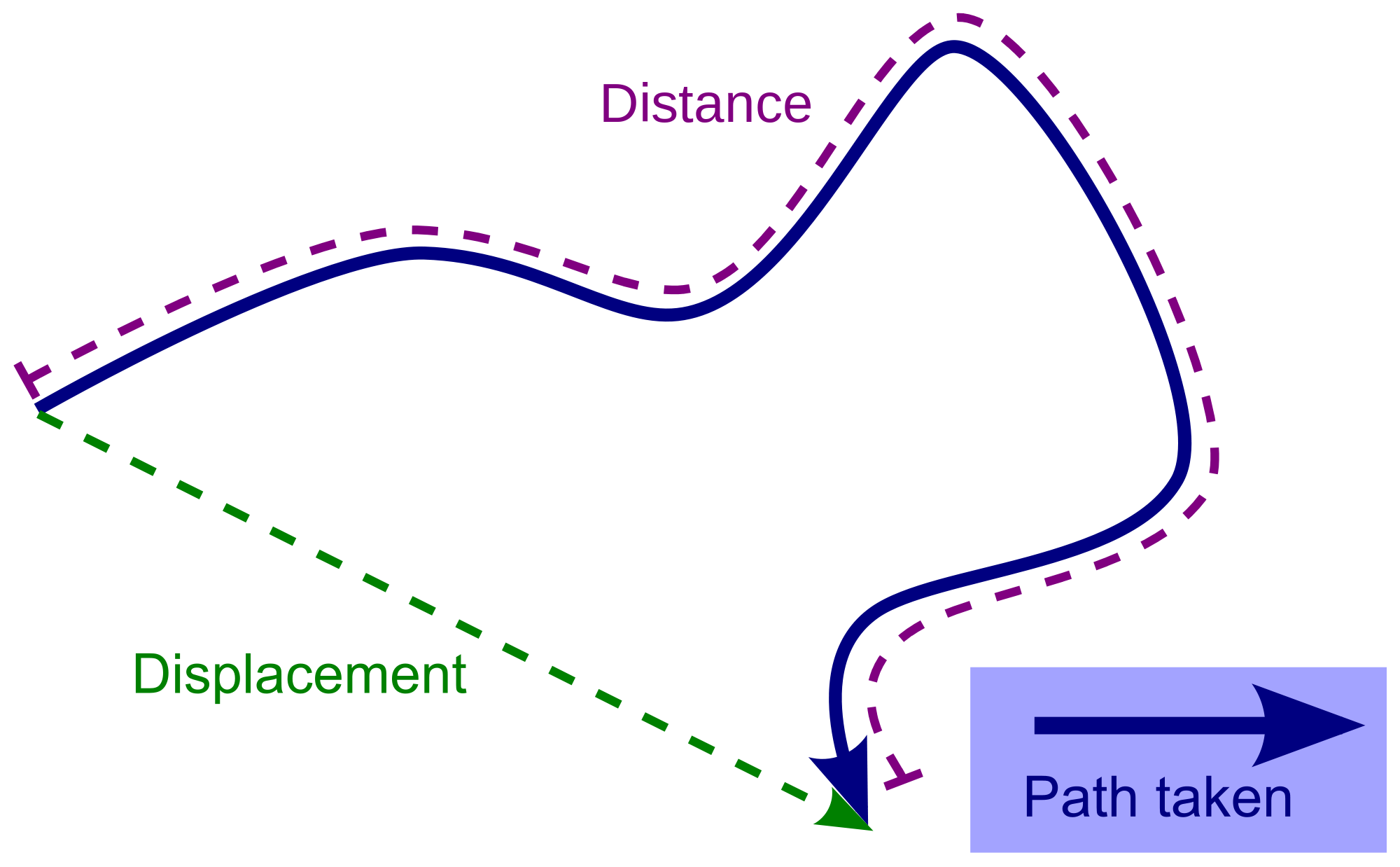
    • Under what condition will the distance and displacement of moving object have the same magnitude?


    • Which vector can be associated with a plane area? And what is its direction?


    • Can the relative velocity of two bodies be greater than the absolute velocity of either? to download complete assignment — MOTION IN ONE DIMENSION
  • UNITS AND DIMENSIONS ASSIGNMENT

    UNITS AND DIMENSIONS ASSIGNMENT

    Assignment of  UNITS AND DIMENSIONS will help the students practice the chapter well , and improve their numerical  skills in this chapter .

    Q 1. Calculate the dimensions of (i) force (f) and (it) impulse (i) in terms of velocity(v) , density (p) and frequency (v) as the fundamental units .

    Q 2. If the velocity of light c, gravitational constant G and Plank’s constant h be chosen as fundamental units, find the dimension of (i) mass, length and time in new system.

    Q 3. Find the dimensions of a/b in the equations, where P is pressure ,t- time & x distance

    P= (a-t2 ) / bx

    To download the full assignment click below…

    UNITS AND DIMENSIONS ASSIGNMENT

  • UNITS AND DIMENSIONS ASSIGNMENT 1

    UNITS AND DIMENSIONS ASSIGNMENT 1

    UNITS AND DIMENSIONS

    ASSIGNMENT
    CLASS-11
    UNITS AND MEASUREMENTS
    Very short answer type questions
    1> Find the area of circle of radius 3.458cm up to correct significant figures.

    2> Name the physical quantities whose dimensions are same.

    3> State the no. of significant fig. in the following (a)0.007 cm (b)2.64 x 1024kg (c)0.2370 cm

    4> Which of the following measurement is more accurate and why? (1)5000.0 cm(2)0.0005cm (3) 6.00cm.

    5> Are all dimensionally correct equations numerically correct? Give one example.

    6> If x=a+bt+ct2 where x is in meters and t is in second, what is the dimensional formula of ‘a’ , and ‘c’.

    7> Write the dimensions formula of (1) Planck’s constant and(2) Rydberg’s constant
    Short answer type questions
    1>The wavelength ‘λ’ depends mass M of the moving particle its velocity v and planks constant ‘h’ . Show dimensionally the relationship between them.
    2>In an experiment the refractive index of the glass was observed to be 1.45, 1.56,1.54,1.44,1.54 and 1.53 . Calculate (1) mean value of the refractive index ;(2) Absolute error ;(3)Fractional error ; (4)Percentage error . Express the result in terms of absolute error and percentage error.
    3> If (P+a/V2)  (V-b)=RT  where the symbols has their usual meanings, then what is the dimension of a/b .
    4. If F= a/ b+√d , where f=force ,d= density , then find the dimension of a and b.
    5> The factors effecting the time period (T) of the simple pendulum depends on mass , length and acceleration due to gravity . Deduce the relation for time period of the simple pendulum.
    6> To determine acceleration due to gravity ,the time of 20 oscillations of a simple pendulum of length 100 cm was observed to be 40 s . calculate the value of ‘g’ and maximum percentage error in the measured value of ‘g’ .
    7> If power P=a-x2/b where x represents displacement find the dimension of a and b.

    8> A physical quantity Qis given by Q= .        A.B3/2/C4D1/2 percentage error in A,B,C,D are 1%, 2%,4%,2% respectively . Find the percentage error in Q.
    9>The measured value of length , breadth and height of a block is given as l=12.08+-0.01 cm , b=10.12+-0.01cm . h=5.62+-0.01 cm . Calculate the percentage error in the volume of the block.
    10>(a) convert 10 J into ergs . (b) convert 10 N into dyne .
    11> A planet moves around the sun , the period of revolution ‘T’ depends upon radius of the orbit ‘R’, mass of the sun ‘M’ and gravitational constant ‘G’, show that  T2αR3                                                                                                                                                                                                  .
    12>If the length and time period of an oscillating pendulum have errors of 1% and 2% respectively , what is the error in the estimate of ‘g’.