Category: Assignments

  • OBJECTIVE QUESTIONS OF KINEMATICS

    OBJECTIVE QUESTIONS OF KINEMATICS

    KINEMATICS  ( OBJECTIVE QUESTIONS)

    KINEMATICS
    KINEMATICS


    THIS ASSIGNMENT IS USEFUL FOR THE STUDENTS FOR CLASS XI ,NEET/ AIIMS AND JEE( MAIN / ADVANCE)OBJECTIVE QUESTIONS OF KINEMATICS IS DESIGNED FOR THE MULTI EXAMINATIONS PAPER  FOR THE STUDENTS . THIS QUESTION PAPER CONTAINS ALL KIND OF QUESTIONS LIKE ACCELERATED MOTION , PROJECTILE ETC….SINCE NUMBER OF QUESTIONS ARE VERY LESS SO STUDENTS CAN USE THIS ASSIGNMENT FOR QUICK REVISION.

    TO DOWNLOAD COMPLETE ASSIGNMENT KINEMATICS ( OBJECTIVE QUESTIONS ) CLICK HERE

    Here is practice paper for NEET/ JEE and class 12th which is selected from Akash study package .

     TO DOWNLOAD COMPLETE ASSIGNMENT OF motion in st. line Akash CLICK HERE-


  • IMPORTANT QUESTIONS OF CURRENT ELECTRICITY

    IMPORTANT QUESTIONS OF CURRENT ELECTRICITY

    CURRENT ELECTRICITYCURRENT ELECTRICITY

    IMPORTANT QUESTION OF CURRENT ELECTRICITY

    THIS ASSIGNMENT PROVIDE  ALL IMPORTANT QUESTIONS OF CURRENT ELECTRICITY CHAPTER .

    This question paper is designed for quick revision for the students of class 12th appearing in the class test or board examination , if students have to practice the question of current electricity in broad level click on  complete assignment of electric current 

    1 (i)State the working principle of a potentiometer. With the help of the circuit diagram, explain how a potentiometer is used to compare the emf’s of two primary cells. Obtain the required expression used for comparing the emf’s.

    (ii) write two possible causes for one sided deflection in a potentiometer experiment.

    (iii)Which material is used for potentiometer wire and why?

    (iv)how can the sensitivity of a potentiometer be increased?

    2. Answer the following

    (i) Why are the connections between the resistor in a meter bridge made of thick copper strips?

    (ii)Why is it generally preferred to obtain the balance point in the middle of the meter bridge wire?

    (iii)which material is used for the meter bridge wire and why?

    3. (i)State with the help of a circuit diagram, the working principle of a meter bridge. Obtain the expression used for determining the unknown resistance.

    (ii) what happens if the galvanometer and cell are interchanged at the balance point of the bridge?

    (iii) why is it considered important to obtain the balance point near the mid- point of the wire?

    4. (a) A cell of emf E and internal resistance r is connected across a variable resistor R. Plot a graph showing the variation of terminal potential V with resistance R.

    (b) Plot a graph showing the variation of terminal potential difference across a cell of emf E and internal resistance r with current drawn from it. Using this graph how does one determine the emf of the cell?

    5. Two conducting wires X and Y of same diameter but different materials are joined in series across a battery. If the number of density of electrons in X is twice than that in Y, then find the ratio of drift velocity of electrons in the two wires.

     If students wants to quick revision in short time practice these question-  IMPORTANT QUESTIONS OF ELECTRIC CURRENT-


  • IMPORTANT QUESTIONS OF ELECTROSTATIC POTENTIAL AND CAPACITANCE

    IMPORTANT QUESTIONS OF ELECTROSTATIC POTENTIAL AND CAPACITANCE

    ELECTROSTATIC POTENTIAL AND CAPACITANCE

    ELECTROSTATIC POTENTIAL AND CAPACITANCE
    ELECTROSTATIC POTENTIAL AND CAPACITANCE

    THIS QUESTION PAPER CONTAINS THE IMPORTANT QUESTIONS OF ELECTROSTATIC POTENTIAL AND CAPACITANCE IT IS IMPORTANT FOR THE BOARD EXAMINATION FOR CLASS 12TH

    1. What do you mean by the term equipotential surface ? Draw the equipotential surface for (i) a point charge, (ii) an electric dipole , (iii) two positive charges of equal magnitude separated by some distance (iv) two uniformly large parallel thin plates having charge density +σ and -σ separated d distance apart. Can two equipotential surface intersect each other ? give reason. Why there is no work done in moving a charge fro one point to other on an equipotential surface? TO DOWNLOAD COMPLETE QUESTIONS PAPER CLICK HERE –ELECTROSTATIC POTENTIAL AND CAPACITANCE
  • Very important questions of ELECTRIC CHARGES AND FIELDS

    Very important questions of ELECTRIC CHARGES AND FIELDS

    ELECTRIC CHARGES AND FIELDS
    ELECTRIC CHARGES AND FIELDS

    ELECTRIC CHARGES AND FIELDS

    This assignment contains very important questions of ELECTRIC CHARGES AND FIELDS

    1. Explain the following terms –(a) Quantisation of charge . (b) Additivity of charge and (c) conservation of charge.
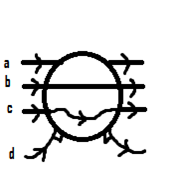
    2. What is electric field lines ? Draw the field lines for (a) A positive charge (b) A negative charge (c) An electric dipole (d) Two positive charge having equal magnitude separated by some distance, (e)  ) Two positive charge having different magnitude separated  by some distance, and (f) A plane positively charged sheet (g) A positive point charge  (+q) is kept in the vicinity of an uncharged conduction plate. Sketch the electric field lines originated from the point on to the surface of the plate. Also explain why ( I ) Field lines never intersect each other? (ii) Why field lines always comes out normally to the surface ?
    3. What do you mean by the term electric dipole and dipole moment? Is it scaler or vector quantity? Find the electric at a point the (i) axial  and  (ii) equatorial point , also find the relation between them . Also deduce an expression for the torque acting on a dipole and energy stored in the dipole when it is placed in the uniform electric field E .What will happen to the dipole when it is placed in non – uniform electric field?
    4. State and prove Gauss theorem . Using Gauss’s theorem find the magnetic field at a point due to (i) straight charged wire , (ii) plane charged sheet , show that it is independent of distance of the point from the sheet , and (iii) charged spherical shell also plot the graph between electric field and separation of point from the centre of the shell. Using Gauss’s law also derive  an expression for the electric field between two uniformly charged  parallel sheets of charge density σ and -σ respectively
    5. (i)Define electric flux  , write its SI unit . (ii)The electric field components due to a charge inside the cube of side 0.1m are shown below      Ex=αx   ,  where α =500N/C-m EY=0,EZ=0Calculate (a) The flux through the cube (b)the charge inside the cube CLICK HERE TO DOWNLOAD-Very important questions for ELECTRIC CHARGES AND FIELD 


  • LAWS OF MOTION

    LAWS OF MOTION

    LAWS OF MOTION
    LAWS OF MOTION

    Laws of motion assignment deals with the questions based on  the topic , Inertia, newton’s first ,second and third laws,momentum ,impulse,linear momentum all kind of friction , and circular motion.

     TO DOWNLOAD THE ASSIGNMENT CLICK HERE- LAWS OF MOTION (1)

  • MOTION IN A PLANE

    MOTION IN A PLANE
    MOTION IN A PLANE

    IN THIS CHAPTER BODY TRAVELS IN ONE, TWO AND THREE DIMENSIONAL DIRECTION.

    IN THIS CHAPTER BODY COVERS BOTH UNIFORM AND NON UNIFORM MOTION.

    . A particle starts form origin at t=0 with a velocity 5 m/s and moves in X Y-plane under the action of a force, which produces a constant acceleration of 3i+2j m/s2.

    (a) what is the y-coordinate of the particle at the instant its x coordinate is 84 m?

    (b) what is speed of the particle at this time?


    TO DOWNLOAD THE COMPLETE ASSIGNMENT CLICK BELOW…..

     DOWNLOAD MOTION IN A PLANE ASSIGNMENT

  • VECTOR

    VECTOR

    VECTOR
    VECTOR


    A PHYSICAL QUANTITY HAVING BOTH MAGNITUDE AND DIRECTION KNOWN AS A VECTOR QUANTITY.

    TO DOWNLOAD THE COMPLETE ASSIGNMENT OF VECTOR CLICK BELOW

      DOWNLOAD VECTOR ASSIGNMENT

  • MOTION IN ONE DIMENSION

    MOTION IN ONE DIMENSION

    When a body changes its position with respect to its surroundings in a single direction , then the motion is said to be in one dimension. read more about MOTION IN ONE DIMENSION

    MOTION IN A STRAIGHT LINE –

    • State the condition when the magnitude of velocity and speed of an object are equal.


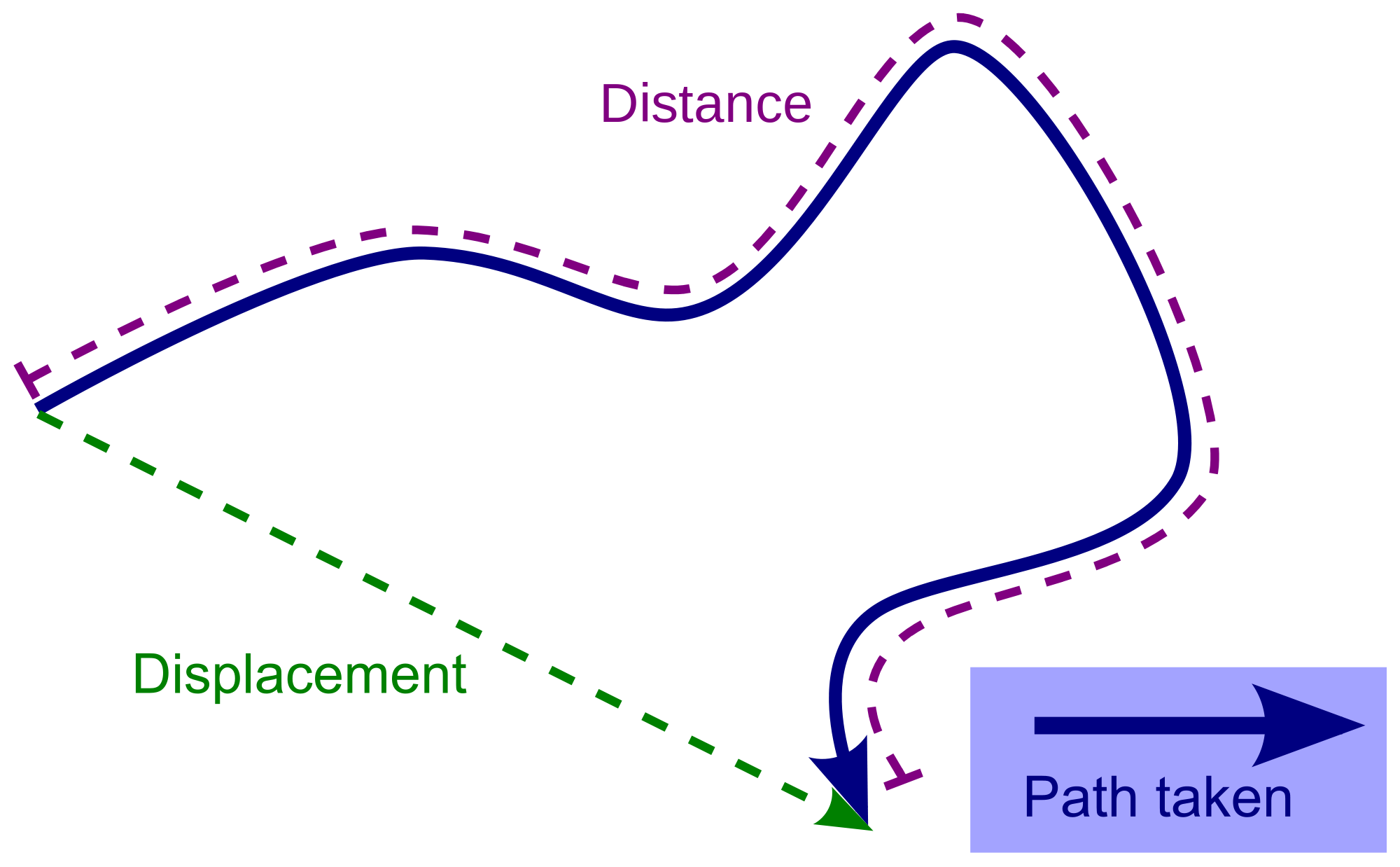
    • Under what condition will the distance and displacement of moving object have the same magnitude?


    • Which vector can be associated with a plane area? And what is its direction?


    • Can the relative velocity of two bodies be greater than the absolute velocity of either? to download complete assignment — MOTION IN ONE DIMENSION
  • UNITS AND DIMENSIONS ASSIGNMENT

    UNITS AND DIMENSIONS ASSIGNMENT

    Assignment of  UNITS AND DIMENSIONS will help the students practice the chapter well , and improve their numerical  skills in this chapter .

    Q 1. Calculate the dimensions of (i) force (f) and (it) impulse (i) in terms of velocity(v) , density (p) and frequency (v) as the fundamental units .

    Q 2. If the velocity of light c, gravitational constant G and Plank’s constant h be chosen as fundamental units, find the dimension of (i) mass, length and time in new system.

    Q 3. Find the dimensions of a/b in the equations, where P is pressure ,t- time & x distance

    P= (a-t2 ) / bx

    To download the full assignment click below…

    UNITS AND DIMENSIONS ASSIGNMENT

  • UNITS AND DIMENSIONS ASSIGNMENT 1

    UNITS AND DIMENSIONS ASSIGNMENT 1

    UNITS AND DIMENSIONS

    ASSIGNMENT
    CLASS-11
    UNITS AND MEASUREMENTS
    Very short answer type questions
    1> Find the area of circle of radius 3.458cm up to correct significant figures.

    2> Name the physical quantities whose dimensions are same.

    3> State the no. of significant fig. in the following (a)0.007 cm (b)2.64 x 1024kg (c)0.2370 cm

    4> Which of the following measurement is more accurate and why? (1)5000.0 cm(2)0.0005cm (3) 6.00cm.

    5> Are all dimensionally correct equations numerically correct? Give one example.

    6> If x=a+bt+ct2 where x is in meters and t is in second, what is the dimensional formula of ‘a’ , and ‘c’.

    7> Write the dimensions formula of (1) Planck’s constant and(2) Rydberg’s constant
    Short answer type questions
    1>The wavelength ‘λ’ depends mass M of the moving particle its velocity v and planks constant ‘h’ . Show dimensionally the relationship between them.
    2>In an experiment the refractive index of the glass was observed to be 1.45, 1.56,1.54,1.44,1.54 and 1.53 . Calculate (1) mean value of the refractive index ;(2) Absolute error ;(3)Fractional error ; (4)Percentage error . Express the result in terms of absolute error and percentage error.
    3> If (P+a/V2)  (V-b)=RT  where the symbols has their usual meanings, then what is the dimension of a/b .
    4. If F= a/ b+√d , where f=force ,d= density , then find the dimension of a and b.
    5> The factors effecting the time period (T) of the simple pendulum depends on mass , length and acceleration due to gravity . Deduce the relation for time period of the simple pendulum.
    6> To determine acceleration due to gravity ,the time of 20 oscillations of a simple pendulum of length 100 cm was observed to be 40 s . calculate the value of ‘g’ and maximum percentage error in the measured value of ‘g’ .
    7> If power P=a-x2/b where x represents displacement find the dimension of a and b.

    8> A physical quantity Qis given by Q= .        A.B3/2/C4D1/2 percentage error in A,B,C,D are 1%, 2%,4%,2% respectively . Find the percentage error in Q.
    9>The measured value of length , breadth and height of a block is given as l=12.08+-0.01 cm , b=10.12+-0.01cm . h=5.62+-0.01 cm . Calculate the percentage error in the volume of the block.
    10>(a) convert 10 J into ergs . (b) convert 10 N into dyne .
    11> A planet moves around the sun , the period of revolution ‘T’ depends upon radius of the orbit ‘R’, mass of the sun ‘M’ and gravitational constant ‘G’, show that  T2αR3                                                                                                                                                                                                  .
    12>If the length and time period of an oscillating pendulum have errors of 1% and 2% respectively , what is the error in the estimate of ‘g’.