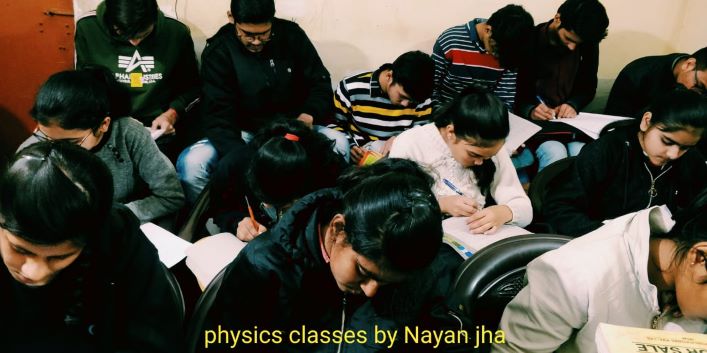
Category: Students informations

  • 4D metals sheet

    4D metals sheet

    2D Metals: The New Frontier of Atomically Thin Materials

    By Nayan Jha, Physics Teacher

    Introduction

    Imagine taking an ordinary piece of metal and reducing its thickness until it is only a few atoms thick. Sounds impossible, right?

    For a long time, scientists thought that producing a truly two-dimensional (2D) sheet of metal would be extremely difficult. Unlike materials such as graphene, metal atoms are strongly bonded to their neighbouring atoms in all directions.

    However, researchers Guangyu Zhang, Luojun Du and colleagues at the Institute of Physics of the Chinese Academy of Sciences have demonstrated a method for producing atomically thin sheets of several metals.

    This development could open a new area of research in condensed-matter physics and materials science.

    Step 1: What is a 2D material?

    A 2D material is a material whose thickness is extremely small—often just one or a few atomic layers.

    A famous example is graphene, which consists of a single layer of carbon atoms arranged in a honeycomb structure.

    Since graphene was discovered in 2004, scientists have produced and studied hundreds of other two-dimensional materials.

    Many of these materials naturally consist of layers. The atoms within each layer are strongly connected by chemical bonds, while neighbouring layers are held together by relatively weak van der Waals (vdW) interactions.

    Because these interactions are weak, scientists can sometimes separate—or “shave off”—individual layers.

    Step 2: Why are 2D metals so difficult to make?

    Metals are different.

    In a conventional metal, each atom interacts strongly with many surrounding atoms. These bonds are not restricted to a simple stack of weakly connected layers.

    Therefore, scientists could not simply peel a metal apart in the same way that graphene or some other layered materials can be exfoliated.

    This raised an important question:

    Can a metal actually exist as an atomically thin, two-dimensional sheet?

    The work of Zhang, Du and their colleagues provides an important answer: yes, under suitable conditions.

    Step 3: The researchers’ new technique

    The researchers developed a technique involving what can be described as “van der Waals squeezing.”

    The basic setup used:

    • Pure metal powder
    • Two monolayers of MoS₂ (molybdenum disulfide)
    • Sapphire substrates
    • High temperature
    • High pressure

    The MoS₂/sapphire structures acted as extremely thin van der Waals anvils around the metal.

    Step 4: Melting the metal

    First, the researchers placed the metal powder between the two MoS₂/sapphire structures.

    The system was then heated.

    As the temperature increased sufficiently, the metal powder melted and formed a tiny liquid metal droplet.

    At this stage, the material was no longer a collection of individual powder particles but a molten metal region.

    Step 5: Applying pressure

    The researchers then applied a pressure of approximately 200 MPa.

    For comparison, atmospheric pressure at Earth’s surface is about 0.1 MPa, so 200 MPa represents a very large pressure.

    The MoS₂ layers helped confine and squeeze the molten metal.

    This process is referred to as van der Waals squeezing.

    Step 6: Cooling the material

    The pressure was maintained while the opposite sides of the anvils cooled toward room temperature.

    During this process, the molten metal was confined into an extremely thin region.

    Eventually, the material solidified into an atomically thin metal sheet.

    This is remarkable because the researchers were able to create metal layers only a few angstroms thick.

    Step 7: Which metals were produced?

    The research team successfully produced five atomically thin metals:

    1. Bismuth (Bi)
    2. Tin (Sn)
    3. Lead (Pb)
    4. Indium (In)
    5. Gallium (Ga)

    The thinnest sheets were approximately 6.3 Å (angstroms) thick.

    Since

    1 Å = 10⁻¹⁰ metre,

    6.3 Å is only:

    6.3 × 10⁻¹⁰ metre

    That gives us an idea of just how extraordinarily thin these materials are.

    Step 8: Why is this discovery important?

    Creating a metal in two dimensions gives physicists a new system in which to investigate the behaviour of electrons and atoms.

    When a material becomes extremely thin, its physical properties can change significantly.

    Scientists can investigate questions such as:

    • How do electrons behave when confined to nearly two dimensions?
    • Do metals exhibit unusual electrical properties at atomic thickness?
    • How do their optical and magnetic properties change?
    • Can quantum effects become particularly important?
    • Could these materials be useful in future electronic or nanoscale devices?

    These questions make 2D metals an exciting area of fundamental physics research.

    Step 9: From graphene to 2D metals

    The discovery of graphene demonstrated that materials could behave very differently when reduced to a single atomic layer.

    The development of atomically thin metals expands this concept further.

    Instead of studying only semiconducting or insulating 2D materials, researchers can now investigate metallic systems at extreme thickness scales.

    This could help scientists understand how the properties of matter change as we move from the three-dimensional world toward the two-dimensional limit.

    A simple analogy

    Think of a thick metal sheet like a large block of clay.

    Trying to peel a metal into a single atomic layer is not like peeling the pages of a book, because the atoms inside the metal are strongly connected in many directions.

    The researchers instead used another strategy:

    Melt → Confine → Squeeze → Cool → Form an ultrathin metal sheet

    This simple sequence captures the basic idea behind the technique.

    The bigger picture

    The researchers describe their work as just the “tip of the iceberg.”

    The five metals produced in this study may be only the beginning. The technique could potentially provide scientists with opportunities to investigate other metals and unusual low-dimensional structures.

    For physics, this is particularly interesting because reducing dimensionality can reveal phenomena that are difficult to observe in bulk materials.

    Conclusion

    The production of atomically thin sheets of bismuth, tin, lead, indium and gallium represents an important development in the study of two-dimensional materials.

    The key idea is not simply making a metal thinner. It is about exploring how the fundamental properties of matter change when a material is confined to an almost two-dimensional form.

    From graphene to 2D metals, scientists are continuing to discover that when matter is reduced to the nanoscale, familiar materials can display entirely new possibilities.

    Physics teaches us that changing the dimensions of matter can change the physics itself.

    — Nayan Jha
    Physics Teacher

  • What is 4DX and How Does It Work?

    What is 4DX and How Does It Work?

    What is 4DX and How Does It Work?

    Written by: Nayan Kumar Jha (Director Of Physics Classes)

    When a Movie Is Not Just Watched, But Felt.

    In this block we will learn what is 4DX and how it works in different different mode, how it is created? How it is invented ? And working functions of all the modes. Where we can feel this experience in India? And one of the most important question , What is the role of chair in 4DX MOVIE?

    4DX  stands for 4D film presentation system that adds multi-sensory physical effects to a standard 2D or 3D movie.

    4DX (Four-Dimensional eXperience) is a 4D film presentation system developed by CJ 4DPlex, a subsidiary of South Korean theater chain .

    It allows films to go with various practical effects,

    In a conventional cinema, we mainly experience a movie through our eyes and ears. We see the images on the screen and hear the sound through the speakers.

    But imagine watching a car chase where your seat moves with the car, feeling wind during a storm scene, experiencing a gentle water effect during rain, or feeling vibrations during an action sequence.

    This is the idea behind 4DX.

    What is 4DX?

    4DX is an advanced cinematic technology developed by CJ 4DPLEX.

    It combines the movie’s visuals and audio with synchronized motion and environmental effects. In simple words, 4DX allows audiences not only to watch and hear certain scenes, but also to physically experience selected effects from those scenes.

    What Effects Are Used in 4DX?

    Depending on the movie and scene, a 4DX auditorium can provide effects such as:

    * Motion: Seats can move in different directions.

    * Vibration: Vibrations can accompany explosions, vehicles and action sequences.

    * Wind: Air effects can simulate wind or storms.

    * Water/Rain: Water or mist effects can accompany rain and water scenes.

    * Fog: Fog effects can create atmospheric environments.

    * Lightning/Light effects: Synchronized flashes can simulate lightning.

    * Scent: Some presentations use fragrances as part of the experience.

    * Snow and bubbles: Certain productions may also use these effects.

    CJ 4DPLEX says its 4DX format can incorporate more than 21 motion and environmental effects.

    How Does 4DX Work?

    This is where the science becomes particularly interesting.

    Suppose a movie shows a car moving rapidly along a road.

    In a normal cinema, you see the car and hear its engine and surrounding sounds.

    In a 4DX presentation, the movie is specially programmed so that physical effects can be synchronized with particular moments in the scene.

    When the car turns, the seat may move. When the vehicle travels over rough terrain, vibrations may be introduced. During a windy scene, air effects can be activated.

    The basic process can be represented as:

    Movie Scene → Timing/Control Data → Theatre Control System → Motion & Environmental Effects

    The synchronization between these systems creates the feeling of being physically closer to the action.

    CJ 4DPLEX explains that immersive formats require scene-by-scene preparation, including timing and continuity adjustments.

    Is 4DX Based on Physics?

    Yes. Several areas of physics and engineering are involved.

    Motion seats use controlled mechanical systems to create movement. Air systems produce wind effects. Water systems create water or mist effects, while lighting systems can produce synchronized flashes.

    In simple terms, 4DX combines:

    Computer-controlled mechanical + pneumatic + electrical + environmental systems

    to create a synchronized cinematic experience.

    The most important element is timing and synchronization.

    If a car crashes on the screen but the seat moves several seconds later, the illusion would be lost. Therefore, the physical effects need to be carefully coordinated with the movie.

    Is 4DX Used Only for Movies?

    4DX was primarily developed for cinematic experiences, but immersive technology can also be applied to other forms of entertainment.

    CJ 4DPLEX has described applications involving live and pre-recorded content, gaming events and concerts in addition to films.

    This suggests that multisensory entertainment can have applications beyond conventional movie screenings.

    Is 4DX Available in India?

    Yes. 4DX is available in India.

    4DX auditoriums have been introduced in Indian multiplexes, particularly through PVR INOX.

    For example, PVR Cinemagic at Ambience Mall, Gurugram include

    How 4DX Works

    • Motion Seats: Chairs move, vibrate, pitch, roll, and twist in sync with the action on the screen.
    • Environmental Effects: The theater uses built-in equipment to simulate real-world elements like wind, rain, fog, snow, bubbles, lightning, and various scents.
    • Control: Most armrests feature a button to toggle water effects on or off, though other environmental features cannot be adjusted manually.

    Key Features

    • Immersion: It turns passive movie-watching into an interactive ride similar to a theme park attraction.
    • Format: Movies shown in 4DX can be in either 2D or 3D; if the film is in 3D, specialized glasses are still required for the visual depth.
    • Suitability: It is popular for action, horror, and adventure films, but it is generally not recommended for individuals with severe back problems, heart conditions, or sensitivity to sudden movements and strobe lights.
    •  https://www.youtube.com/watch?v=O6HzEOnJ_zw&t=131s
    • The scientific and engineering process behind 4DX relies on precise synchronization, mechanical physics, and automated fluid dynamics. The entire experience is driven by an underlying data track that coordinates three core pillars of technology

    Role of chairs in the 4dx theater

    The 4DX motion chair is not just a seat; it is a complex piece of robotic and mechanical engineering. Its primary function is to transform visual kinetic energy from the screen into physical kinetic energy that you can feel.

    The properties and internal technologies loaded into a 4DX chair can be broken down into two main categories: Kinematic Motion (How it moves) and Tactile/Atmospheric Effects (What it simulates).


    1. Kinematic Motion Properties (The 3 DoF System)

    The base of every 4DX chair block (usually configured in connected rows of 4 seats) is loaded with heavy-duty servomotors or hydraulic actuators. These allow the chair to move across Three Degrees of Freedom (3DoF) to match camera angles and vehicle movements:

    • Pitch (Tilt Forward/Backward): The chair pitches forward during braking, diving, or leaning over a ledge, and pitches backward during rapid acceleration or rocket liftoffs.
    • Roll (Tilt Left/Right): The chair leans sideways to replicate sharp turns, drifting cars, or a fighter jet banking through the air.
    • Heave (Move Up/Down): The entire unit lifts up or drops down vertically to simulate falling, jumping, driving over bumps, or the weightlessness of a roller coaster drop.

    2. Tactile and Sensory Properties Built Into the Chair

    Aside from moving through space, the chassis of the chair itself is densely loaded with localized sensory hardware:

    • Shakers / Transducers (Vibration): Built into the backrest and the bottom cushion. Unlike standard gaming controllers, these use sub-sonic audio frequencies to create subtle textures—like the purr of a sports car engine, a low rumble of thunder, or the heavy thud of an explosion.
    • Back Ticklers & Back Heavers: Mechanical pins or plates hidden inside the back cushion. They suddenly poke or thump your back to simulate a punch, a bullet impact, or something sneaking up behind you.
    • Leg Ticklers: Flexible rubber or plastic cords located underneath the seat. A mechanical motor whips them against your calves to simulate insects crawling, rats running, or water splashing past your legs.
    • Face Air Jets & Water Nozzles: Mounted on the rear of the headrest directly in front of you. They shoot targeted bursts of compressed air or a fine mist of water straight at your face to mimic wind, gunshots, or splashing waves. (The water can be turned off via a physical button on your armrest).
    • Neck Air Jets: Built into the sides of your own headrest. They shoot a sudden, chilly blast of air right past your neck and ears to create jump scares or the feeling of a ghost passing by.
    • Scent Dispensers: Small chemical diffusion cartridges inside the front-facing seatback that vaporize specific scent oils (e.g., burning rubber, gunpowder, coffee, or fresh grass) directly into your breathing zone when triggered by the movie’s timeline.

    Click here to know how students should use AI?-

  • Why online study is dangerous for students?

    Why online study is dangerous for students?

    Why Online Study Can Be Dangerous for Students? Risks, Distractions and the Right Way to Learn.

    Online education has made learning easier than ever before. But is studying online always beneficial for students?

    Today, students can attend online classes, watch educational videos, use AI tools, download notes, solve questions, and access thousands of educational resources from a single smartphone.

    However, excessive and unplanned online study can create serious challenges for students. The problem is not online education itself; the real problem is excessive screen time, distraction, passive learning, unreliable information, and dependence on technology.

    How to use artificial intelligence click here to know

    What Makes Online Study Dangerous for Students?

    1. Excessive Screen Time

    Students can spend several hours every day looking at mobile phones, tablets, or computers.

    Although some of this time may be educational, excessive screen exposure can reduce physical activity and may contribute to eye strain, headaches, poor posture, and difficulty maintaining a healthy routine.

    Students should take regular breaks and balance online learning with offline study.

    1. Online Distractions

    A smartphone is both a learning device and an entertainment device.

    A student may open YouTube to watch a physics lecture and soon become distracted by unrelated videos, games, social media, or notifications.

    This creates a major challenge:

    The device that helps students study can also become the biggest distraction.

    1. Too Many Educational Resources

    The internet provides an enormous amount of study material.

    Students may watch lectures from several teachers, download multiple PDFs, use different websites, and follow numerous study plans.

    Instead of improving preparation, this can create confusion.

    A student does not need ten explanations of every chapter. They need one clear explanation followed by consistent practice.

    1. Passive Learning

    Watching an educational video is not the same as understanding a subject.

    For example, a student may watch an entire physics lecture on electromagnetic induction and feel that the chapter is easy. But when they attempt numerical problems without the video, they may struggle.

    This happens because watching is passive, while problem-solving is active learning.

    A better approach is:

    Watch → Understand → Write → Solve → Test → Revise

    1. Dependence on AI

    AI tools are becoming increasingly popular among students.

    They can explain difficult concepts, generate examples, provide practice questions, and help students understand mistakes.

    But students should not use AI simply to obtain answers.

    If a student asks AI to solve every problem without attempting it independently, their problem-solving ability may not develop properly.

    The best use of AI is to support thinking rather than replace thinking.

    1. Unreliable Information

    Not everything available online is accurate.

    Students may encounter incorrect explanations, outdated information, misleading shortcuts, or content created without proper academic knowledge.

    Therefore, students should verify important information using reliable textbooks, qualified teachers, official educational resources, and trusted sources.

    1. Reduced Physical Activity

    Online classes can make studying more convenient, but students may spend long periods sitting in front of a screen.

    Education should not mean sitting continuously for many hours.

    Students should include physical activity, outdoor time, adequate breaks, and other offline activities in their daily routine.

    1. Sleep and Study Routine

    Many students use mobile phones late at night for online classes, videos, social media, or revision.

    A disturbed sleep routine can make it harder to concentrate and remember information effectively.

    A good study plan should therefore include adequate sleep and regular breaks, rather than simply increasing screen time.

    Online Study vs Offline Study

    Neither online nor offline education needs to completely replace the other.

    Online learning is useful for:

    • Understanding difficult concepts
    • Revising chapters
    • Watching demonstrations
    • Accessing additional resources
    • Practising questions
    • Learning at one’s own pace

    Offline learning is particularly valuable for:

    • Writing practice
    • Solving numerical problems
    • Reading textbooks
    • Classroom interaction
    • Discussion with teachers
    • Developing concentration without digital distractions

    The most effective approach for many students can be a balanced combination of online and offline learning.

    How Should Students Use Online Education?

    Students can follow some simple rules:

    1. Have a fixed study schedule.
      Do not study randomly whenever you pick up your phone.
    2. Turn off unnecessary notifications.
      This reduces interruptions.
    3. Take regular breaks.
      Do not continuously stare at a screen for hours.
    4. Make handwritten or offline notes.
      Writing helps students actively process what they learn.
    5. Solve questions without looking at the solution.
      This is particularly important for subjects such as Physics and Mathematics.
    6. Use fewer but better resources.
      Choose reliable teachers and study material instead of continuously switching between sources.
    7. Use AI intelligently.
      Ask AI to explain a concept or identify your mistake rather than simply copying an answer.

    The Most Important Question

    Students should not measure their preparation by the number of hours they spend online.

    Instead of asking:

    “How many hours did I study today?”

    ask:

    “What did I learn today, and can I solve questions without help?”

    This simple change in thinking can make online education much more effective.

    Final Thoughts

    Online education is a powerful tool. It can make quality educational content accessible to millions of students.

    But technology should remain a tool for education, not become a substitute for thinking, teachers, textbooks, practice, sleep, physical activity, and real-world experiences.

    For students, the goal should not be to spend more time online.

    The goal should be to learn better, think independently, practise regularly, and use technology wisely.

    A Message for Students

    Use YouTube for learning, not endless scrolling.
    Use AI for understanding, not copying.
    Use online classes for guidance, not as a replacement for practice.
    And remember: watching a lecture is only the beginning of learning.

    — Physics by Nayan Jha

  • Uses of artificial intelligence for students

    Uses of artificial intelligence for students

    When students should use AI and when shouldn’t

    What is artificial intelligence? to know the answer click here-

    Using AI in your studies is a double-edged sword. Recent research—including findings from the global OECD PISA reports—shows that students who rely on AI to generate answers or bypass reading often perform worse on exams, while those who use it strategically to test themselves gain a significant edge.

    To get the most out of AI without dulling your own critical thinking, here is when you should and shouldn’t use it.

    Nayan Jha Sir’s perspective aligns closely with core pedagogical principles, especially for conceptual subjects like Physics. His advice highlights the essential distinction between verification/quick utility and deep, foundational learning.

    1. Where AI Works Well (As a Quick Reference & Verification Tool)

    • Checking Correctness & Confirming Answers: Once you have solved a numerical problem on your own, using AI to check whether your final answer or calculation steps match is an efficient use of technology.
    • Quick Definitions & Short Topics: For fast factual queries (e.g., “What is the standard value of Permittivity of Free Space?” or “Define Lenz’s Law in two lines”), AI acts like a smart dictionary saving you time.
    • Saving Time on Minor Clarifications: When you are stuck on a minor unit conversion, a specific formula variable, or a quick definition, AI prevents you from breaking your workflow to search through textbooks.

    2. Why AI Fails as a “Full-Time Teacher” for Deep Physics Concepts

    • Formula Derivations Require Step-by-Step Logic: Physics derivations are not about memorizing lines; they are built on fundamental laws (like Gauss’s Law, Conservation of Energy, or Newton’s Laws). Seeing an AI output a derivation instantly deprives your brain of following the step-by-step physical logic.
    • Lack of Intuition: Physics requires spatial and physical intuition (understanding vectors, field lines, motion under gravity, etc.). An AI can display equations, but a human teacher or active problem-solving builds the mental model of why a force acts in a certain direction.
    • Practice-Based Skills Need Muscle Memory: Mastering Physics—especially for exams like CBSE Boards, JEE, or NEET—comes from struggling through multi-step numericals yourself. AI provides answers instantly, creating a false sense of understanding (“illusion of competence”) that crumbles during an actual exam.

    The Practical Rule

    Treat AI as a sanity check after you have put in the work. Use it for quick fact-checking and answer verification, but rely on teacher-led instruction, textbooks, and personal problem-solving when tackling new concepts, derivations, and practice numericals.

    When to Use AI (As a Tutor or Assistant)

    Use AI when it acts as an active learning accelerator—a tool that pushes you to think harder, test yourself, or organize your workload.

    • Generating Active Recall Quizzes: Paste your own study notes into AI and ask it to write a 10-question multiple-choice practice quiz or flashcards to test your retention.
    • Breaking Down Complex Concepts (Feynman Technique): Ask AI to explain a tough topic using an analogy. For example: “Explain quantum superposition like I’m 12 years old.”
    • Structuring Study Plans & Time Management: Use AI to draft realistic daily revision schedules, break large projects into smaller tasks, or format messy study notes into clean tables.
    • Feedback and Editing Assistant: Draft an essay or response on your own first, then ask AI to critique your argument, check for grammar, or point out logical gaps.
    • Socratic Problem Solving: Tell the AI: “Do not give me the answer. Ask me step-by-step questions to help me solve this math problem myself.”

    When NOT to Use AI (As a Shortcut or Substitute)

    Avoid AI when it replaces the mental effort required to build brain connections. If the tool does the thinking, you won’t retain the knowledge when exam day arrives.

    • First-Pass Reading & Summarization: Don’t rely on AI to summarize a textbook chapter or research paper before you’ve read it. The act of reading and picking out core ideas yourself is where retention happens.
    • Drafting Assignments or Homework Responses: Writing is how you structure your thoughts. Having AI generate full paragraphs or complete assignments bypasses the primary goal of learning.
    • Fact-Checking Without Verification: AI chatbots can hallucinate incorrect facts, citations, or formulas. Never use AI as a primary source for historical data, citations, or precise calculations without double-checking against trusted textbooks.
    • Solving Math/Physics Problems directly: Copy-pasting a problem to instantly get the final step-by-step solution creates a false sense of mastery. You need to struggle through the steps yourself to build problem-solving stamina.

    The Golden Rule: Use AI to test your understanding, clarify sticking points, and organize your time—never to replace the physical act of reading, writing, and problem-solving.

  • How to score better marks in physics class 12 physics

    How to score better marks in physics class 12 physics

    How to score better marks in physics class 12 physics

    To download latest physics sample paper click here-

    CBSE Class 12 Physics Board Exam: Smart Strategy to Score Better Marks in physics.

    In this blog Physics by Nayan Jha going to tell you, about the smart strategy to score better in  physics class 12th board examination.

    Class 12th Physics Board Examination is not only about studying for long hours; it is about studying with the right strategy, proper revision and consistent practice. Many students understand the concepts but lose marks because of incomplete preparation, calculation mistakes, poor time management and lack of practice in objective-type questions.

    With the right approach, Physics can become one of the scoring subjects in the CBSE Board Examination.

    1. Make a Realistic Study Schedule

    Students should focus on quality study hours rather than simply counting the number of hours.Try to study Physics for around 2–3 focused hours every day, depending on your overall timetable and preparation level.A simple daily routine can be:

    – 45–60 minutes: Concept revision

    – 45–60 minutes: Numerical and derivations

    – 30–45 minutes: Objective questions

    – 15–20 minutes: Quick revision of formulas

    Consistency is more important than studying for 8–10 hours on one day and then taking a long break.

    2. Give Special Attention to Objective Questions

    To download the important objective class12th click here-

    The pattern of board examinations has increasingly placed importance on conceptual and application-based questions. Therefore, students should not prepare Physics only by solving long-answer questions.

    Practice regularly:

    – MCQs

    – Assertion-Reason questions

    – Case Study-based questions

    – Competency-based questions

    – Numerical-based MCQs

    – Statement-based questions

    Physics by Nayan Jha Suggestion:

    Don’t wait until the last few days to start objective preparation. Solve a small set of objective questions every day.

    3. Understand the Concept Before Memorising the Formula

    Physics is not a subject where memorising formulas alone is enough.

    Before using a formula, understand:

    What does the formula represent?

    When can it be used?

    What are the units of each quantity?

    What happens when one variable changes?

    This approach is particularly useful for MCQs, Assertion-Reason and application-based questions.

    4. Make a Chapter-wise Formula Sheet

    Prepare a separate formula sheet for every chapter.

    For example, revise:

    – Important formulas

    – SI units

    – Dimensions

    – Graphs

    – Important laws

    – Important definitions

    – Special cases

    – Frequently used relations

    Revise these sheets regularly instead of opening the entire textbook every time.

    5. Don’t Ignore NCERT

    For CBSE Board preparation, NCERT should remain one of the most important resources.

    Students should thoroughly study:

    – NCERT theory

    – Important definitions

    – Diagrams

    – Examples

    – Derivations

    – Numerical problems

    – Tables and graphs

    After completing NCERT, move towards sample papers and additional practice questions.

    6. Practice Numericals Every Day

    Many students understand the theory but lose marks in numerical questions because they do not practice enough.

    While solving a numerical, follow this sequence:

    Given → Formula → Substitution → Calculation → Final Answer with Unit

    Also pay attention to:

    – Sign conventions

    – SI units

    – Powers of 10

    – Significant figures where applicable

    – Direction of vectors

    Regular numerical practice improves both speed and accuracy.

    7. Prepare Important Derivations

    Do not leave derivations for the last week.

    Prepare the important derivations chapter-wise and practise writing them without looking at the book.

    While writing a derivation:

    1. Start with the relevant law or principle.

    2. Write the required equation.

    3. Show the mathematical steps clearly.

    4. Draw the diagram wherever required.

    5. Highlight the final result.

    A neat and logically arranged answer makes your solution easier to evaluate.

    8. Solve Sample Papers and Previous Questions

    Once you have completed the syllabus, start solving full-length papers under examination conditions.

    Try to complete the paper within the prescribed time.

    After every paper, analyze :

    – Which questions were wrong?

    – Which concepts were weak?

    – Where did you lose time?

    – Were there calculation mistakes?

    – Did you leave any question incomplete?

  • Physics class12th sample paper  2026-2027

    Physics class12th sample paper 2026-2027

    The newly launched CBSE Sample Question Papers (SQPs) for the 2026–27 academic session (meant for the 2027 Class 12 board exams) carry a few specific characteristics and properties aimed at guiding your exam preparation:

    1. No Change in the Assessment Pattern, A major property of this year’s sample papers is structural stability. Every official document carries a clear line stating that there is no change in the Question Paper Design and Assessment Pattern compared to the previous academic session. The passing criteria also remain identical, requiring students to score at least 33% to pass a subject.

    2. High Weightage on Competency-Based Questions . The core testing property follows the modern CBSE framework, heavily prioritizing concept-oriented, analytical, and intelligence-based competency questions. Instead of encouraging rote memorization , these papers evaluate how well you can apply textbook formulas and concepts to real-world or case-based scenarios.

    3. Blueprint to the Real Exam Structure The sample papers act as an exact mirror for how your final boards will be formatted. For instance: Science stream papers (like Physics or Chemistry) typically feature 33 compulsory questions spread across five distinct sections for a maximum of 70 marks. Mathematics papers feature 38 questions for 80 marks, incorporating a heavy chunk of standard MCQs, Assertion-Reason pairings, and case-study sections.

    4. Direct Pairing with Official Marking Schemes (MS)Every single sample paper released on the CBSE Academic Website has a corresponding Marking Scheme (MS) document. This acts as a step-by-step evaluation guide, explicitly demonstrating how answers must be framed and structured to score full marks in the actual exam. If you are preparing for a specific class or stream, let me know: Are you looking for  Class 12 sample papers?

    To download the pdf of physics sample paper class 12th 2026-27 click here-

    To download the solution of the sample paper class-12th with marking scheme click here-

  • Objective class 12th Book part-1

    Introduction to Objective Physics for Class 12
    “Objective Physics” by Nayan Jha meets the demand for objective questions in Class 12 Physics exams.
    Key Features of This Book:
    Comprehensive Question Types:
    Multiple Choice Questions (MCQs) with answers,
    Assertion–Reason Questions with answers,
    Case Study Based Questions with answers,

    Focus on Conceptual Understanding: Each question enhances students’ conceptual understanding of Physics.
    Problem-Solving Skill Development: The book strengthens students’ ability to solve various Physics problems.
    Detailed Solutions:
    Every question includes a detailed solution.
    Solutions explain the correct answer and underlying Physics principles.
    Target Audience and Benefits:
    This book is for:
    Class 12th Board Examination Preparation: It offers effective preparation for board exams.
    NEET and JEE Aspirants: Concept-based questions benefit students preparing for NEET and JEE.
    How This Book Helps Students:
    Chapter-wise Practice: Chapter-organized questions allow students to assess preparation and identify improvement areas.
    Beyond Memorization: The aim is to foster deeper understanding, helping students understand concepts, learn applications, and build confidence in solving objective questions.
    Author’s Philosophy:
    “Concepts + Practice = Success — Your Success is My Mission.”
    — Nayan Jha
    Physics by Nayan Jha

    To download the complete book (pdf) click here-

  • What is String theory?

    What is String theory?

    What is string theory? Simple explanation of string theory in physics

    Now these days as the need of science increasing , the students are excited to know about the  universe, , related to the atomic and sub atomic particles. String theory is one of them .

    Now in this block we will discuss about the one of the most excited and fundamental concept of physics, known as the string theory.

    String theory is a theory in modern physics that tries to explain what the smallest building blocks of the universe really are.

    Questions may be asked on the basis of string theory which are –

    (i) How does a string produces particles?

    (ii)What are the purpose of string theory?

    (iii) Why extra dimensions involved ?

    (iv) Is the string theory proven ?

    String theory is a proposed framework in physics that tries to explain the fundamental particles and forces of nature—including gravity—within one mathematical theory.

    The central idea is surprisingly simple: instead of treating fundamental particles as infinitely small points, string theory proposes that they are tiny, one-dimensional vibrating strings.

    Normally we think of particles such as electron ,quarks as point like particles. But according to string theory ,at most fundamental level these particle may actually be made of extremely small , one dimensional objects called ‘string’.

    Different ways a string vibrates would appear to us as different particles. You can think of it somewhat like a guitar string: one string can produce different notes depending on how it vibrates. In string theory, one vibration might behave like an electron, another like a photon, and another like a different particle.

    One reason physicists are interested in string theory is that it naturally produces a particle with the properties expected of the graviton, the hypothetical quantum particle associated with gravity. This makes string theory a candidate for reconciling quantum mechanics with general relativity, two extremely successful theories that are difficult to combine under extreme conditions such as the interiors of black holes or the very early universe.

    There are some unusual consequences. Most versions require more dimensions than the four we experience (three dimensions of space plus time). Superstring theories generally require 10 space time dimensions, with the additional dimensions thought to be curled up at extremely small scales. A broader framework called M-theory involves 11 dimensions and also includes higher-dimensional objects called branes.

    The major problem is that string theory has not been experimentally confirmed. The characteristic scales involved are thought to be far beyond what current particle accelerators can directly probe, and the theory allows many possible ways for the extra dimensions to be arranged. Consequently, string theory remains an active but speculative area of theoretical physics rather than an experimentally established description of nature.

    In one sentence: string theory proposes that everything—from electrons to the particles associated with forces—ultimately arises from different vibrations of extraordinarily tiny strings.

  • Similarities Between the Rigveda and Science

    Before reading this blog, I would like to inform you all that the views expressed here are based on my own understanding and knowledge. Your perspective may differ from mine.

    (Nayan Kumar Jha)

    The Rigveda contains certain material that can be viewed in the context of the history of modern science. However, an important point should be kept in mind: it would not be correct to describe the Rigveda as a textbook of Physics, Chemistry, or Biology in the modern sense. According to scholars, it contains observations of nature and numerical and astronomical references, along with primarily religious, poetic, and philosophical ideas.

    1. The Origin of the Universe — The Nasadiya Sukta

    One of the most fascinating examples is Rigveda 10.129, commonly known as the Nasadiya Sukta. It raises profound questions about the origin of creation.

    The opening conveys the idea:

    «“Then, there was neither existence nor non-existence…”»

    The hymn asks whether there was the sky, the atmosphere, or anything else at that time. Towards the end, it raises a profound question about how creation actually came into existence—and whether anyone can truly know the answer.

    This is interesting in relation to modern cosmology because both approach the origin of the universe as a fundamental question. However, it would not be scientifically correct to describe the Nasadiya Sukta as a direct description of the Big Bang Theory.

    The modern Big Bang model is based on mathematical models, astronomical observations, and physical evidence, whereas the Nasadiya Sukta presents a philosophical exploration of the origin of existence.

    2. Astronomy

    The Rigveda contains numerous references to the Sun, dawn (Ushas), stars, and celestial phenomena. According to an official Government of India portal related to Sanskrit, the Rigveda holds an important place among the early references to astronomical thought in India.

    However, an important distinction should be made here:

    Observation of the sky → Beginning of scientific curiosity

    Modern astronomy → Mathematics + Measurement + Observation + Testing

    Therefore, the two should not be considered exactly the same.

    3. Mathematics and Numbers

    The Rigveda contains numerous numerical expressions. According to historian Takao Hayashi, it would not be appropriate to derive fully developed mathematical theories from the Rigveda. However, it does contain scattered references related to whole numbers, fractions, and simple geometric forms.

    These references are interesting from the perspective of the history of mathematics, although they should not be interpreted as equivalent to modern mathematical theory.

    4. The Most Important Aspect — The Spirit of Scientific Thinking

    In my opinion, the most interesting aspect of the Rigveda from the perspective of science is not merely any particular “scientific fact,” but the willingness to ask questions.

    In the Nasadiya Sukta, the poet openly asks who truly knows the origin of creation. It reflects a form of epistemic humility—the ability to acknowledge what we do not know.

    This attitude is particularly interesting from the perspective of scientific thinking because science itself progresses by asking questions, examining evidence, testing ideas, and accepting uncertainty where evidence is insufficient.

    Conclusion

    Therefore, saying that modern scientific theories are directly written in the Rigveda would be an exaggeration.

    However, the Rigveda certainly contains serious observations and questions concerning the universe, nature, sky, time, numbers, and existence. This makes it an important subject for studying the history of human thought and the development of scientific curiosity.

    The Rigveda may not be a modern science textbook, but it demonstrates that human beings have been asking profound questions about the universe and existence for thousands of years.

    — Physics Classes by Nayan Jha 

  • AI or Artificial intelligence

    In this blog we will know what is AI or artificial intelligence ?

    AI or artificial intelligence ,

    It refers to the simulation of human intelligence in machines. These machines are programmed to think , learn , Do  analysis  and take decisions as a man does .

    AI can used in the following forms-

    1. Machine learning (ML) ; In this form machine learn from data given to it and improve it with time without clearly  programmed .

    2.Natural Language Processing (NLP): Enables machines to understand and respond to human language.

    3.Computer Vision: Allows machines to interpret and analyze visual information from the world.

    3. Robotics: Combines AI with physical machines to perform tasks in the real world.

    In short, AI helps machines do tasks that normally require human intelligence, such as recognizing speech, playing games, recommending products, or even driving cars.

    Bottom of Form