According to this law every action has equal and opposite reaction.
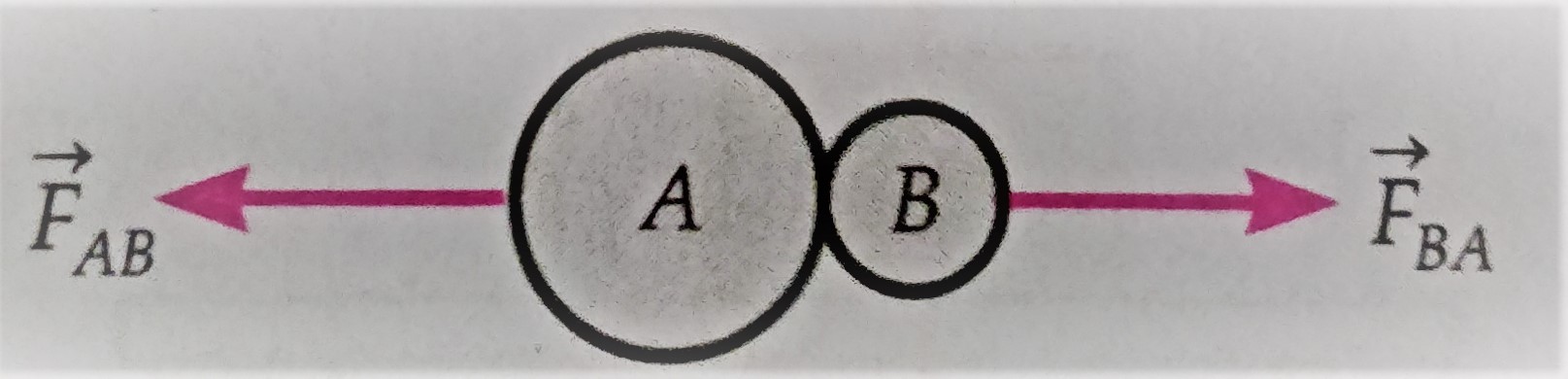
Forces in nature always occur between pairs of bodies. Let two objects A and B colliding as shown in figure.
FAB force on A due to B ,and FBA force on B due to A .
Then according to Newton’s third law of motion FAB = -FBA .
For example- When a man walk on the ground then man push the road backward and road push the man in forward direction. This example shows , single force never exist and force always exist in pair.
Important point of Newton’s third law we must know –
(i) Action and reaction always acts on different bodies.
(ii) No action occur without reaction.
(iii) Action and reaction can’t cancel each other.
(iv) action and reaction may be mechanical, gravitational, electrical or of any other nature.
Some important illustration of Newton’s third law of motion.-
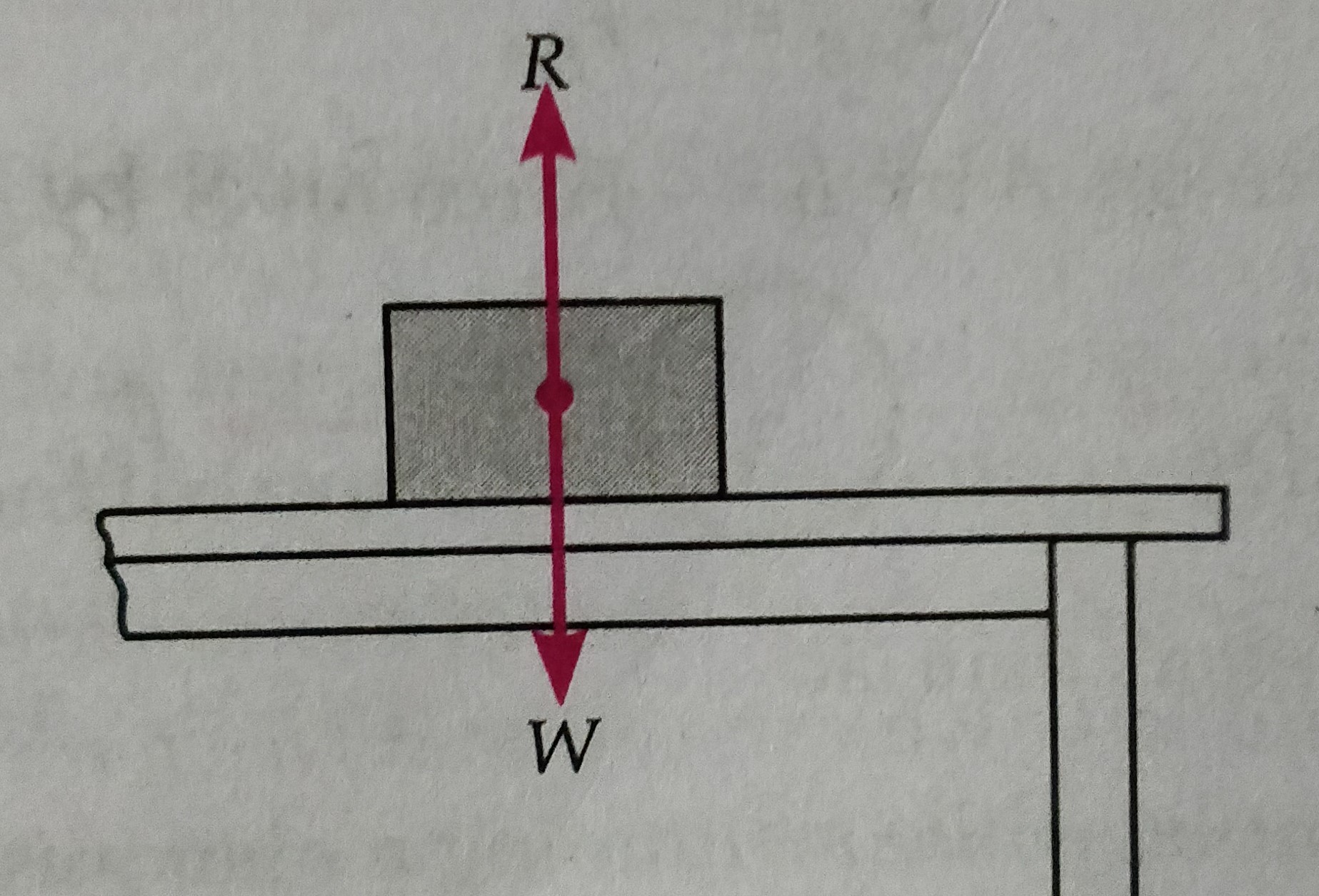
Object kept on the table – suppose an object of mass ‘m’ placed on the table , then the weight ‘W’ applying a force equal ti its weight W = mg, on the surface of table , and table applying a reaction R on the book , In this condition W = -R.
2. Walking of a man on the ground –
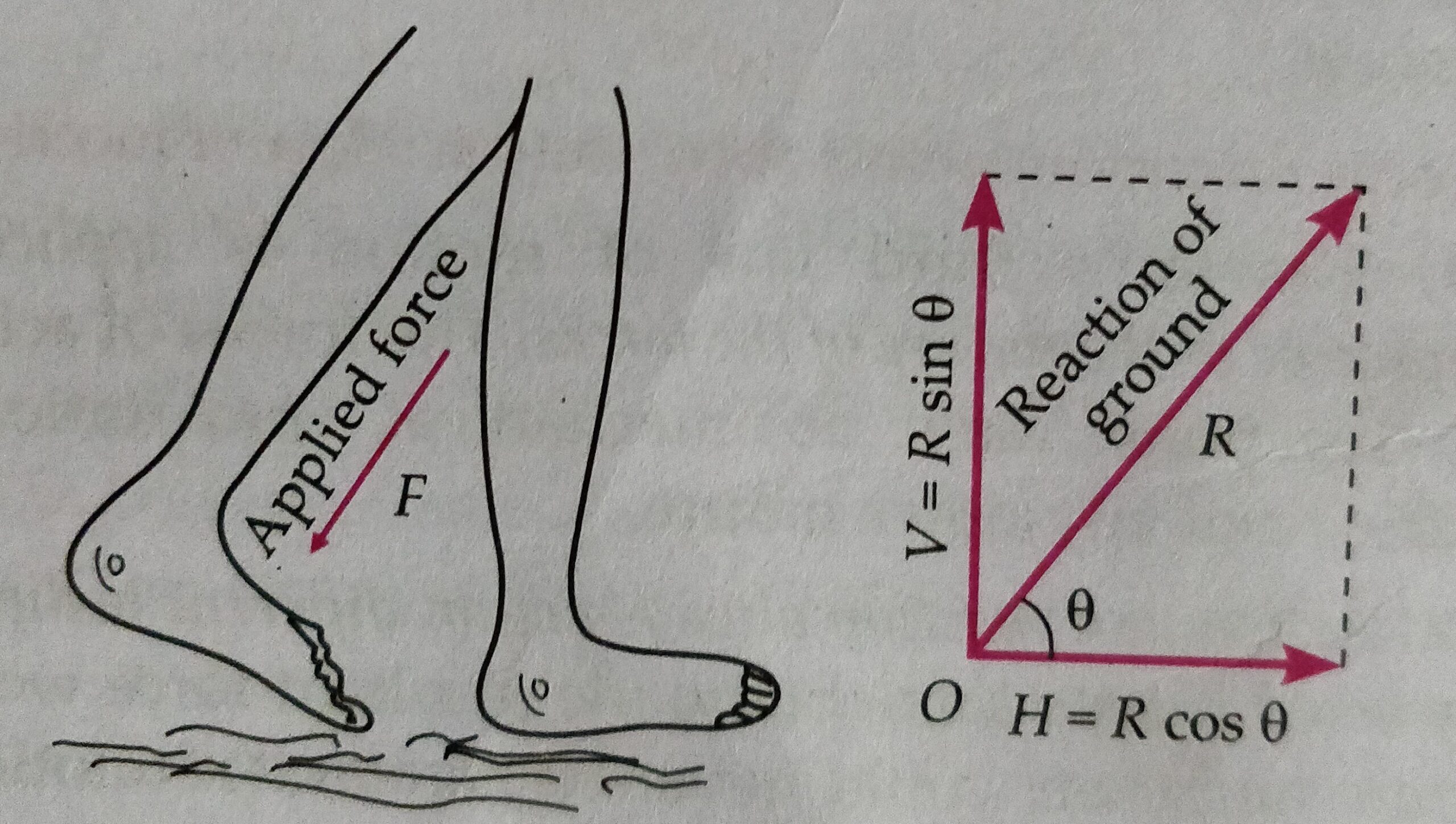
While walking we press the ground F ( action ) with our feet in the slightly backward direction and ground exert an equal reaction R , as shown in figure . then R has two component H = R cosϴ in horizontal direction and V= R sinϴ in vertical direction . V balance the weight of the man and H makes the man to move in forward direction .
It is difficult to walk on the slippery ground or sand- It is because we are unable to push such a ground sufficiently hard . As a result force of reaction is not sufficient to help a person move in forward direction.
While swimming , a person pushes water with his hand in the backward direction and water in turns reacts and pushes the swimmer in forward direction.
In this topic Newton’s second law of motion and Impulse , we will explain Newton’s second law of motion , expression for force, Impulse and application of concept of impulse . The reasoning questions of this topic and numericals ( specially based on Impulse) is very important for class examination and also for other competitive examination like JEE/NEET .
As we know from Newton’s first law of motion ‘every body remain in its position of rest or of uniform motion in a straight line , till no external force acts on it’ . Just think what will happen when external force acts on the body . This effect of acting a force on the body is described by Newton’s second law of motion .
To watch the video on Newton’s second law – click on the link given below-
Newtons second law of motion ( Force law)-
Newton’s second law of motion states that , when an external force applied on a body , then rate in change in momentum is directly proportional to the applied force , and change takes place in the direction of applied force . this law is also known as the law of force.
We have to take care of its two parts (i) rate of change of momentum is directly proportional to the applied force and , (ii) change in momentum occurs in the direction of applied force .
Expression of force from newtons second law of motion –
Let a body of mass ‘m’ moving with velocity ‘v’ .
Then , its linear momentum will be p = mv ;
As newton’s second law states force F α dp/dt ; or F= k dp/dt ……………..(i)
But here , p=mv .
So putting this value of p in equation (i) we get
F=k d(mv)/dt =k m (dv/dt) = k ma; [where dv/dt=a( acceleration) ],
To know the impulse we must know . What is impulsive force?
Impulsive force – It a large force acts on a body for short time which is the cause of change in momentum . example- Blow a hammer on a nail, force exerted by a bat when it hits a ball, etc.
Impulse – When a large force acts on a body for short time which is the cause of change in momentum, then the product of force and time for which it acts on the body is called impulse or Impulse of force which is equal to the change in linear momentum of the body.
So we can write impulse I = Fav. x t = Pf – Pi = Δp
Proof– From Newton’s second law we know ;
Force F = dp /dt ;
But momentum P = mv ( m- mass of the body and v is its velocity);
So we can write F dt = dp ;
Integrating both sides with appropriate limits we get ,
∫ Fdt =∫dp = p2-p1
Or , Fav.t = p2-p1 = I
So we can say if the force varying with time ( or force is the function of time ) then we can write
Impulse I = ∫F dt .
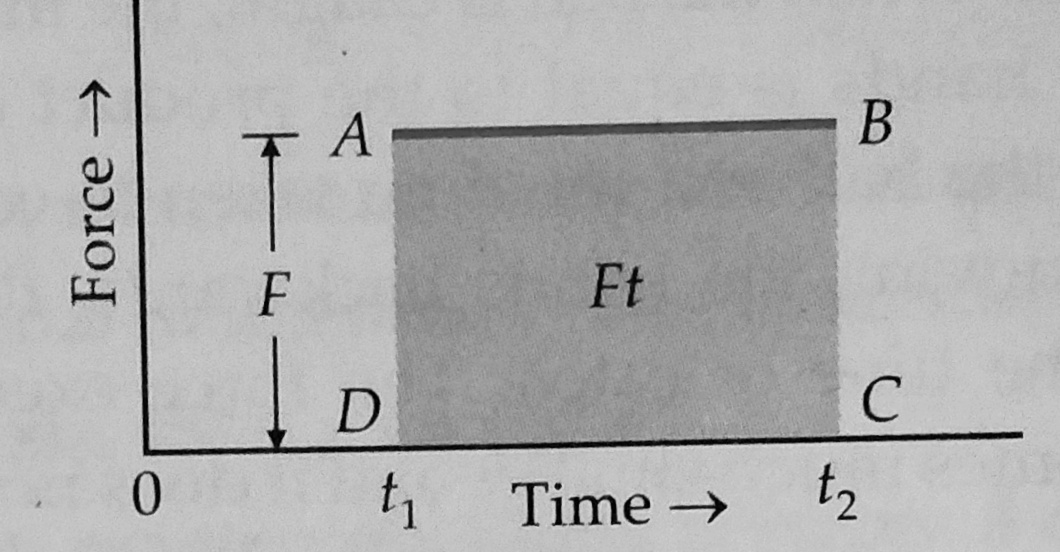
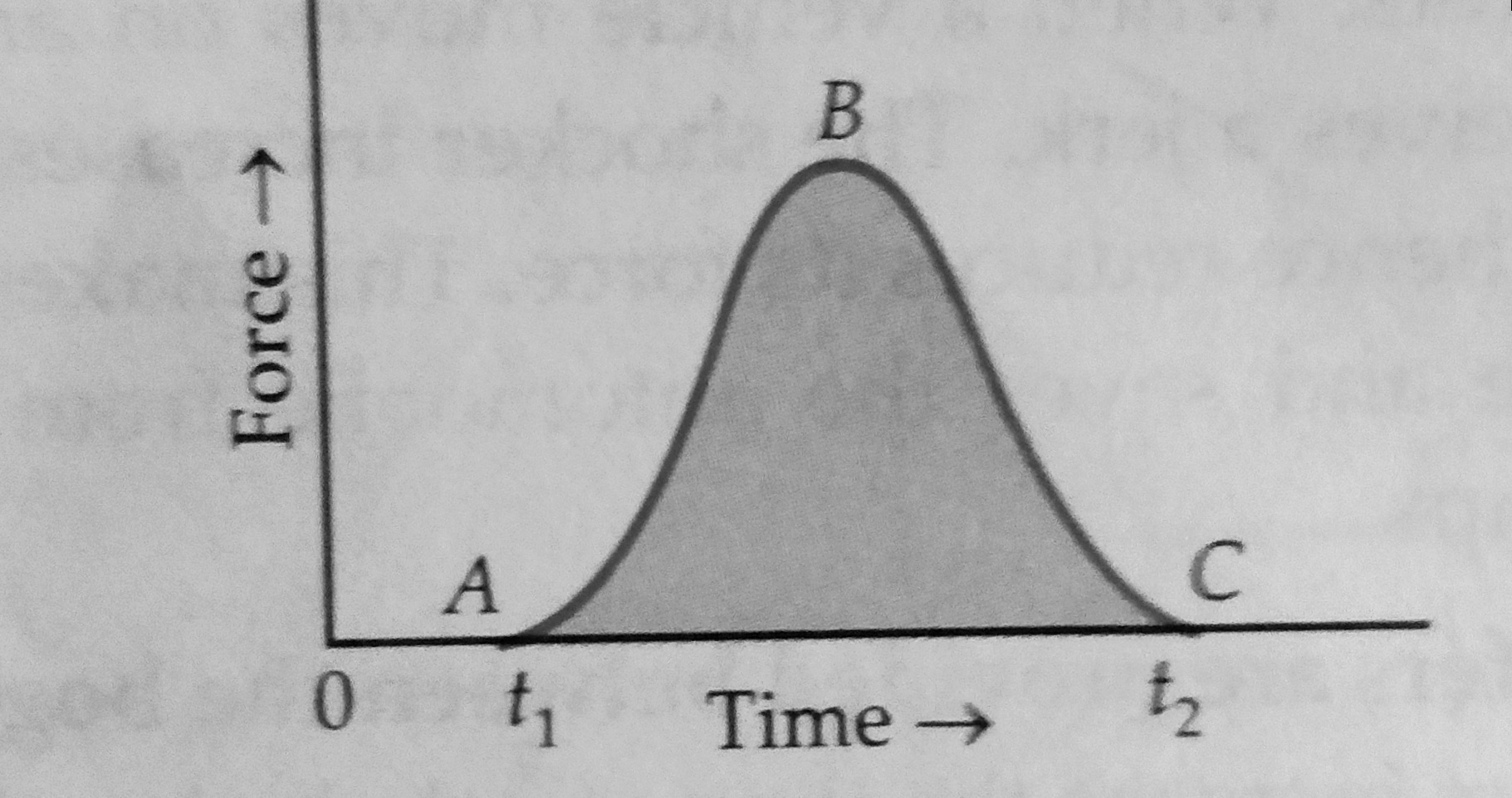
If we plot the force v/s time curve , then the area under the curve gives the impulse .
A. When a constant force acts on a body then force v/s time graph is given below . the area under the line AB gives the impulse .
B. When a variable force acts on a body then force v/s time graph is given below . the area under the line ABC gives the impulse ;
The unit and dimension of the impulse is same as linear momentum .
Application of concept of impulse – ( It also work as reasoning questions in your class examinations)
(a) Automobiles are provided with shockers.
(b) China wares are packed under straw paper.
(c) A cricket players lower his hand while catching a ball.
(d) A person falling from a certain height gets more injuries when he falls on a cemented or tough floor than when he falls from a heap of sand.
If we goes to the reason of all the points mentioned above then answers of all the questions will be same .
As we know, impulse = F x t = change in momentum
For the same impulse force F = impulse / time . i.e. F α 1/t
when time of impact increases due to some processes then force acts on the body decreases .
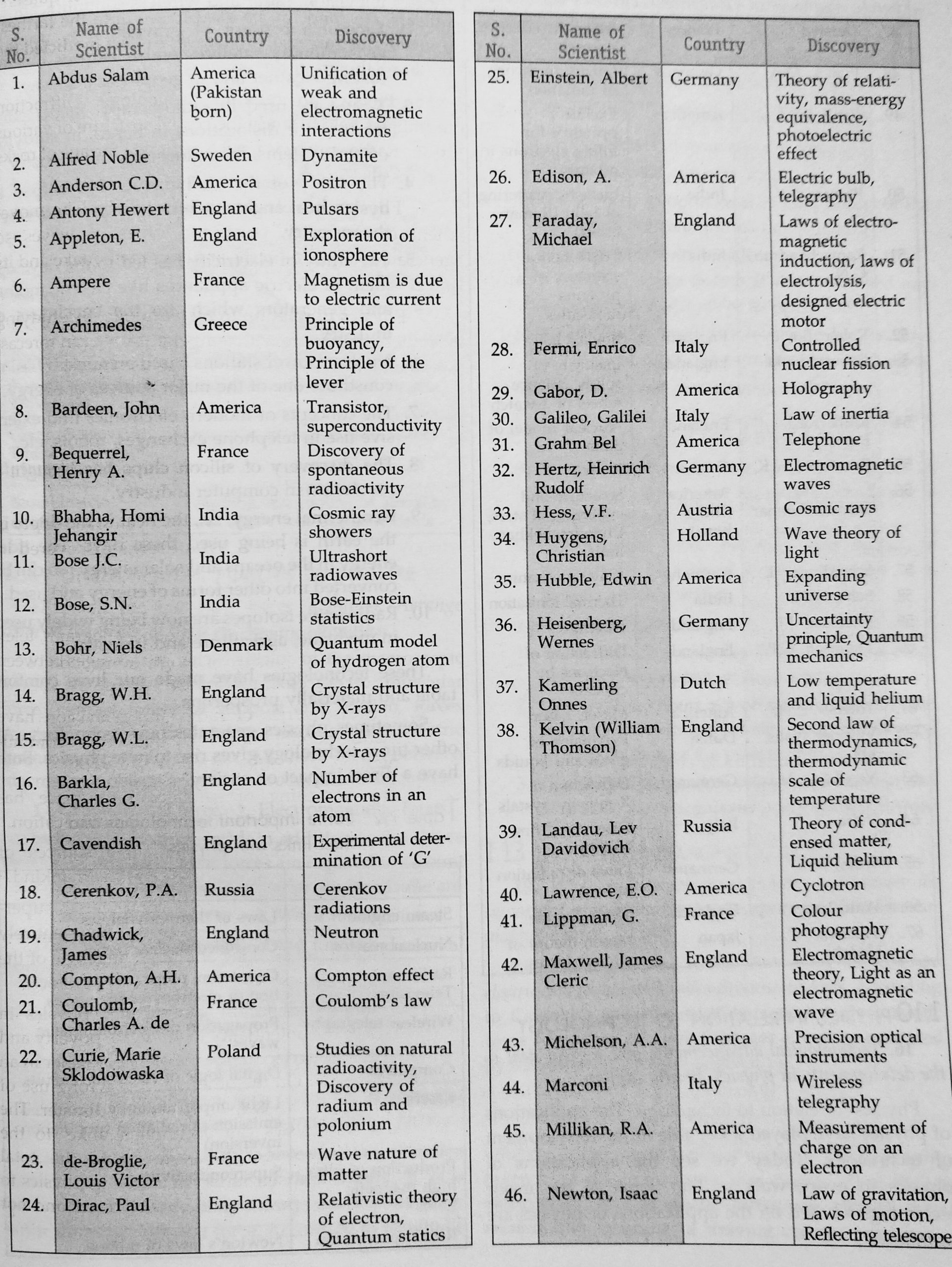
In this topic we will discuss about, type of units, system of units , name and define of all fundamental units . Also the abbreviations in power of tens. one of the important thing given is chart of physicist and their discoveries.
Units and measurement
Physical quantity-
All those quantities which can be measured in terms of which the laws of physics can be expressed are called physical quantity. Example- mass , speed, force , power etc.
Physical quantities are of two types- fundamental and derived
Fundamental quantities–
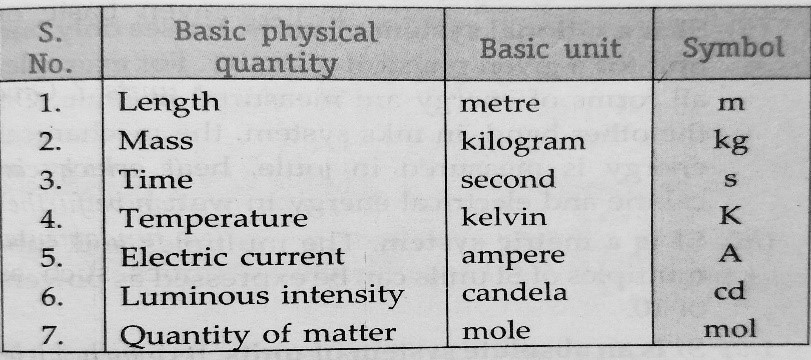
The physical quantities which is independent of other physical quantities and are not usually defined in terms of other physical quantities are called fundamental quantities. These are , mass, length, time, electric current, temperature ,luminous intensity and amount of substance.
Derived quantities-
The physical quantities which can obtained using other physical quantities are called derived units. Example – velocity, force , power etc. or we can say all the physical quantities other than seven fundamental quantities are derived units.
UNITS-
The standard amount of a physical quantity chosen to measure the physical quantity of the same kind are called physical unit.
To represent a physical quantity we need numeric value and its units .i.e.
Physical quantity Q = n U ( where n represent numeric value and U is the unit) . So we can define unit is the thing used to identify and measure a physical quantity .
There are two types of unit .Fundamental and derived units .
Fundamental units–
The physical unit which neither be derived from one another and it can not be resolved into more simpler units called fundamental units. There are seven fundamental units which are the units of These are , mass, length, time, electric current, temperature ,luminous intensity and amount of substance .
Derived units – All the units can be expressed using fundamental units is called derived units .
Example unit of speed = distance/time =m/s …etc .
System of units – A complete set of units which is used to measure all kind of fundamental and derived quantities is called system of units.
(i) cgs system- It is based on centimetre, gram and second as the fundamental unit of length, mass and time respectively.
(ii) MKS system – – It is based on metre, kilogram and second as the fundamental unit of length, mass and time respectively.
(iii) FPS system – – It is based on foot, pound and second as the fundamental unit of length, mass and time respectively.
(iv)SI ( the international system of units) system .
Definition of basics units –
Meter (m) – It is the SI unit of length, One meter is defined as the path travelled by light in vacuum in 1/ 299,792,458 seconds ,
kilogram (kg) – It is the SI unit of mass .- It is the mass of prototype cylinder of platinum-iridium alloy .
Second(s)- It is the SI unit of time . On e second is the duration of 9,192,631,770 period of the radiation between two levels of the ground state of the Cesium-133 atom.
Ampere (A) – It is the unit of electric current. It is the force 2 x 10⁻⁷ Newton between two parallel current carrying wire placed 1m away is of unit length . To know more on Ampere click here-
Kelvin (K) – It is the SI unit of temperature. One kelvin is the fraction 1/273 of the thermodynamic temperature of the triple point of water.
Candela(cd)- It is the SI unit of luminous intensity. It is the intensity of a source that emits monochromatic radiation of frequency 540 x 1012 Hz , and that has the radiant intensity 1/683 watt per steradian in that direction.
Mole (mol)- It is the unit of amount of substance . .It is the amount of substance which contain as many elementary entities as there are atom in 0.012 kg of C-12 isotopes.
Supplementary SI units –
(a). Radian (rad)- It is the plane angle subtended at the centre of a circle by an arc equal in length to the radius of the circle . ϴ= arc/radius .
(b). Steradian (sr)- It is defined as the solid angle subtended at the centre of the sphere by a surface of the sphere equal in area to that of a square , having each side equal to the radius of the sphere . sr= surface area / radius2 .
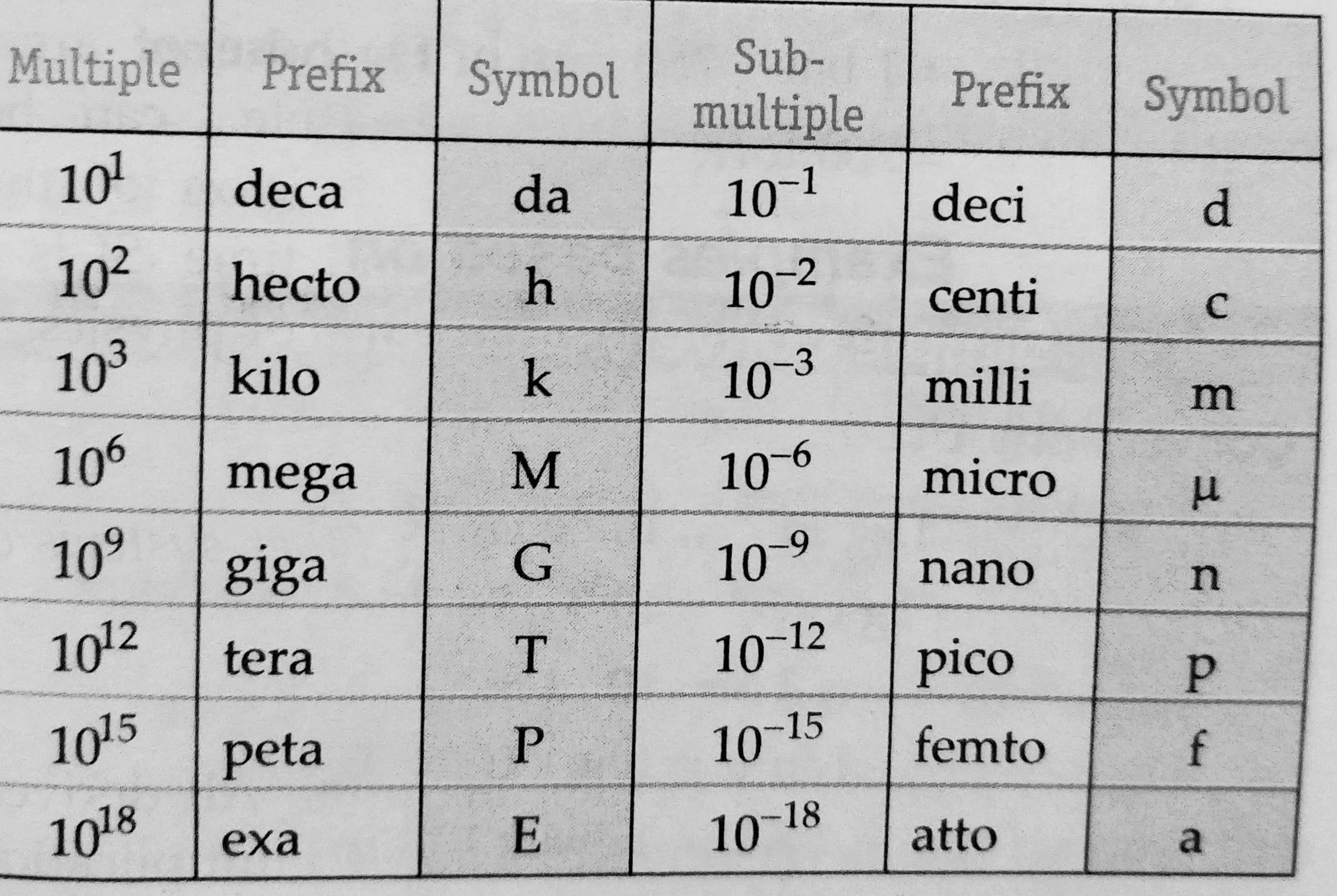
Some important thing ( multiple , prefix and symbol) in the power of ten.
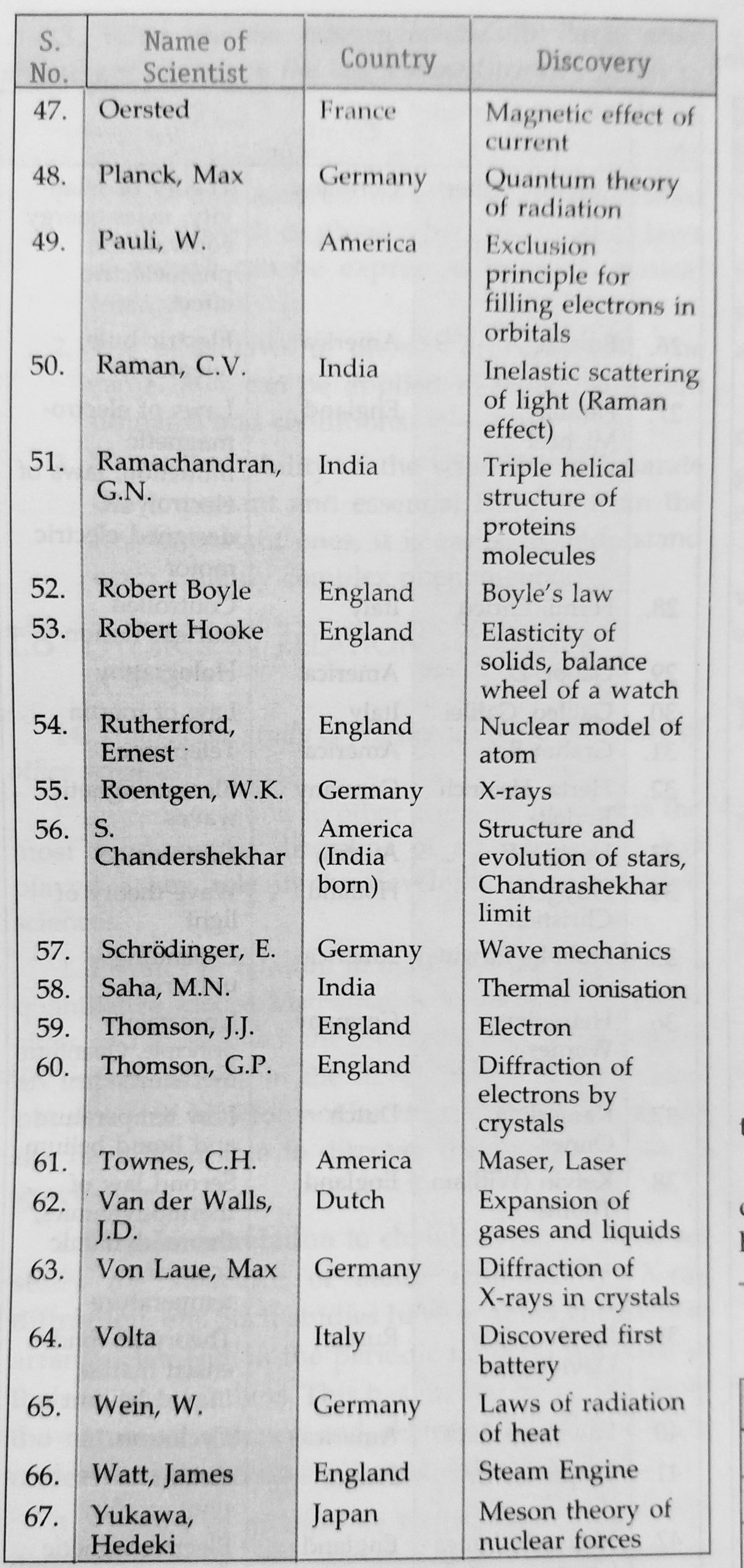
Some great physicist and their discoveries ( This topic is important for objective point of view)-
In this topic we will discuss about Newton’s first law of motion and inertia . Force , linear momentum and some example of inertia (all type).
Newton’s first law of motion ( law of inertia )-
Before to know the Newton’s first law of motion and inertia we must know –
FORCE– Force is a physical quantity which when applied on a body it actually changes or try to change , shape, size and, position of rest or motion.
INERTIA – It is the property of a body by virtue of which it can’t change itself its state of rest or uniform motion in a straight line . Or we can say ‘inertia is the resistance of change’. this term inertia is first used by Galileo .
Different types of inertia –
Inertia of rest – It is the tendency of a body to remain in its position of rest .
Example- A person standing in a bus fall backward when the bus suddenly start moving forward. Dust is removed from a hanging carpet by beating it with a stick, etc.
Inertia of motion– It is the tendency of a body to remain in its state of uniform motion in a straight line .
Example-When a running bus stop suddenly the passengers in the bus fall in forward direction. It is dangerous to jump out from a running bus, etc.
Inertia of direction– It is the property of the body to restrict the change of direction of motion.
Example- When a bus takes a sharp turn the person sitting in the bus experiences a force acting away from the centre of the curved path .
Linear momentum (momentum) – momentum of a body is the quantity of motion possessed by the body . Mathematically it is equal to the product of mass and velocity of the body .
If ‘m’ is the mass of the body and its velocity is’v’ then it is given momentum P = m v .
It is a vector quantity .
Its unit is kg m/s or Ns.
And its dimension is [M L T-1] .
Newton’s first law of motion – It is also known as law of inertia. According to Newton’s first law of motion ‘every body remain in its position of rest or of uniform motion in a straight line , till no external force acts on it’ .
This law consist of three parts ;
(i) firs part say a body is in rest continues in the states of rest( inertia of rest).
(ii) second part say that body is in motion continue moves in the same path with same speed (inertia of motion)
(iii)third part say that if a body moving with wit uniform velocity in a st. line then it cant change its direction of motion it self ( inertia of direction ) .
From the above three parts given above explain that how Newton’s first law explain the law of inertia.
Illustration of Newton’s first law of motion –
Based on inertia of rest-
(i) When we shake a branch of tree its fruit and dry leaves fall down – It is because when we shake the tree its branches comes in motion but due to inertia of rest fruit or leaves wants to be in rest due to which it separated from the branches of tree and fall down.
(ii) When a horse suddenly start running then the riders on it fall back -It is because initially the rider and horse are in rest , when horse starts running suddenly the part of the rider in contact with the horse comes into the motion but upper part of the body due to inertia in rest remain in rest and the rider falls back.
(iii) A person standing in a bus fall backward when the bus suddenly start moving suddenly forward- -It is because initially the person and bus are in rest , when bus starts moving suddenly the part of the person in contact with the bus comes into the motion but upper part of the body due to inertia in rest remain in rest and the person falls back.
(iv) Dust is removed from a hanging carpet by beating it with a stick- it is because when we hit the carpet it comes in motion but due to inertia of rest dust wants to be in rest due to which it separated from the carpet and fall down.
2.Based on inertia of motion–
(i) When a running bus stop suddenly the passengers in the bus fall in forward direction.- It is because when the bus is in motion then the passenger on it also is in motion , but when bus stop suddenly then the portion of the passenger is in contact with the bus also comes in rest but due to inertia of motion upper part of the passenger remain in motion and hence passengers fall in forward direction or in the direction of the moving bus .
(ii) It is dangerous to jump out from a running bus – .- It is because when the bus is in motion then the passenger on it also is in motion , but when the person jumps out then the lower part of the body comes in contact with the ground and it comes in rest but due to inertia of motion upper portion of the body remain in motion and person fall down in the direction of motion of bus and it becomes the cause of accident.
In this topic we will discuss about what is circular motion, angular displacement,angular velocity, angular acceleration, relation between angular velocity- linear velocity ,and angular acceleration-linear acceleration . Also we will discuss about centripetal acceleration.
Circular motion-
When during the motion body moves on a circular path then the such kind of motion of the body is called circular motion .
Some important topics of circular motion:-
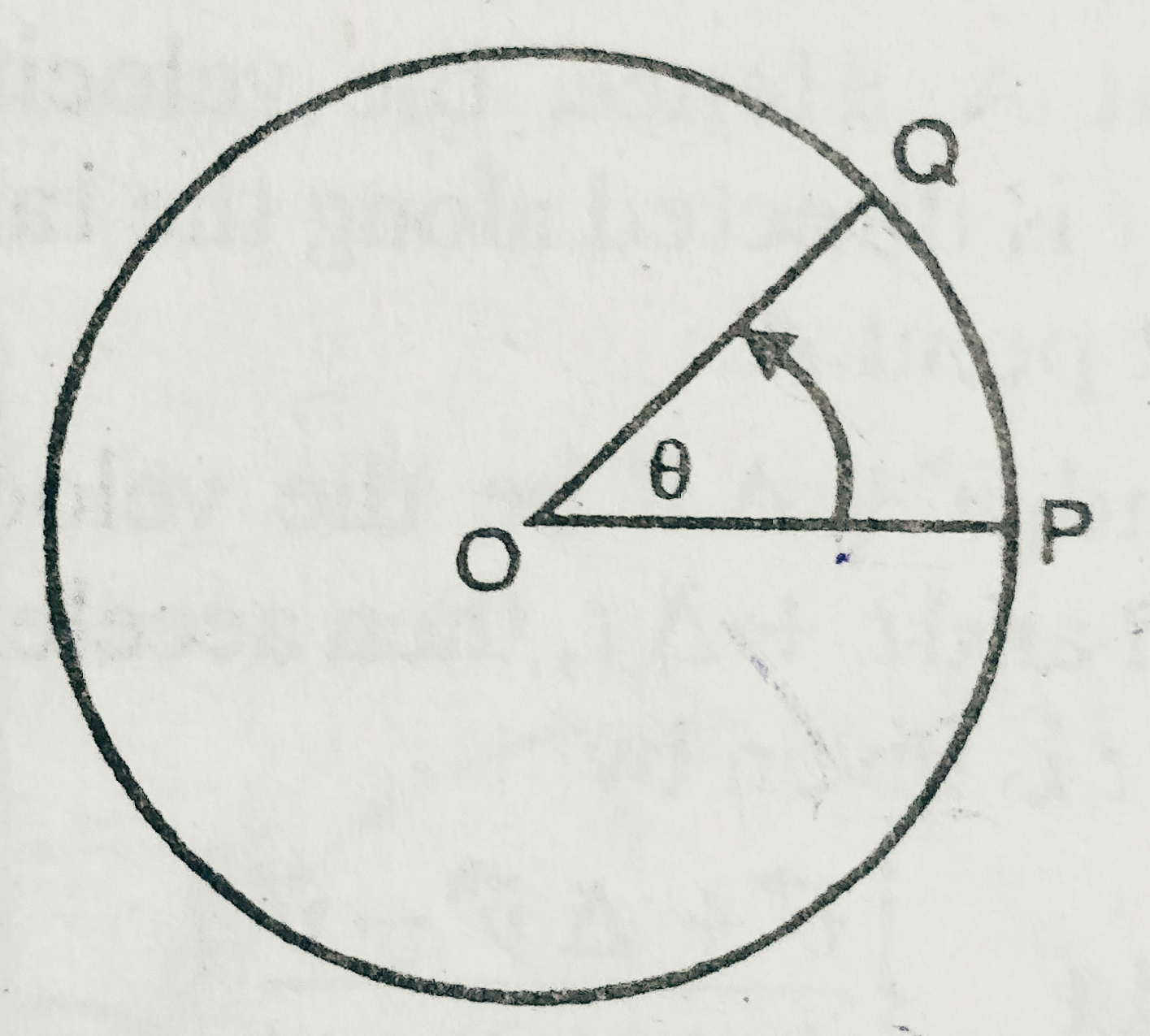
Angular displacement – When a body moves on a circular path then the angle traced out by the radius vector at the axis of the circular path in a given time is called angular displacement .
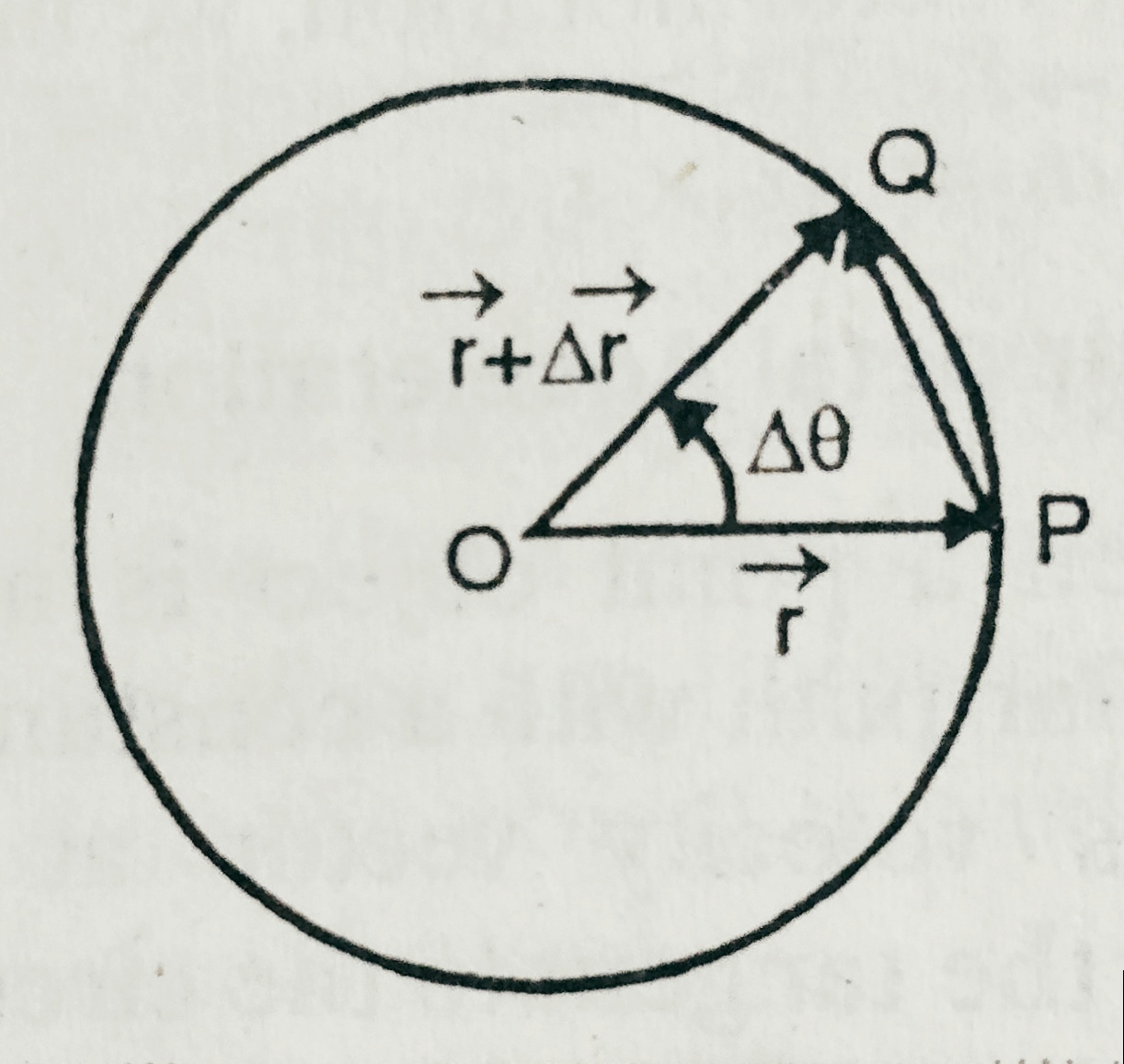
Suppose a body is moving on a circular path of radius ‘r’ , in anticlockwise direction in the plane of paper , with center ‘O’ . let the position of the object changes from P to Q in time t . let <POQ = ϴ , as shown in figure .
Since, angle = arc/radius
So we can write ϴ=PQ/r .
Angular displacement is a vector quantity . Its unit is radian and it has no dimension.
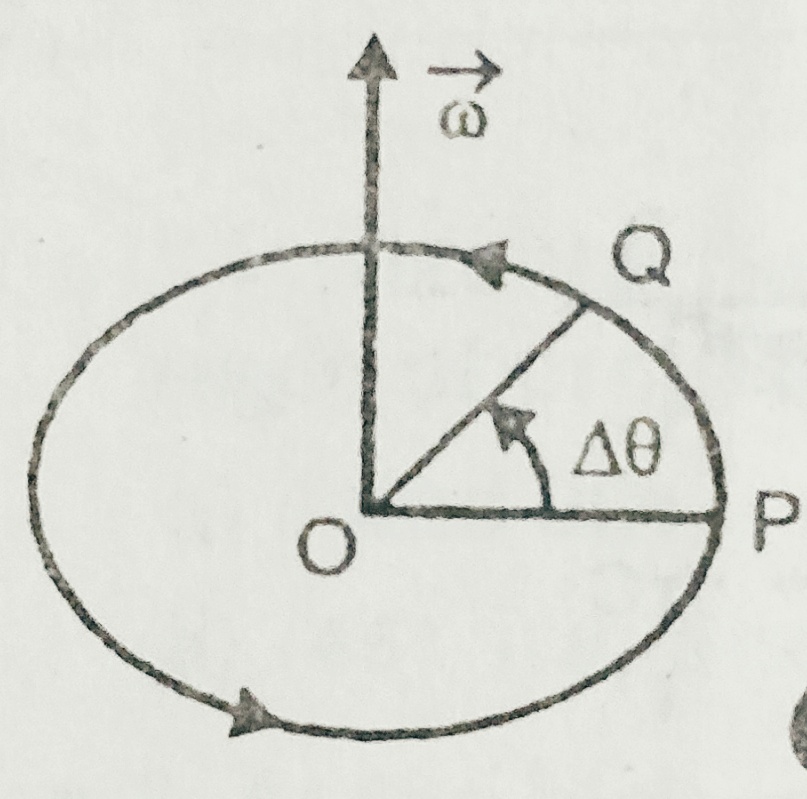
Angular velocity – When a body moves on a circular path then angular velocity is defined as the rate of change of its angular displacement . it is denoted by ‘ω’ (omega) .
Its unit is radian/second , and its dimension is [M0L0T-1]. It is a vector quantity.
Suppose a point object moving along a circular path of radius r and centre O . let object moves from P to Q in time dt . and <POQ = dϴ .
Then angular velocity ω= dϴ/dt .
Relation between linear velocity and angular velocity –
Suppose an object is moving with uniform angular velocity ω and linear velocity v on a circular path of radius r with centre O .
Object is at P at time t and after time Δt it reaches at Q . <AOP=Δϴ The length of PQ=Δl
Therefore v= Δl/Δt or, Δl=vΔt
But , angular velocity ω=Δϴ/Δt or, Δϴ=ωΔt ,
As we know angle = arc/redius
So, Δϴ=Δl/r or ωΔt=vΔt/r or v=ωr ;
Angular acceleration –
In a circular motion angular acceleration is defined as the time rate of change of its angular velocity .
it is denoted by α . Its unit is rad. S-2 . And its dimension is [M0 L0 T-2].
Relation between linear velocity and angular acceleration – as we know v=ωr
In a uniform circular motion , the velocity vector of the object is changing with time . it indicates that the uniform circular motion is the example of circular motion.
Acceleration acting on the object undergoing uniform circular motion is called centripetal acceleration . It always acts along the radius and towards the center.
Suppose a particle of mass m moving with a constant speed v and uniform angular velocity ω around a circular path of radius r .
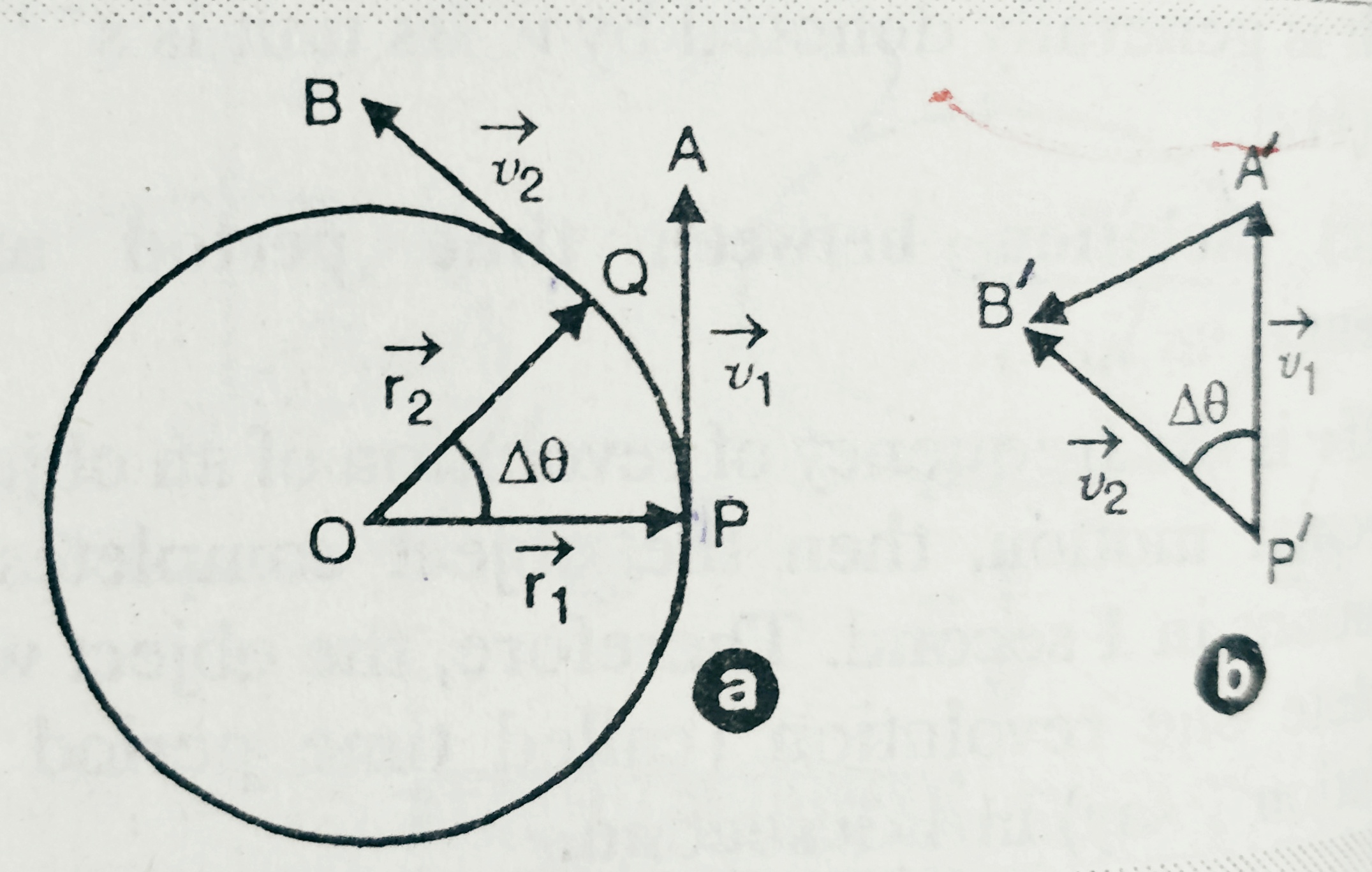
Let at time t the point is at p and after time Δt it reaches at Q .
Here OP=r1 and OQ = r2 and , <POQ = Δϴ
Here, angular velocity ω=Δϴ/Δt ;
Let v1 and v2 are the velocity at position P and Q respectively . as shown in figure (a) .
Here magnitude of PA and QB are equal which is equal to v.
To find the change in velocity in time interval Δt . we draw p’A’ and P’B’ respectively the velocity vector v1 and v2 as shown in above figure (b) .
Multiplication of vectors ( Dot and Cross product).
In this topic we will discuss about Multiplication of vectors ( Dot and Cross product), and what are the rules of dot (scalar) product and cross(vector) product ?
Before to know about this topic , students must know these topics ,
Multiplication of vectors ( Dot and Cross product) –
Scalar product (dot product ) of –
when the product of two vector quantity gives a scalar quantity such kind of product is called scalar product or dot product. The dot product of two vectors and is represented by . ,which is equal to the product of the magnitude of the two vectors and and cosine of the smaller angle between them .
Example of dot product – work done,power , flux .
Vector product ( cross product )-
When the product of two vector quantities gives the vector quantity then such quantity is called vector product. The cross product of two vectors and is represented by x ,which is equal to the product of the magnitude of the two vectors and and sine of the smaller angle between them .the direction of resultant vector is perpendicular to both and .
Example- Torque , angular velocity,linear velocity , etc.
In this topic we will discuss about the meaning of resolution of vectors , how can we resolve a vector ? What are the applications of resolution of vectors ? and rectangular components of a vector quantity.
Before to know about the Resolution of vectors , students must know about what is a vector quantity?
It is the process of splitting a single vector into two or more vectors in different directions which together produce the same effect as is produced by the single vector alone.
Application of resolution of vector –
(1) It is easier to pull a lawn roller than push it –
(2) Walking of a man is the another example of resolution of vector –
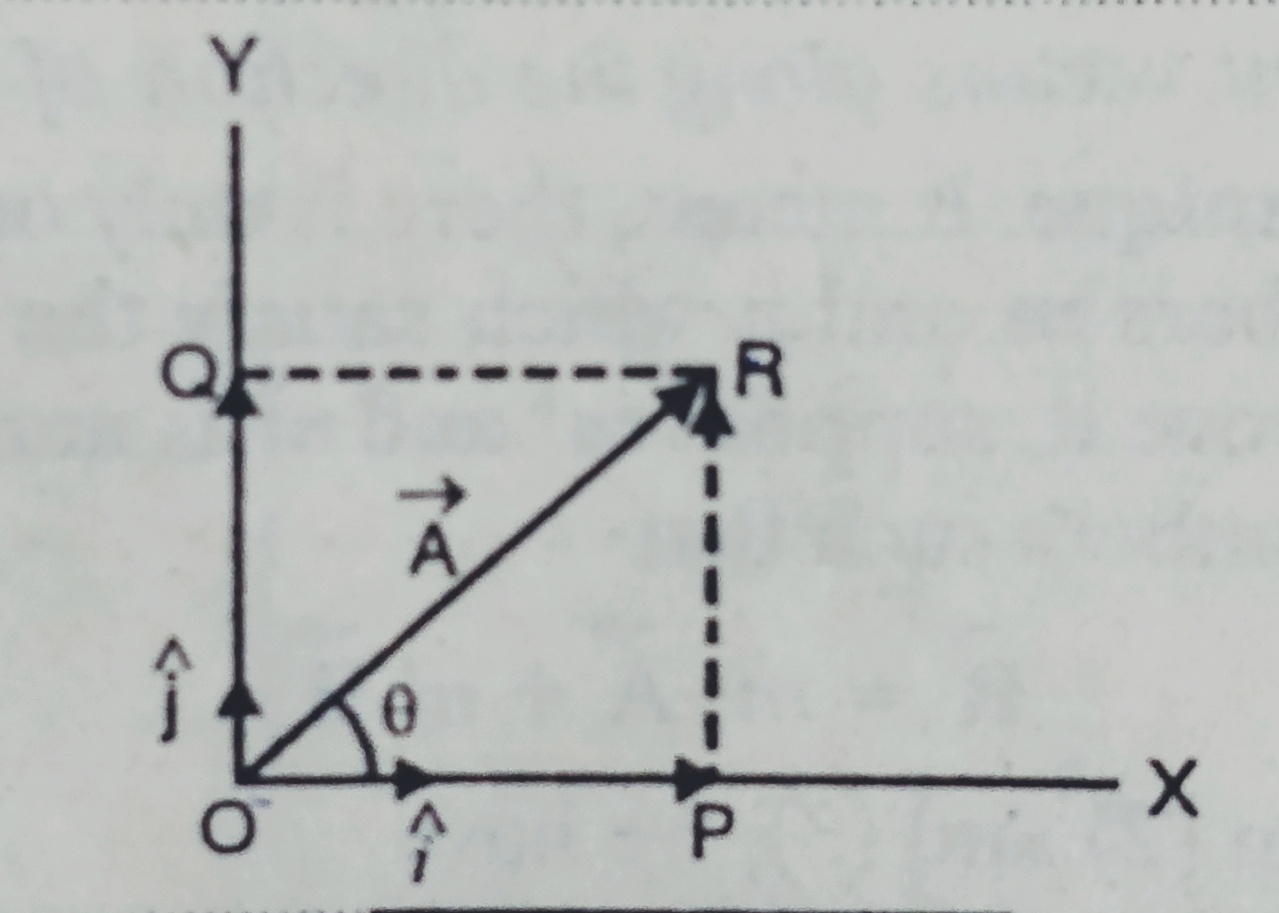
Rectangular components of a vector in a plane –
If we split a vector in two component vectors at right angles to each other then the component vectors are called rectangular components of a vector .
In this topic we will discuss about what is Dimensions and uses of dimensions ?Also what are the limitations of dimensions ? This topic is easy to understand and video related to the topic is also linked with the given notes of Dimensions and uses of dimensions .
Dimensions and uses of dimensions-
DIMENSIONS
When a physical quantity expressed In terms of fundamental units , it is written as a product of different powers of the fundamental quantity is known as the dimension of the physical quantity .
Some fundamental units are – Length – [L] , Mass – [M] , Time – [T] , Ampere-[A] etc.
Here – [L] , [M] , [T] , [A] are called dimensions .
Dimension of some physical quantity may be written as –
(II) Acceleration- Change in velocity/time = dimension of velocity/dimension of time = [LT-1]/[T] =[LT-2]
(III) Force – Mass x acceleration = [M] [LT-2]= [MLT-2] Similarly we can find the dimension of all other physical quantity .
Uses of dimensions –
(i) To check the correctness of the formula – [ Principle of Homogeneity – according to this principle for a given formula , the dimension of every term of L.H.S. = dimensions of every term of R.H.S. ]
{** we must keep in mind that when two physical quantity is added or subtracted there dimensions will be same }
Lets check the correctness of given formula S= ut + ½ (at2 )
Here L.H.S. dimension of s= [L]
Dimension of ut = [LT-1] X [T] = [L]
Dimension of next term of R.H.S ½ at2 = [LT-2][T]2 = [L]
So dimension of R.H.S = [L] + [L] = [L]
So we can say dimension of LHS = Dimension of RHS , it follows the principle of homogeneity and hence the given formula is correct .
[ note- using this process we can find the dimensions of unknown physical quantity ]
(ii) Conversion of unit of a physical quantity – Dimension also help us to convert the unit of a physical quantity from one form to another Ex- MKS to CGS or vice-versa .
As we know , when we change the unit then the magnitude of the physical quantity changes but it express the same physical quantity . example – 1 km = 1000m ; here when we changes the unit km to m its numeric value changes but it express the same physical quantity which is distance/displacement .
So we can say for a given physical quantity n1u1=n2u2 ;
Using this we can write-
n1[M1a L1b T1 c ] = n2[M2a L2b T2 c ]
So ,
n2 = n1 [M1a L1b T1 c ]/ [M2a L2b T2 c ]
= [M1/M2]a [L1/L2]b [T1/T2]C ………..Eq(I)
Suppose we have to convert 10 Newton( MKS) force into Dyne (CGS) . At first we have to write the dimension of the physical quantity which is force ( since Newton is the unit of force ) .
Dimension of force is [MLT-2] i.e. a=1 , b=1, c=-2 and n1 = 10 ;
So applying the eq. (i) n2 = n1 [M1/M2]a [L1/L2]b [T1/T2]C
n2 = 10 x [ 1kg/1gm] [1m/1cm] [1s/1s]
n2= 10 x [1000gm/1gm] [ 100cm/1cm ] [1s/1s] = 10 x 105
10 Newton = 10 x 105 Dyne ;
Similarly we can convert a physical quantity from one unit to another .
(iii) Deducing relation among the physical quantity– Dimension is also used to find the actual relationship among the given physical quantities or in another words we can say it is used to derive the formula with the help of given physical quantities .
Suppose if it is given the pressure (p) acting on a body depends on force applied (F) and area of cross-section A ,
We can write P α Fa Ab
Or, P = K Fa Ab ( Where K is a constant ) ………………………..(I)
Dimension of, pressure P = [ ML-1 T-2]
Dimension of , force F = [MLT-2]
Dimension of area A = [L2]
Putting all these values in equation (i) we can write
[ ML-1T-2] = [MLT-2]a [L2]b
[ ML-1T-2] = [Ma La+2b T-2a] , on comparing the power of both sides we get ;
a=1 , a+2b=-1 and -2a =- 2
so a=1 and b=-1 . putting these values in eq. 1 we get
pressure p = F/A ;
again , suppose time period (t) of a pendulum depends on mass of the bob ’m’ length of the pendulum ‘l’ and acceleration of the gravity ‘g’. we have to find the formula of the time period .
we can write
t α ma lb gc
or, t = K ma lb gc ……………..(i) where K is a constant .
[M0L0T1] = [ M]a [L]b [LT-2]c = [Ma Lb+c T-2c]
On comparing we get , a=0 ,b+c=0 and -2c=1
On solving all the above relations we get , a=0 . b=1/2 and c=-1/2 ; putting all these value in the above eq (i) we get,
t= Kl1/2g-1/2 here K= 2∏ √l/g .
limitations of dimensions –
(i) The dimensional method works only when the dependence is of the product time . it does not show the relation in addition or subtraction .
(ii) The numerical constant having no dimensions cannot be deduced by the method of dimension.
(iii) the method works only when a physical quantity depends on only three physical quantity . This method is not valid for four or more physical quantity dependence.
Assignment related to the unit and dimension is also available for the students , which will help the student to solve questions related to these topics .
Projectile given horizontal projection and projectile given angular projection
In this topic we will discuss about projectile given horizontal and projectile given angular projection. And we will derive the expressions for equation of trajectory, time of flight , vertical height , horizontal range and velocity of projectile at any time .
Projectile motion-
When a body has given some initial velocity , and body allowed to move in two dimensional motion under the action of gravitational force only ( i.e. there is no any external force acting on the body ) such kind of motion of the body is called projectile motion .
Important things to know about the projectile motion- projectile moves with constant horizontal velocity, there are no any external force it means there is no acceleration or retardation in horizontal motion.
The vertical velocity changes with time i.e. increases or decreases when moves downward or upward direction respectively under the gravitational acceleration.
There is no air resistance ( practically it is not possible in earth surrounding , but considered)
The magnitude of acceleration due to gravity remain constant at every point it doesn’t changes even at height or depth.
Projectile given horizontal projection-
HORIZONTAL PROJECTION
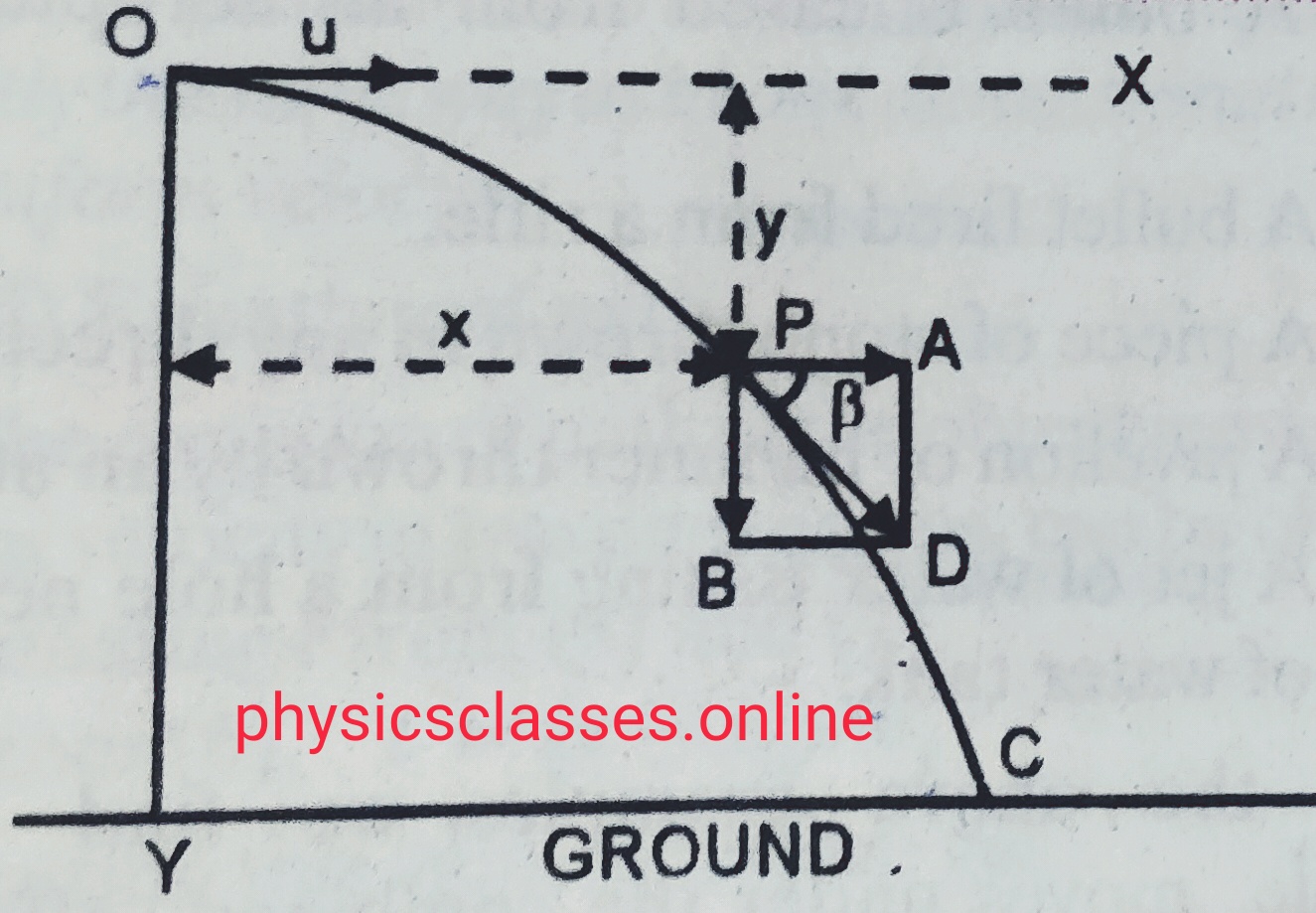
Suppose OX a horizontal line is parallel to the ground and oy is vertical height. A body is projected with velocity u in horizontal direction ,
so, ux = u and uy = o
Let t is the time taken by the body to reach from initial point O to final point C ( as shown in fig. ) then , horizontal distance X = ux x t = u x t
so t= x /u
Again for vertical motion Y = uyt + ½ gt2 = 0 + ½ gt2
y = ½ g (X/u)2
or , Y = ½ g X2/u2……………………..(i) This the equation of trajectory which is equation of parabola , then we can say path followed the projectile is parabolic .
Time of flight (T) – It is the time taken by the projectile to reach from initial to final position , let T is the time of flight and H is the height ,
Then, from equation of motion Y = uy + ½ gT2
( but uy =0)
so, Y= ½ g T2
or , T = √2H/g ………………(ii)
Horizontal range (R) – It is the horizontal distance covered by the projectile during its flight . Since there is no acceleration in horizontal direction.
So , distance = speed x time
X = R = u x T = u √2H/g .
Velocity of the projectile at any time ‘t’ – As shown in fig. at point p , there are are two components of the velocity , vx and vy along horizontal and vertical direction respectively , then , v = √(vx)2 + (vy)2
Or , v = √ u2 +(gt)2 ( since , vx = u and vy = gt )
Let v makes an angle β with the horizontal then , tanβ = vy/vx
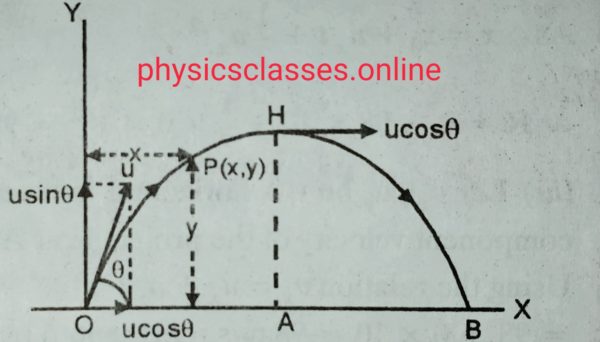
Suppose a projectile is projected at an angle θ with horizontal , and velocity given to the projectile is ‘u’ . OX and OY are the horizontal and vertical axis respectively . Then the component of velocity along OX and OY are respectively u cosθ and u sinθ .
Equation of trajectory- let ‘t’ is the time taken by the projectile to reach from point O to point B as shown in fig.
Then horizontal distance X = u cosθ x t ,
Or, t=x/ucosθ
But for vertical motion , y= uyt + ½ g t2
Putting the value of time in the above equation we get ,
Y = usinθ .( x/ucosθ) + ½ g ( x2/ u2 cos2θ) .
Or , y= x tanθ + ½ g (x2/u2 cos2θ) …………………….this is the equation of trajectory , which is parabolic . Hence we can say path followed by the projectile is parabolic .
Time of flight (T)– It is the total time taken by the projectile to reach from initial position to the final position . Total time of flight ( T) = ta ( time of ascent) + td (time of descent ) .
[ Time of ascent is the time taken by the projectile to reach to max. height by the projectile. And time of descent is the time taken by the projectile to reach from highest position to the point on the ground .]
As we know , for ascending motion , v = uy – gta
But at highest point v=0 , so , 0= u sinθ – g ta
g ta = u sinθ
ta = u sinθ/g ;
Hence, Time of flight , T = 2 ta = 2u sinθ/g ……………eq.
maximum height(H) – It is the maximum vertical height attained by the projectile above the point of projection during its flight.
from 3rd equation of motion v2 -u2 =2as ;
0 – u2sin2θ = – 2gH
H = u2sin2θ/2g ……………………eq.
Horizontal range(H)– It is the displacement of the projectile between point of projection and point of hitting the ground .
Since there is no acceleration in horizontal direction and hence
X= R = u cosθ x T = u cosθ . 2u sinθ/g = u2 2sinθ cosθ/g = u2 sin2θ /g ;
At ant time the velocity has two components vx (velocity along x- axis) and vy (velocity along y-axis ). So at any time velocity v= √vx2 + vy2
v = √ [u2 cos2 θ + (u sinθ – gt)2 ].
Or , v = √ (u2 + g2t2-2ugt sinθ ).
Let β be the angle of resultant velocity with horizontal direction then ,
Tanβ = (u sinθ-gt) / (ucosθ)
[ ***** note- question based on the projectile may be asked to find the all equations but angle of projection is θ with the vertical instead of horizontal in that case , at the place of sinθ take cosθ and vice-versa .*******]
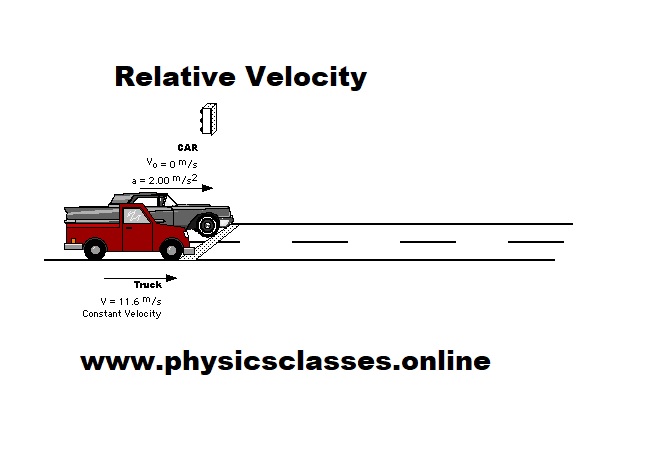
This topic will discuss about the velocity of an object with respect to another object. In this article you will learn Relative Velocity Analysis in both forms text and video as well.
Relative velocity of one object with respect to another is the velocity with which one object moves with respect to another object .When two objects A and B are moving with different velocities , then the velocity of one object A with respect to another object B is called relative velocity of object A with respect to object B , hence relative velocity is defined as the time rate of change of relative position of one object with respect to another.
Watch Relative Velocity Analysis Video :
Expression for the relative velocities – Suppose two objects A and B moving with uniform velocities VA and VB respectively along parallel straight line path in the
(i) Same direction (I.e. angle between them is 00) ;
Relative velocity of A with respect to B = VA -(VB ) = VA -VB
(ii) Opposite direction (I.e. angle between them is 1800)
Relative velocity of A with respect to B = VA – (-VB ) = VA + VB