In this topic we will discuss about the meaning of resolution of vectors , how can we resolve a vector ? What are the applications of resolution of vectors ? and rectangular components of a vector quantity.
Before to know about the Resolution of vectors , students must know about what is a vector quantity?
It is the process of splitting a single vector into two or more vectors in different directions which together produce the same effect as is produced by the single vector alone.
Application of resolution of vector –
(1) It is easier to pull a lawn roller than push it –
(2) Walking of a man is the another example of resolution of vector –
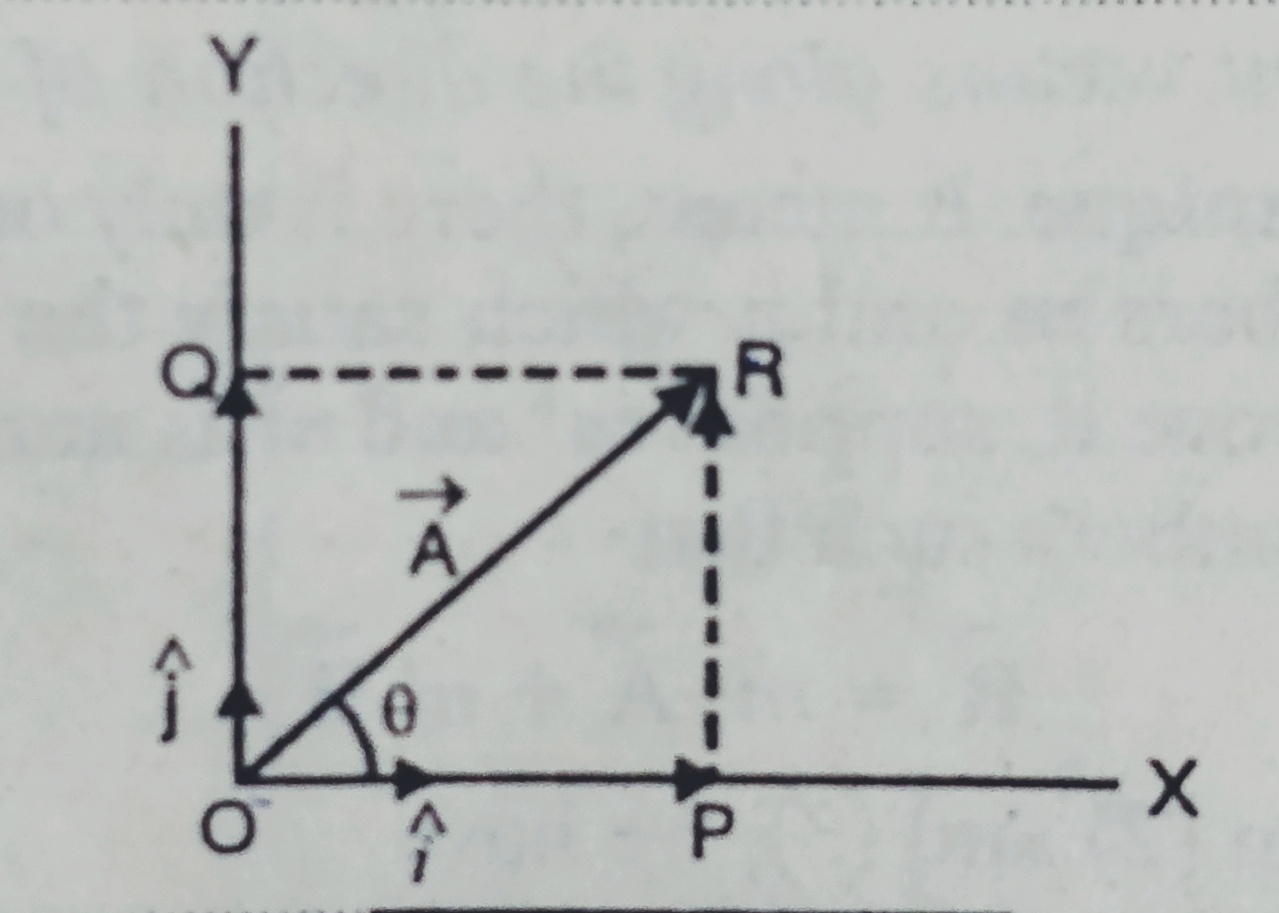
Rectangular components of a vector in a plane –
If we split a vector in two component vectors at right angles to each other then the component vectors are called rectangular components of a vector .
Students as you know , physics classes by Nayan jha already provided many kind of assignment of the chapter Electrostatics . But this is the Complete assignment of electrostatics . It contains objective type,fill in the blanks,1 marks,2 marks,3 marks and 5 marks questions with numerical and HOTS .
It will help the students to revise complete chapter .which will help the students preparing for 12th board and all kind of competitive examinations .
Before to solve the questions of these assignment student must learn complete notes of these two chapters , electric charges and field and electrostatic potential and capacitance .
After revise the entire chapters of electric charges and field and electrostatic potential and electrostatics.Students may solve the questions of related chapters. Here is the Complete assignment of electrostatics –
Current density , conductance and electrical conductivity –
In this topic we will discuss about what is Current density , conductance and electrical conductivity ? and also the relation between them .
Before to learn about this topic students must have to know about Drift velocity , Ohm’s law , resistance and resistivity ( without know about them students can’t understand this topic explained below )
Current density , conductance and electrical conductivity –
Current density –
Current density of a conductor at a point is the amount of current flowing per unit area of the conductor .
If ‘I’ is the current flowing through the conductor and A is the area of cross-section the conductor at a given point then current density J = I/A . Its unit is ampere per meter square ( Am-2)
Again as we know I = neA Vd ;
Then current density J = neA Vd /A = ne Vd
Conductance (G) of a resistor –
Conductance of a conductor is the inverse of resistance (R) .
G = 1/R , Its unit is ohm-1 or mho or siemen (S) ;
Electrical conductivity –
Electrical conductivity is the inverse of resistivity . It is represented by (σ) .
So, σ = 1/ƍ its SI unit is ohm-1m-1 ,
and its dimension is [ M-1 L-3 T3 A2]
So we can write electrical conductivity , σ = ne2Ʈ/m
what do you mean by the term Thermistor and superconductor ? How a Thermistors is different from ordinary resistance and what are the applications of Thermistors and super-conductors?
Before to learn about this topic Thermistors and superconductor , students must have to learn about resistance and resistivity;
It is a heat sensitive device whose resistivity changes very rapidly with change of temperature . The temperature coefficient of resistivity of a thermistors is very high , which may positive or negative . a thermistors can have a resistance in the range of 0.1 ohm – 107 ohm .
Uses of thermistors –
Thermistors are used in industry as temperature control unit , remote sensing, picture tube and to measure very high temperature change .
A thermistors differs from an ordinary resistance in the following ways –
(i) The temperature coefficient of resistivity of a thermistors can be both positive and negative .
(ii) The resistance of thermistors changes very rapidly with change in temperature
(iii) temperature coefficient of resistivity of a thermistors is very high .
Super-conductivity
Super-conductivity is the property due to which a metal alloy or metal oxide shows zero resistance at a very low temperature . or in another words we can say that certain metals or alloys at very low temperature lose their resistance and becomes zero .
Application of super-conductors –
(i) It is used to produce very high speed computers ,
(ii) it is used to transmission of electric power ,
(iii) It is used to make very strong electromagnet ,
(iv) It is used in material science research and high energy particle .
In this topic we will discuss about what is Dimensions and uses of dimensions ?Also what are the limitations of dimensions ? This topic is easy to understand and video related to the topic is also linked with the given notes of Dimensions and uses of dimensions .
Dimensions and uses of dimensions-
DIMENSIONS
When a physical quantity expressed In terms of fundamental units , it is written as a product of different powers of the fundamental quantity is known as the dimension of the physical quantity .
Some fundamental units are – Length – [L] , Mass – [M] , Time – [T] , Ampere-[A] etc.
Here – [L] , [M] , [T] , [A] are called dimensions .
Dimension of some physical quantity may be written as –
(II) Acceleration- Change in velocity/time = dimension of velocity/dimension of time = [LT-1]/[T] =[LT-2]
(III) Force – Mass x acceleration = [M] [LT-2]= [MLT-2] Similarly we can find the dimension of all other physical quantity .
Uses of dimensions –
(i) To check the correctness of the formula – [ Principle of Homogeneity – according to this principle for a given formula , the dimension of every term of L.H.S. = dimensions of every term of R.H.S. ]
{** we must keep in mind that when two physical quantity is added or subtracted there dimensions will be same }
Lets check the correctness of given formula S= ut + ½ (at2 )
Here L.H.S. dimension of s= [L]
Dimension of ut = [LT-1] X [T] = [L]
Dimension of next term of R.H.S ½ at2 = [LT-2][T]2 = [L]
So dimension of R.H.S = [L] + [L] = [L]
So we can say dimension of LHS = Dimension of RHS , it follows the principle of homogeneity and hence the given formula is correct .
[ note- using this process we can find the dimensions of unknown physical quantity ]
(ii) Conversion of unit of a physical quantity – Dimension also help us to convert the unit of a physical quantity from one form to another Ex- MKS to CGS or vice-versa .
As we know , when we change the unit then the magnitude of the physical quantity changes but it express the same physical quantity . example – 1 km = 1000m ; here when we changes the unit km to m its numeric value changes but it express the same physical quantity which is distance/displacement .
So we can say for a given physical quantity n1u1=n2u2 ;
Using this we can write-
n1[M1a L1b T1 c ] = n2[M2a L2b T2 c ]
So ,
n2 = n1 [M1a L1b T1 c ]/ [M2a L2b T2 c ]
= [M1/M2]a [L1/L2]b [T1/T2]C ………..Eq(I)
Suppose we have to convert 10 Newton( MKS) force into Dyne (CGS) . At first we have to write the dimension of the physical quantity which is force ( since Newton is the unit of force ) .
Dimension of force is [MLT-2] i.e. a=1 , b=1, c=-2 and n1 = 10 ;
So applying the eq. (i) n2 = n1 [M1/M2]a [L1/L2]b [T1/T2]C
n2 = 10 x [ 1kg/1gm] [1m/1cm] [1s/1s]
n2= 10 x [1000gm/1gm] [ 100cm/1cm ] [1s/1s] = 10 x 105
10 Newton = 10 x 105 Dyne ;
Similarly we can convert a physical quantity from one unit to another .
(iii) Deducing relation among the physical quantity– Dimension is also used to find the actual relationship among the given physical quantities or in another words we can say it is used to derive the formula with the help of given physical quantities .
Suppose if it is given the pressure (p) acting on a body depends on force applied (F) and area of cross-section A ,
We can write P α Fa Ab
Or, P = K Fa Ab ( Where K is a constant ) ………………………..(I)
Dimension of, pressure P = [ ML-1 T-2]
Dimension of , force F = [MLT-2]
Dimension of area A = [L2]
Putting all these values in equation (i) we can write
[ ML-1T-2] = [MLT-2]a [L2]b
[ ML-1T-2] = [Ma La+2b T-2a] , on comparing the power of both sides we get ;
a=1 , a+2b=-1 and -2a =- 2
so a=1 and b=-1 . putting these values in eq. 1 we get
pressure p = F/A ;
again , suppose time period (t) of a pendulum depends on mass of the bob ’m’ length of the pendulum ‘l’ and acceleration of the gravity ‘g’. we have to find the formula of the time period .
we can write
t α ma lb gc
or, t = K ma lb gc ……………..(i) where K is a constant .
[M0L0T1] = [ M]a [L]b [LT-2]c = [Ma Lb+c T-2c]
On comparing we get , a=0 ,b+c=0 and -2c=1
On solving all the above relations we get , a=0 . b=1/2 and c=-1/2 ; putting all these value in the above eq (i) we get,
t= Kl1/2g-1/2 here K= 2∏ √l/g .
limitations of dimensions –
(i) The dimensional method works only when the dependence is of the product time . it does not show the relation in addition or subtraction .
(ii) The numerical constant having no dimensions cannot be deduced by the method of dimension.
(iii) the method works only when a physical quantity depends on only three physical quantity . This method is not valid for four or more physical quantity dependence.
Assignment related to the unit and dimension is also available for the students , which will help the student to solve questions related to these topics .
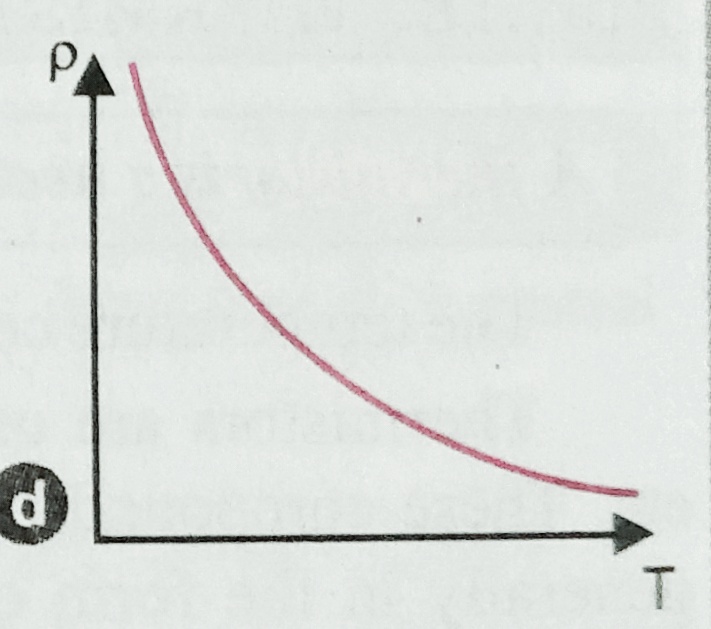
In this topic we will discuss about what is Electrical resistance and resistivity (specific resistance). On what factors Electrical resistance and resistivity depends ? And some plot of resistivity with temperature.
Electrical resistance –
It is the property of a conductor to resist the flow of current through it or electrical resistance is the obstruction posed by the conductor to the flow of electric current through it . Or Resistance of a conductor is the ratio of potential difference applied across the end of the conductor to the current flowing through it . i.e R=V/I ;
the ratio of potential V/s current gives resistance, which is shown in Ohm’s law .
Its unit is Ohm (Ὡ) or Volt /Ampere = V/A
And its dimension is [ML2T-3A-2]
We can define one ohm as – resistance of a conductor is said to be 1 Ohm when 1 volt potential difference setup across the end of the conductor and current flows through the conductor is 1 Ampere .
( ******** Cause of the resistance – As we know even a small piece of the conductor contains millions of free electrons when potential difference setup across the end of the conductors the electric field setup in the conductor due to which electrons start flowing from low to high potential , and the wire arise on account of frequent collision which oppose the flow of charges from one end to other . )
Effect of temperature on resistance – As we know resistance R = ml/n Ae2 Ʈ
For a given conductor R α 1/Ʈ when the temperature of the conductor is increases then the density remain constant and velocity of the electron increases then relaxation time decreases and hence resistance increases . So finally we can say ‘ the value of electrical resistance increases with rise of temperature’ .
The resistance at any temperature Rt = R0 ( 1 + αt)
Where Rt – resistance at any temperature ‘T’ , R0 – resistance at temperature 0 kelvin , t is the rise in temperature and α is the coefficient of thermal conductivity .
α = Rt – R0 / R0t
we can define the temperature coefficient of resistance is the increase in resistance per unit original resistance per degree kelvin rise of temperature . Its unit is per kelvin ( K-1)
for two different temperatures T1 and T2 we can write α= (R2 – R1 )/ R2(T2-T1 ) ;
[ Question – why alloy like manganin , constantan are used for making standard resistance
Ans- because (i) Alloy have high value of resistivity ,(ii) small value of temperature coefficient (iii) their resistance is less effected by the atmospheric condition .]
Resistivity or specific resistance –
As we know resistance R = ml/n Ae2 Ʈ ………….(i) from this relation we just come to know that resistance is directly proportional to length of the conductor and inversely proportional to area of cross-section the conductor . i.e. R α l/A
Or , R =ƍl/A………(ii) where ƍ is a constant called resistivity of the conductor ;
From equation (i) and (ii) we get,
ƍ = m/n e2 Ʈ ;
we can define resistivity of a conductor is te resistance of a unit length with unit area of cross-section of the material of the conductor .
Its unit is Ohm-meter (Ὡ-m) and its dimension is [ ML3T-3A-2] ;
Effect of temperature on resistivity –
As we know resistance ƍ = m/ne2 Ʈ
For a given conductor ƍ α 1/Ʈ when the temperature of the conductor is increases then the density remain constant and velocity of the electron increases then relaxation time decreases and hence resistivity increases . So finally we can say ‘ the value of electrical resistivity increases with rise of temperature’ .
The resistance at any temperature ƍ t = ƍ 0 ( 1 + αt)
Where ƍt – resistivity at any temperature ‘T’ , ƍ 0 – resistance at temperature 0 kelvin , t is the rise in temperature and α is the coefficient of thermal conductivity .
α = ƍ t – ƍ 0 / ƍ0T
we can define the temperature coefficient of resistivity is the increase in resistivity per unit original resistivity per degree kelvin rise of temperature . Its unit is per kelvin ( K-1)
for two different temperatures T1 and T2
we can write α = (ƍ2 – ƍ 1 )/ ƍ 2(T2-T1 ) ;
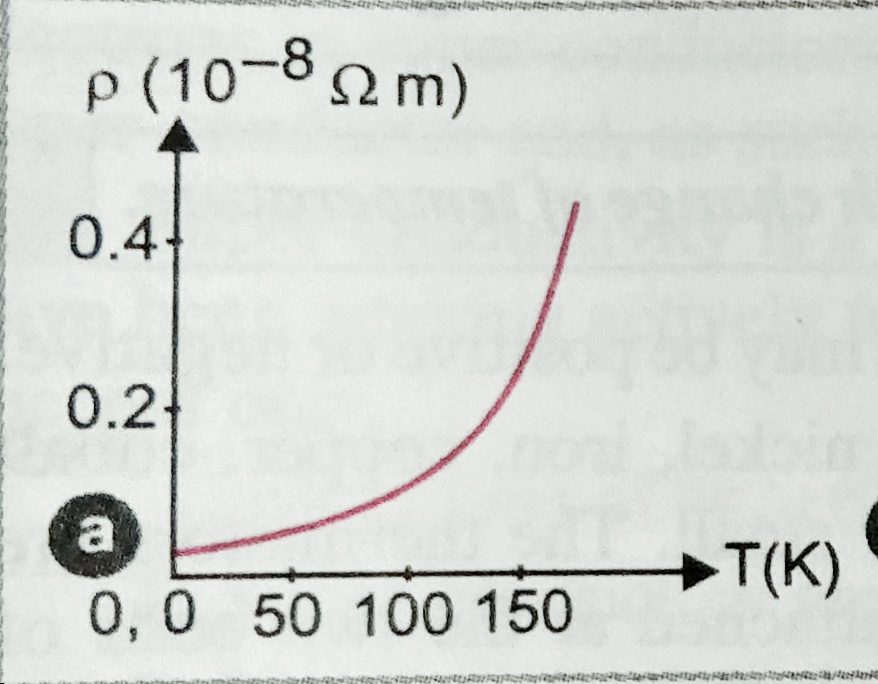
When we plot the graph resistivity or resistance v/s temperature we get the following plot ;
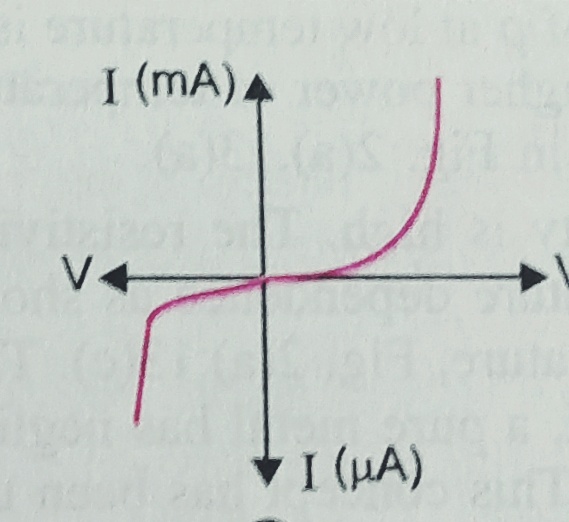
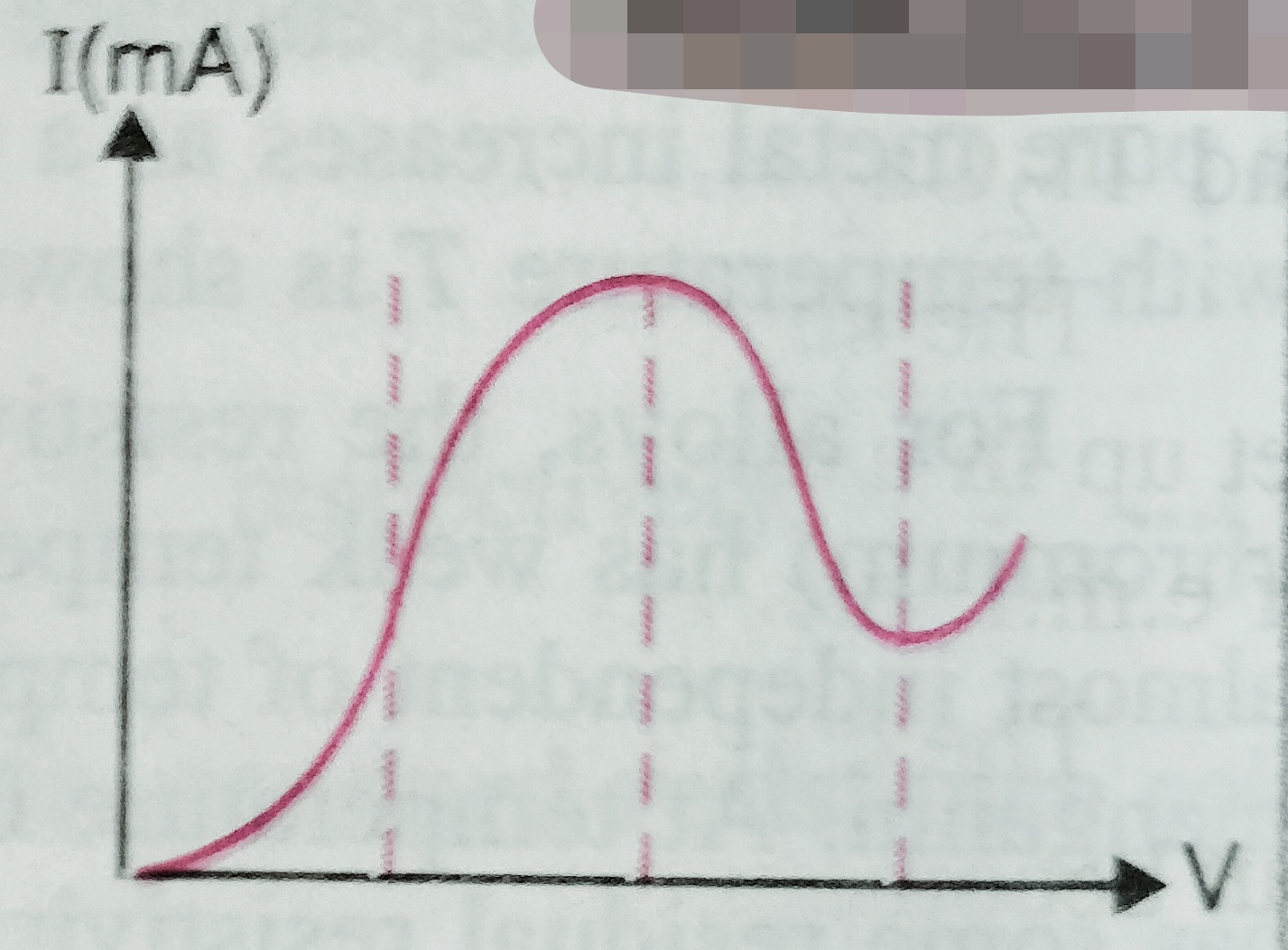
in this topic we will discuss about Ohm’s law proof and limitation of Ohm’s law , in which we will prove Ohm’s law with the help of drift velocity , and graph [V(potential) Vs I(current) ] for non-Ohmic resistance .
Ohm’s law and deduction of Ohm’s law –
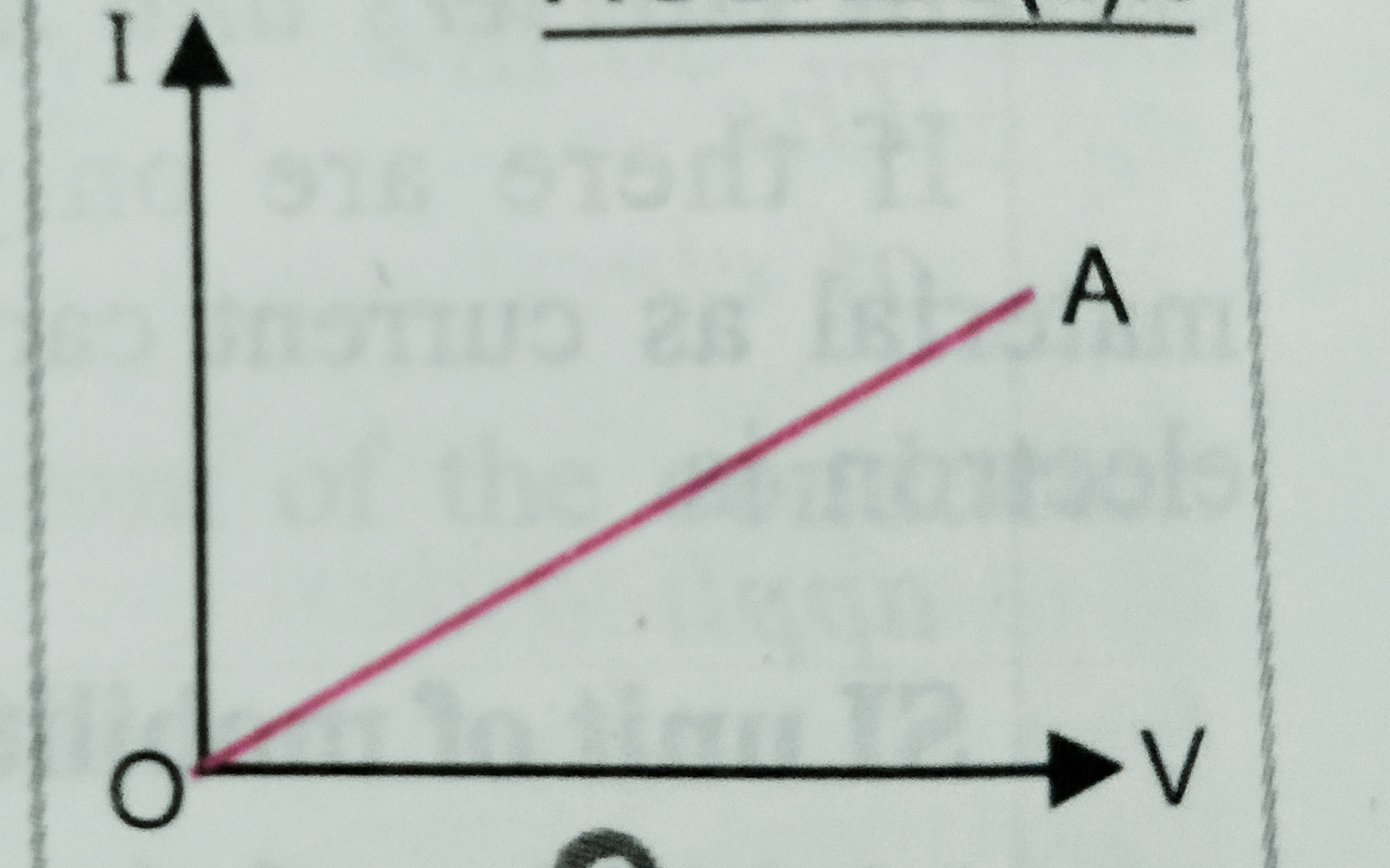
According to Ohm’s law the current flowing through a conductor is directly proportional to the potential difference applied across the conductor when temperature across the conductor is kept constant .
i.e potential difference V α current (I)
or , V α I or, V = RI , Where R is the resistance of the conductor which depends on length , shape and nature of the material .
We also know that I = neAVd therefore Vd = I /neA ……………..(ii)
From equation (i) and (ii)
eV Ʈ/ml = I /neA
so , V = Iml/nA e2 Ʈ
or, V = I (ml/nA e2 Ʈ) ; here ml/n Ae2 Ʈ is constant called resistance
so, V = RI
or , V α I …………………Hence proved Ohm’s law ,
when we plot the graph potential vs current we get ;
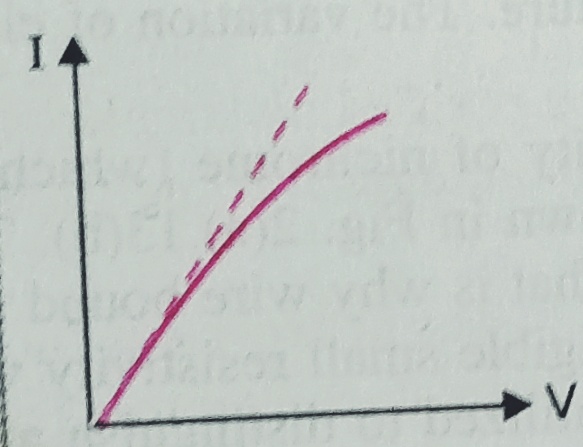
Limitation of Ohm’s law ( Non-Ohmic devices ) – As we know when current flows through some conductor heat developed into the conductor , due to which its property like resistivity changes , and its V/I characteristics also changes . Ohm’s law does not discuss about these kind of change .
Those devices which do not obey the Ohm’s law are called non-Ohmic devices .
As we know a metal contains large numbers of free electrons . At room temperature these electrons moves randomly into the conductors , and its average velocity becomes zero . But when some potential difference is applied across the ends of the conductor the electric field setup inside it and due to which electrons drifted from one end to other ( low to high against the direction of electric field ), and drifted electrons suffers several collisions but at the end reaches to the positive terminal . So new can define drift velocity is the average velocity with which free electrons drifted from negative to positive terminal under the influence of the external electric field .
Let V is the potential difference across the end of the conductor , l is the length of the conductor , then , electric field setup E = V/l
As we know electric field E = F/q = F/e . Therefore , F= e E = ma , and hence a= eE /m ;
SO, drift velocity Vd = ( v1+v2+v3+………vn)/n ;
As we know V = u+at so we can write v1 = u1+at1 , v2 = u2+at2 , v3 = u3+at3 ………………..
So , Vd= u1+at1 + u2+at2 + u3+at3 ………../n
= ( u1+u2+u3…../n ) + a(t1 +t2 +t3 ………../n) ;
But ( u1+u2+u3…../n ) = 0
So, Vd = a(t1 +t2 +t3 ………../n) = eE (t1 +t2 +t3 ………..)/mn .
But we can write, a(t1 +t2 +t3 ………../n)=Ʈ
So, Vd = EeƮ/m ……………………………..eq.
Relation between current and drift velocity –
Suppose a conductor is of length ‘l’ and area of crossection ‘A’ . Let n is the number density of electron . Then total number of electrons in the conductor = Volume x electron density = A.l.n .
Total charge q= A.l.n.e
Let , V is the potential difference setup across the conductor.
then , electric field E = V/l
as we know time Ʈ (t) = l/Vd
and as we know current I = q/t = Alne/t = Alne/ (l/Vd) = neAVd
I = neAVd …………….eq. this is the relation between drift velocity and current.
In this topic we will discuss about what is Electromotive force (EMF) of the cell and it is different from potential difference .
As we know electric current flows through a complete closed circuit ,when there is an source of external force which can bring the ions from low potential to high potential . This external for which makes the current carriers to move in a definite direction called electromotive force (EMF) . In another words we can define ‘ It is the maximum potential difference between two electrodes of the cell when no current flows through the circuits i.e. in open (off) circuit‘ .
Unit of the EMF is Volt (V) and it is generally represented by ‘E’
Difference between EMF of a cell and potential difference –
(i) EMF -It is related with source of current
P.D. – It is related with any two points of the closed circuit.
(ii) EMF – It cause of potential difference between two point of circuit .
P.D. – It is an effect .
(III) EMF – It is the amount of work done in taking a unit charge once round the complete circuit .
P.D. – It is the amount of work done to bring unit charge from one point to another point .
(iv) EMF – It is equal to sum of potential difference across all components of the circuit ( Including all the cells connected in the circuit .
P.D. – In a closed circuit the different components of the circuit have different potential difference .
(v) EMF – It is independent of the external resistance and current drawn from the circuit .
P.D. – It depends on the resistance between two points of circuit and current flowing through it .