Tag: Electrostatics

  • Test eletric chargs and fileld

    Test eletric chargs and fileld

    This test paper based on the topic Electric charges and field,(chapter -1 CBSE ). This test paper contains objective, assertion-reason ,case study based questions also, provided by Physics classes by Nayan jha.

    PHYSICS CLASSES BY NAYAN JHA

                                                       Test class 12th

    1.Two small identical sphere having charges +10μC attract each other with a force of F newton. If they are kept in contact and then separated by the same distance, the new force between them is: (a) F/6      (b) 16F      (c) 16F/9        (d) 9F                   

    2.An electric dipole is placed in a non-uniform electric field. Then net:

    • force experienced is zero while torque is not zero
    • force experienced is zero and torque is also zero
    • both force and torque are not zero
    • force experienced is not zero while torque is zero                                     

    3.Electric charges q , q, -2q are placed at the corners of an equilateral triangle ABC of side l. The magnitude of electric dipole moment of the system is:

    • (a)ql            (b) 2ql                      (c) √3ql                      (d) 4ql               

    4.Eight dipoles of charges of magnitude e are placed inside a cube. The total electric flux coming out of the cube will be: (a) 8e/ε0    (b) 16e/ε0   (c) e/ε0     (d) zero            

    5.The ratio of electric fields on the axis and at equator of an electric dipole will be:

    • (a)1 : 1     (b) 2 : 1         (c) 4 : 1        (d) 1 : 4                                

    6.Two point charges exert on each other a force F when they are placed r distance apart in air. When they are placed R distance apart in a medium of dielectric constant K, they exert the same force. The distance R equals: (a)r/√K                            (b) r/K                       (c) rK                        (d) r√K                                                                                                                                         To download the complete test paper click on the link given below-

    To download the another test paper of this chapter click here-

  • Complete assignment of electrostatics

    Complete assignment of electrostatics

    Complete assignment of electrostatics

    Students as you know , physics classes by Nayan jha already provided many kind of assignment of the chapter Electrostatics . But this is the Complete assignment of electrostatics . It contains objective type,fill in the blanks,1 marks,2 marks,3 marks and 5 marks questions with numerical and HOTS .

    Previously assignment of electrostatics , Objective questions of electrostatics , Important questions of electrostatics and numericals of electrostatics is already provided .In the previous assignment electric charges and field and electrostatics potential and capacitance are in different -different assignment . But here we are providing all kind of questions of both the chapters in one assignment .

    By clicking here students can see the complete syllabus of class 12th physics (CBSE) .

    It will help the students to revise complete chapter .which will help the students preparing for 12th board and all kind of competitive  examinations .

    Before to solve the questions of these assignment student must learn complete notes of these two chapters , electric charges and field and electrostatic potential and capacitance .

    To get the notes of  both the chapters of electrostatics click here-

    After revise the entire chapters of electric charges and field and electrostatic potential and electrostatics.Students may solve the questions of related chapters. Here is the Complete assignment of electrostatics  –

     To download the complete assignment Electric charges and field click here-

    To download the complete assignment Electrostatic potential and capacitors click here-


  • Complete notes of electrostatics

    Complete notes of electrostatics

    Complete notes of electrostatics –

    ELECTROSTATIC POTENTIAL AND CAPACITANCE


    Here complete notes on electrostatics is provided by physics classes by Nayan jha . This notes are based on CBSE  Delhi syllabus . This is the combination of all the topics already provided on this website , which can be studied by the students one by one ( individually )  . If students wants to see all the notes on single page  can go through this page . The link of the all topics are given below –

    Topic-1 -; What is electric charge ? And  what are the properties of charge? 

    Topic-2-; Coulomb’s law of electrostatics (Vector form)

    Topic-3-;  Electric field , and electric field lines . All the properties of electric field lines  

    Topic-4-; Electric dipole , electric field at a point on axial and equatorial point due to dipole .

    Topic-5-;Electric field at any point due to a dipole 

    Topic-6-; Expression for torque and potential energy , when a dipole is placed in external uniform electric field.

    Topic-7-; Electrostatic potential and potential energy

    Topic-8-; Equi-potential surfaces

    Topic-9-; Electric flux and area vector

    Topic-10-; Gauss’s law , proof of Gauss’s law , and prove of Coulomb’s law with the help of Gauss’s law

    Topic-11-; What do you mean by the term electrical capacitance?

    Topic-12-; Explain  parallel plate capacitor , find expression for capacitance of parallel plate capacitor .

    Topic-13-; Grouping (combination ) of capacitors ( series and parallel combination)

    Topic-14-; Energy stored in capacitor and energy density

    Topic-15-;Common potential and loss in energy on shearig charges

    Topic-16-; Non-polar and polar dielectrics

    Topic-17-; Capacitance of parallel plate capacitor with conducting and dielectric slab 


  • Capacitance of parallel plate capacitor with conducting and dielectric slab.

    Capacitance of parallel plate capacitor with conducting and dielectric slab.

    Capacitance of parallel plate capacitor with conducting and dielectric slab.

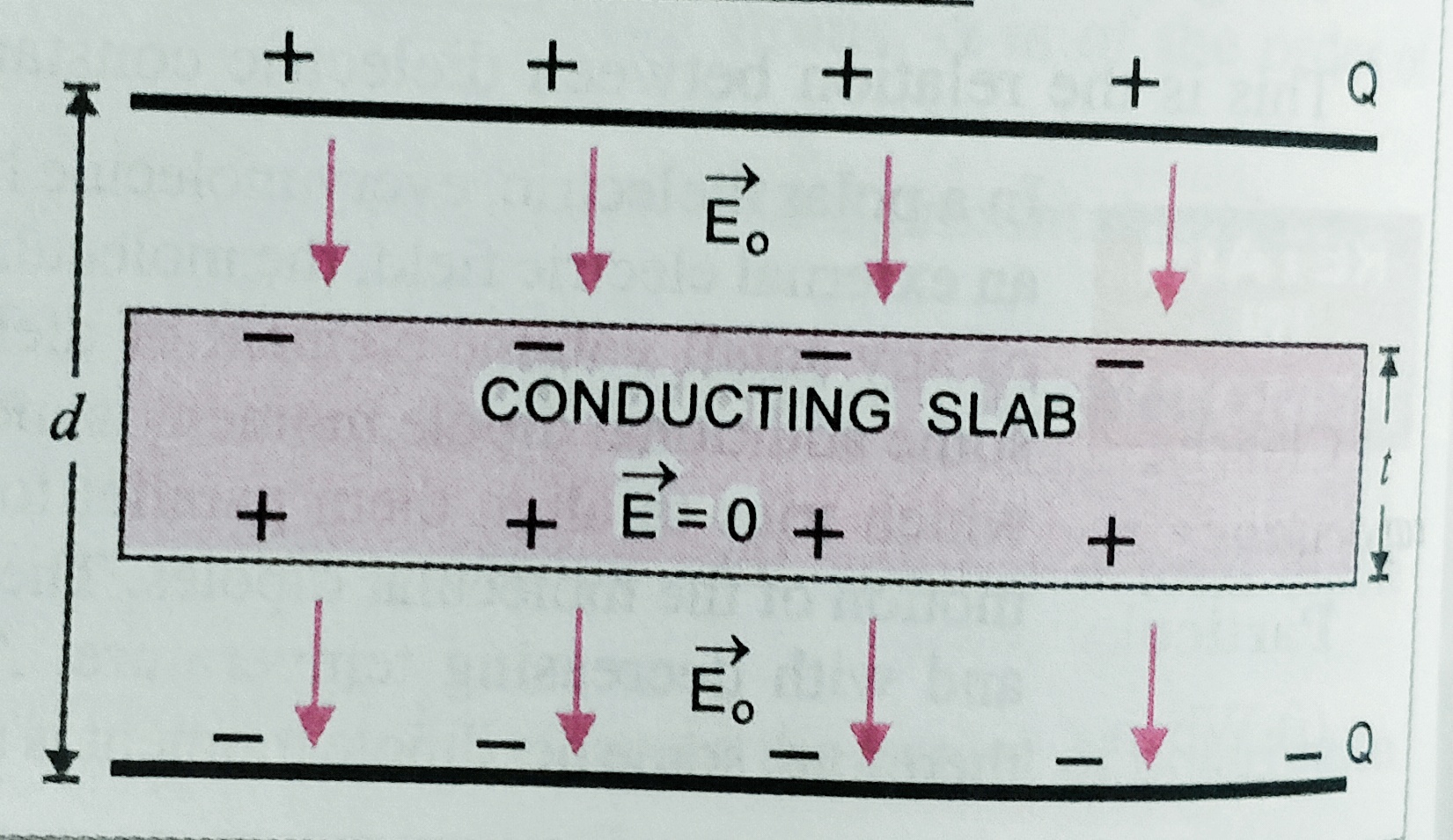
    Capacitance of a parallel plate capacitor with a conducting slab –

    Let A is the area of plates and d is the separation between them is d then capacitance C0= ϵ0A/d .

    Let Q is the charge on the plates of the capacitor. When a conducting slab of thickness ‘t’  ( t< d ) is inserted between the plates . Then the original electric field E0 exist over a distance (d-t) , And inside the metallic plate electric field is zero . so net potential difference between the plates is

    V = E0 (d – t) = σ(d-t)/ϵ0 ;   where σ=Q/A

    As C = Q/V    = Q /( σ(d-t)/ϵ0 ) ;  But , σ = Q/A

    C = Aϵ0 /(d-t) = Aϵ0/[d (1-t/d)] = C0/(1-t/d)

    Special case if    t = d  then   new capacitance of the arrangement will be  infinity ,

    Capacitance of a parallel plate capacitor with a dielectric slab  –

    Let A is the area of plates and d is the separation between them is d then capacitance C0= ϵ0A/d .

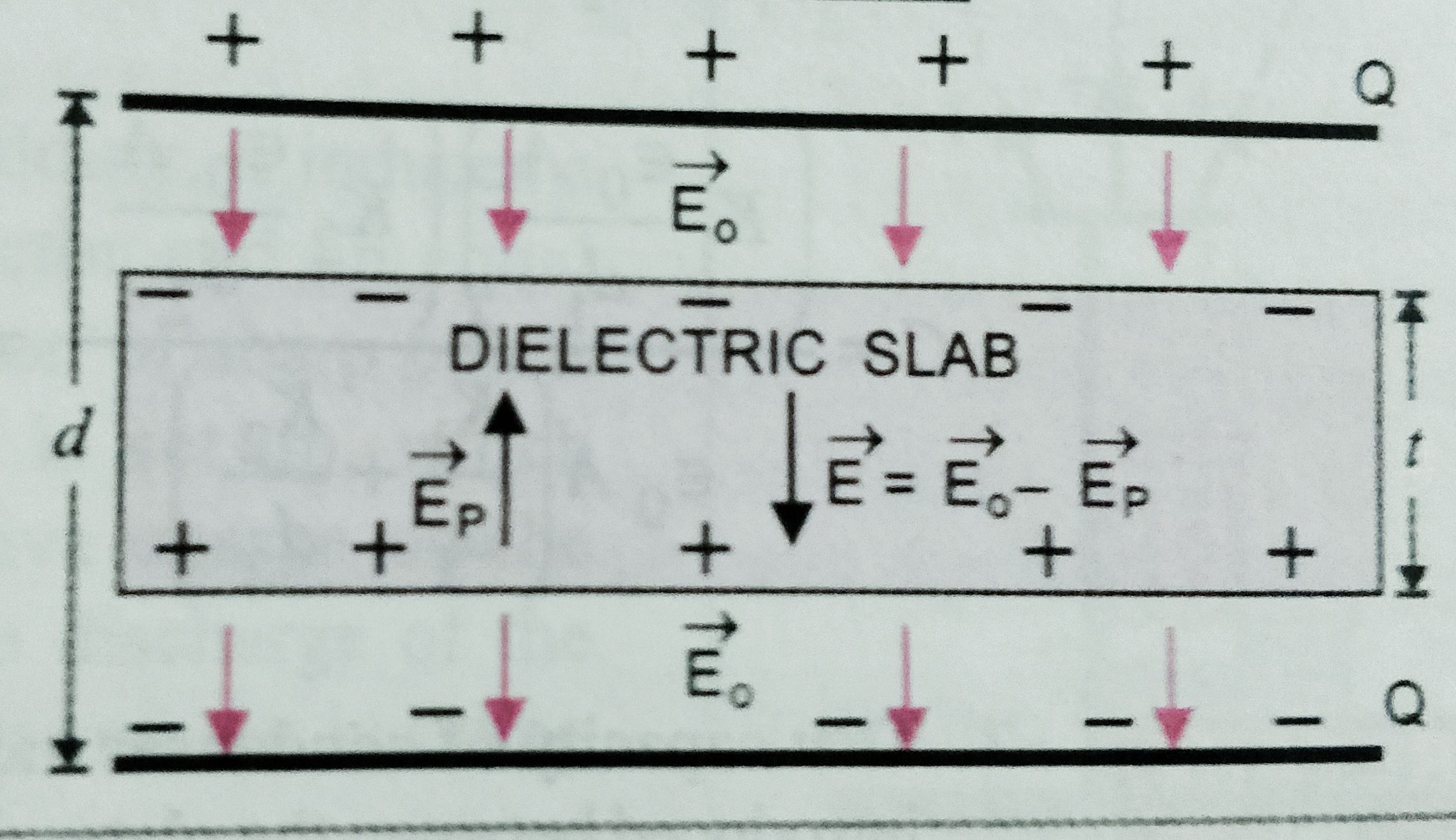
    Let Q is the charge on the plates of the capacitor. When a dielectric slab of thickness ‘t’  ( t< d ) , and dielectric constant K  is inserted between the plates . Then the original electric field E0 exist over a distance (d-t) , And inside the dielectric plate electric field is E0/K . So net potential difference between the plates is ,

    V = E0 (d – t) +( E0 t/K)  = E0[d-t+(t/K)]

    = σ[d-t+(t/K)] /ϵ0  ,   where σ=Q/A

    As C = Q/V    = Q / σ[d-t+(t/K)] /ϵ0  ;  But , σ = Q/A

    C = Aϵ0 /(d-t +t/K)= Aϵ0/[d (1-t/d+t/dK)] = C0/(1-t/d  +t/dK) ;

    If t= d   then  new capacitance  C = KC0


    *** Special cases –

    When a dielectric  slab of dielectric constant ( K ) is inserted between the plates having same thickness of separation between the plates . (t = d ) . 


    When battery disconnected             

    ( I ) Capacitance C = KC0

    (II) Potential  V =  V0/K

    (III) Charge  Q = Q0

    (iv) potential energy U = U0/K

      When battery remain connected       

    (I) Capacitance C = K C0

    (II) Potential  V = V0

    (III)  Charge   Q = K Q0

    (IV)  potential energy  U = KU0


  • Non-polar and polar dielectrics

    Non-polar and polar dielectrics

    Non-polar and polar dielectrics –

    In this topic we will discuss about Non-polar and polar dielectrics and dielectric polarization with electrical susceptibility.

    Non polar and polar dielectrics  –

    As we know the dielectrics are insulating material which transmit electric effect without conducting electricity .

    Dielectrics is of two types , Non-polar Dielectrics and polar Dielectrics .

    In non-polar dielectric ,  in the molecule of the dielectric the centre of mass of the positive charge coincide with the centre of mass of the negative charge . Like , Hydrogen , nitrogen , oxygen , carbon dioxide , methane , benzene etc . In such kind of molecule each molecule has zero dipole moment and they are symmetric in shape .

    But in case of polar dielectric . The  centre of mass of positive and negative charges do not coincide  because of the asymmetric shape of the molecules. It has permanent dipole moment . example – HCl , NH3 H2O, alcohol etc .

    Dielectric polarization –

    When a non polar dielectric is held in external electric field , the two centres of positive and negative charges in the molecules are separated . The molecules gets distorted and is said to be polarized as a small dipole moment .

    The dipole moment acquired is given as , p = αϵ0E0  Where α is the constant of proportionality called molecular polarizability .  Its unit is m3 .

    If N is the number of atoms per unit volume then , electric polarization P = N p   or,  P = N qx .

    Its unit is C-m-2

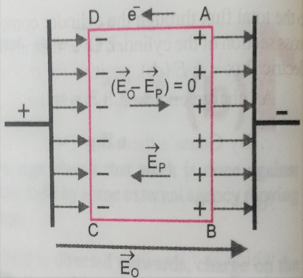
    If we consider a small volume element in the interior of the slab  as shown in figure . , each volume has no net charge ,though it has net dipole moment . This is because positive charge of each dipole sits close to the negative charge of the adjacent dipole . . The negative end of the dipole remain un-neutralized  at the surface AB and positive end of the dipole at CD . then the effective electric field E = E0 -EP  ;

    Further EP = σ/ϵ =  p/ϵ.

    Electric susceptibility –  As we know that the electric polarization P αE    or, p= ϵ  χ E

    Where  χ is constant called electrical susceptibility .

    For vacuum χ = 0 ;

    But as we know ,   E = E0 -EP  = E0 – P/ϵ = E0  –  ϵ  χ E/ϵ

    Or , E = E0 -χE  ;

    E0 = E  +   χ E  = E( 1+ χ )

    OR ,             E0/E  =  1 + χ

    K ( Dielectric constant or relative permittivity ) = 1 + χ   [ since  K= E0/E  ]

    K (ϵr) = 1 +  χ …………………This is the relation between relative permittivity and susceptibility .

  • Common potential and loss in energy on shearing charges .

    Common potential and loss in energy on shearing charges .

    Common potential and loss in energy on shearing charges .

    Before to know about the topic Common potential and loss in energy on shearing charges .student must have to know about Energy stored in the capacitor and electrostatic potential .

    To know about energy stored in a capacitor click here-

    To know about the electrostatic potential energy click here- 

    In this topic students will know about Common potential and loss in energy on shearing charges . its derivation and numerical is important for class 12th ( Board examination) and for NEET/JEE examinations .

    Common potential – When two charged capacitors are connected with each other using a conducting wire then charge starts flowing from high potential to low potential, and after some time their potential becomes equal.

    Let two capacitors C1 and C2 and their potentials are V1 And V2 respectively. Then total charge before combination Q = C1V1 + C2V2.

    Let they are connected with a conducting wire, then charge start flowing from high potential to low potential, till potential is not equal. Let V is the common potential then total charge after combination Q = V (C1 + C2).

    But from the conservation of energy charge after collision = charge before collision

    So, C1V1 + C2V2 = (C1 + C2) V

    Then     V = C1V1 + C2V2 / (C1 + C2)………………………eq.


    Loss of energy on shearing charges –

    As we have seen in the above equation  common potential after combination

    V = C1V1 + C2V2 / (C1 + C2)

    Total energy before combination U1 = ½ C1V12 + ½ C2V22

    Total energy after combination  U2= ½ ( C1 + C2 ) V2 ; Putting the value of  V

    We get , U2= ½ ( C1 + C2 ) [C1V1 + C2V2 / (C1 + C2)]2

    = ( C1V1+C2V2 )2 /2(C1+C2 )

    Then loss in energy ;

    =U1-U2 = [½ C1V12 + ½ C2V22] – [( C1V1+C2V2 )2 /2(C1+C2 )]

    = [C1V12(C1+C2 )+C2V22 (C1+C2 )- (C1V1+C2V2)2]/2(C1+C2) ;

    = C1C2(V12+V22-2V1V2)/2(C1+C2) Or  U1-U2 = C1C2(V1-V2)2/2(C1+C2) . Which is positive for all  possible values of  C1 , C2 And V1 , V2 .

    I.e .  U1 – U2 >0 ( POSITIVE ) .

    So, U1 > U2 . Therefore we can say that there is always loss in energy during the combination of charged capacitors .


  • Energy stored in a capacitor and energy density

    Energy stored in a capacitor and energy density

    Energy stored in a capacitor and energy density .

    Before to know about the Energy stored in a capacitor and energy density , student must have to know about capacitors . To know about the capacitor click here–

    In this topic we will discuss about the Energy stored in a capacitor and energy density, when a capacitor is charged from zero to Q .

    ENERGY STORED IN A CAPACITOR –

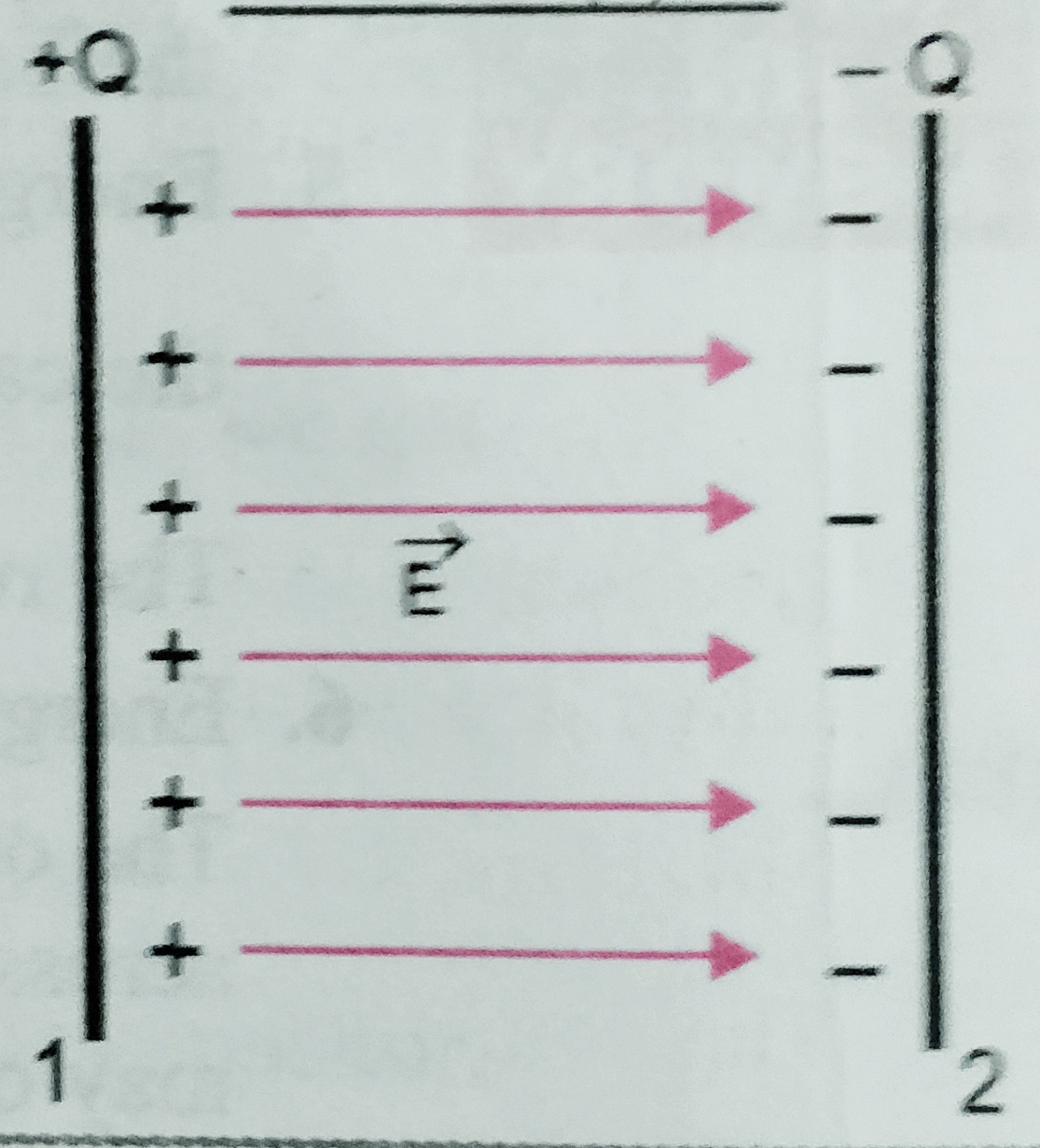
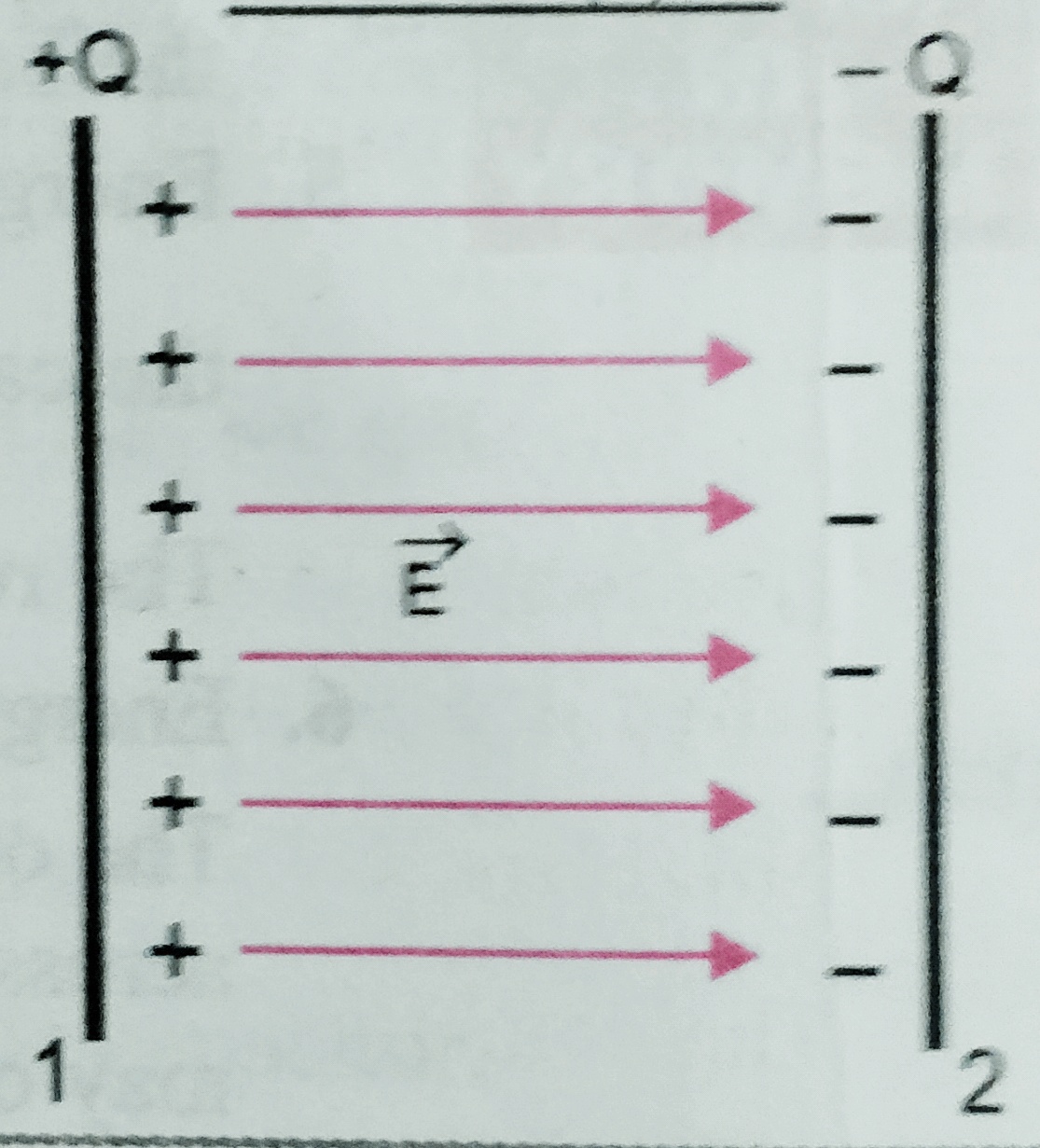
    Suppose the plates of the capacitor is initially uncharged , and the charge is to be transferred from plate 2 to plate 1 , at a small time charge dQ transferred and at the final time it reaches from 0 to Q .   


    Let V is the potential difference across the plates then work done for small instant is

    dW = V . dQ  = (Q/C)dQ .

    integrating both sides,

    ∫ dW =∫(Q/C)dQ from limit 0 to Q ,  then we get ,

    net work done W = Q2/2C ,

    also as we know Q=CV,  so work done may be written as ,

    W = potential energy stored = U =( ½) CV2   = ½ QV .

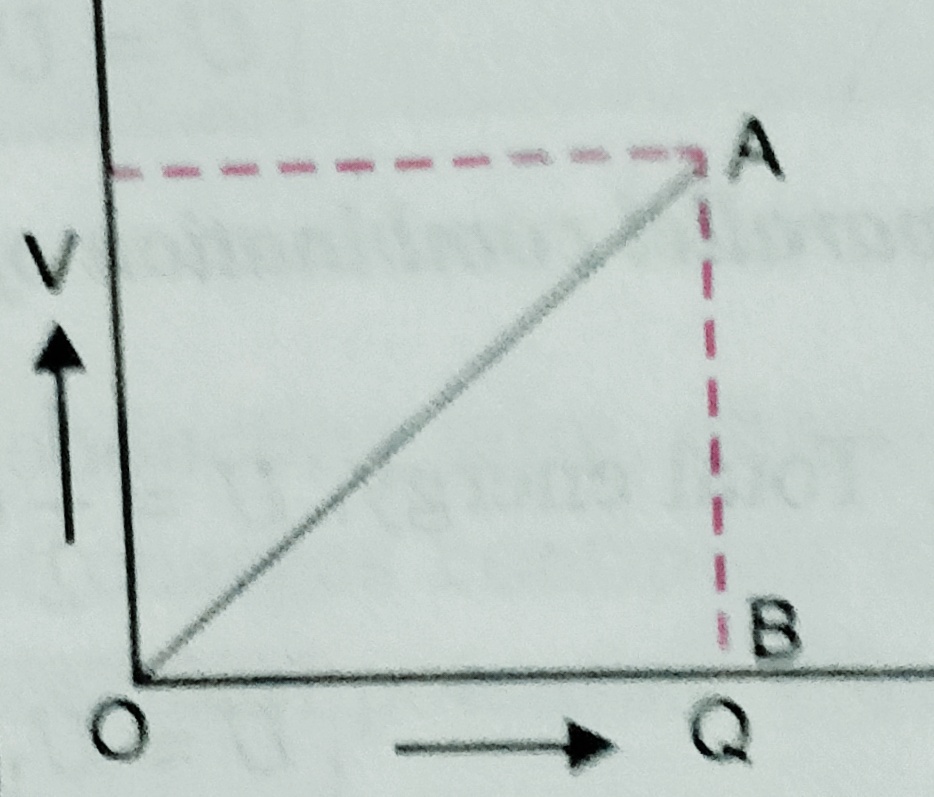
    If we plot the graph  potential v/s charge we get,


    ***Similarly we can plot the graph (i)  U v/s V ( when C is constant )

    (ii) U v/s C (when V is constant)

    (iii) U v/s V  (when Q is constant)

    Total energy stored in the combination of capacitors –

    In  series combination –  U = Q2/2CS But in series combination 1/Cs = 1/C1  + 1/C2 + 1/C3   ….

    So we can write in series combination total energy U = U1 + U2 + U3 + …..

    In parallel combination – U = ½ Cp V2 = ½ C1 V2 + ½ C2 V2 + ½ C3V2 …..

    So we can write in parallel combination total energy of the combination   U = U1+ U2 + U3 ……

    Energy density of a  parallel plate capacitor –

    Energy density of the capacitor is the energy stored per unit volume of the capacitors or condensers . We can write energy density u = U/ ( volume )

    u = ( ½ C V2 )/ A d  ( Where A is the area of the plate and D is the separation between the plates .

    But potential V = E( electric field) d  . putting this value in the above equation we get  ,

    u = ½ ( ϵ0 A /d ) ( E2 d2 / Ad ) = ½ ϵ0 E2 .

    the  unit of energy density is  J/m3 .


  • Grouping of capacitors

    Grouping of capacitors

    Grouping of capacitors

    Before to know about grouping of capacitors students should know about parallel plate capacitor .To read about the topic parallel plate capacitor click here-

    This is the topic in which students will learn about grouping of capacitors , which contain series combination and parallel combination of the capacitors .

    (Combination) Grouping of capacitors or condensers  –

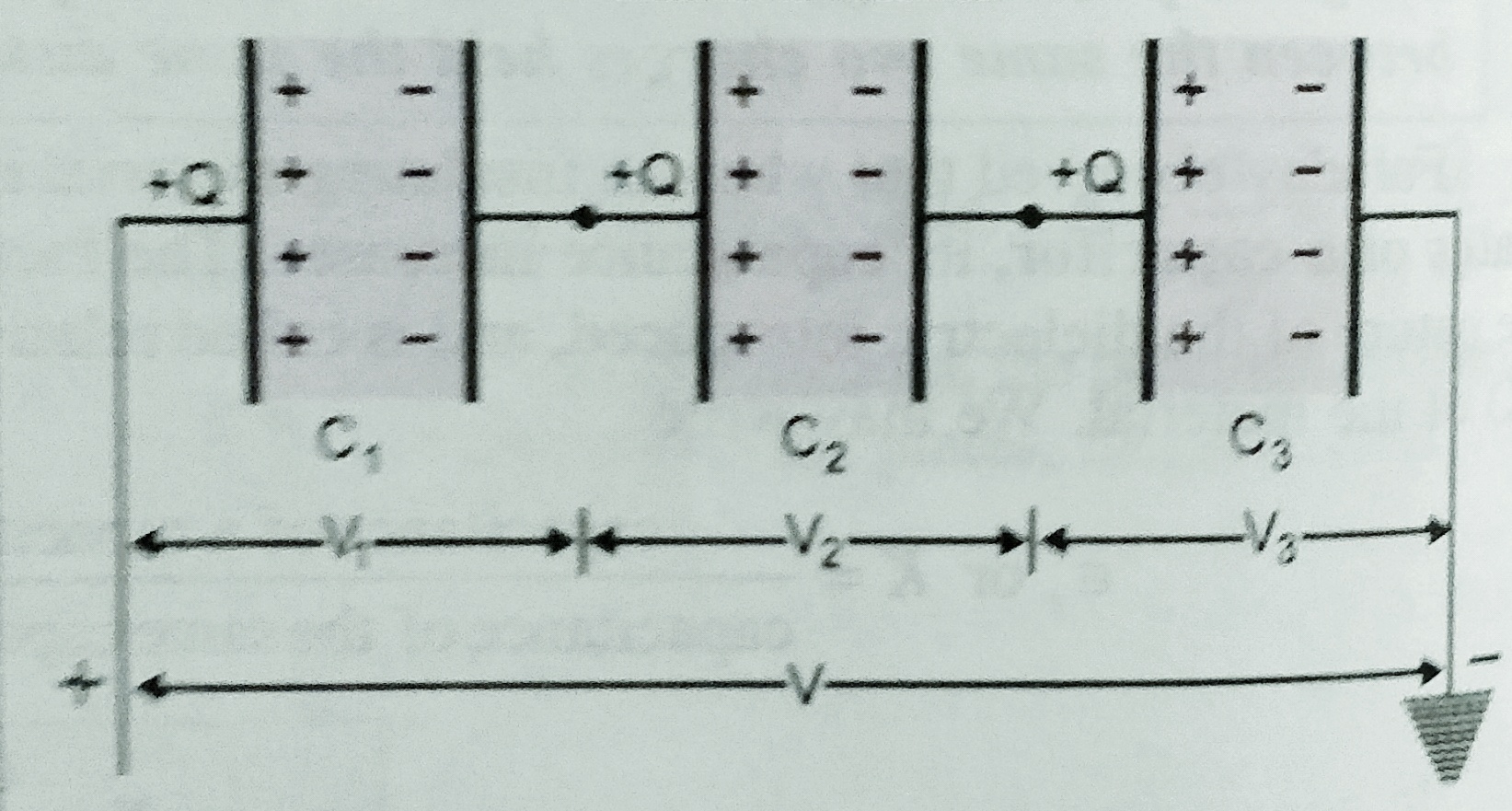
    1. Capacitors in series –   When negative plate of first capacitor is connected with positive of second , negative of second connected to positive of third and so on such combination is called series combination . in another words we can say that, the capacitors are said to be connected in series between two points , when we can proceed from one point to the other only through one path .

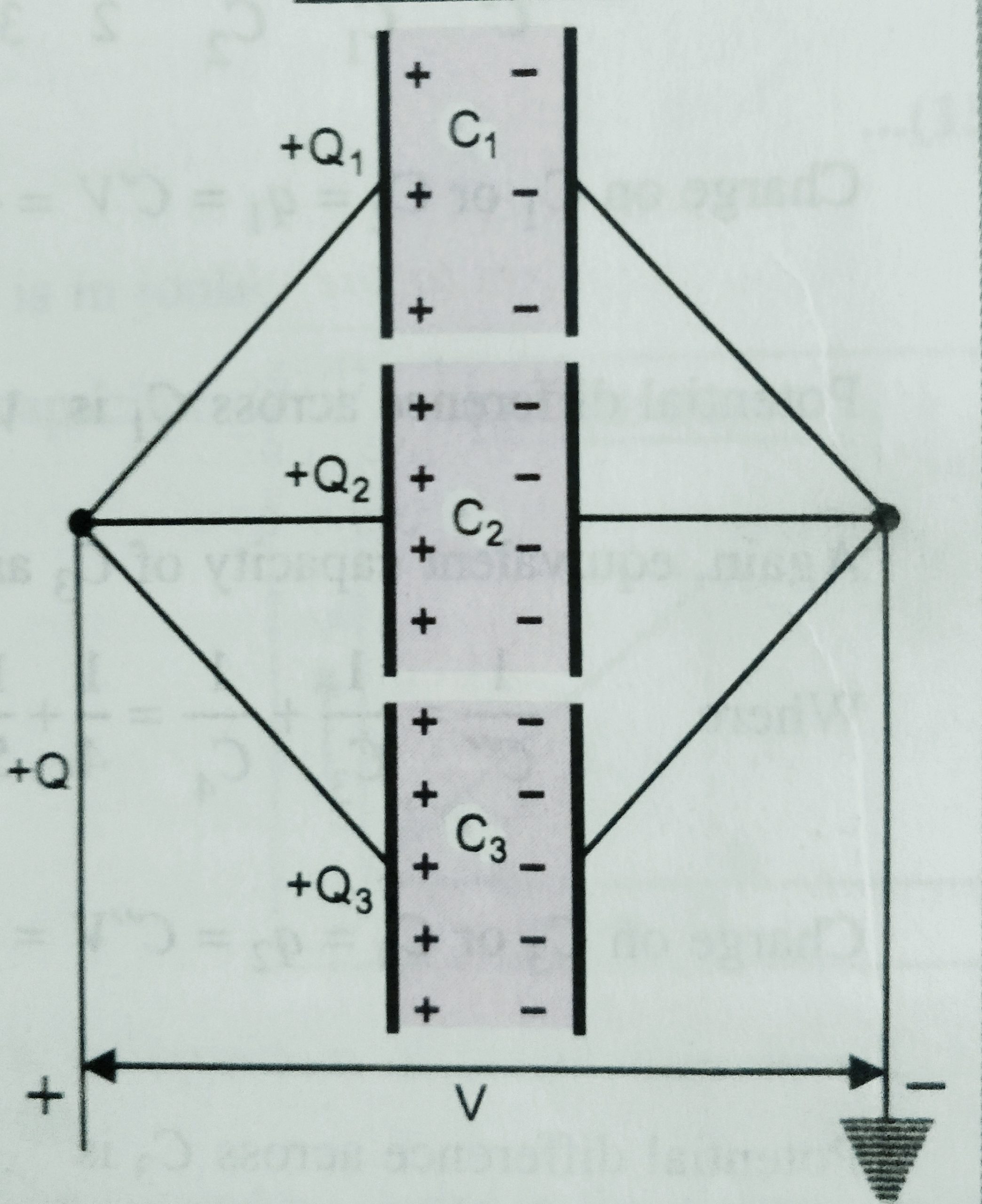
    As shown in figure three condensers of capacitance C1 , C2 and  C3  are connected in series .

    Suppose V is the potential difference across the combination .  Suppose   ‘Q’ charge is given to the left plate of C1 due to induction -Q charge setup on the other plates and =Q on the left plate of capacitor C2 and so on . Let V1, V2 and V3 are the potential difference setup across the capacitors  C1 , C2 and  C3  respectively . charge across the capacitors are same which is Q . Then V1 = Q/C1 , V2 = Q/C2 . V3 = Q/C3 . So net potential   V = V1 + V2 + V3 ;

    If CS is the equivalent capacitance of the combination of the capacitors then  ,

    Q/CS = Q/C1 +  Q/C2 + Q/C3

    Or ,  1/CS = 1/C1+ 1/C2 + 1/C3

    If there are n  capacitors are connected in series then

     1/CS = 1/C1+ 1/C2 + 1/C3 …………………+ 1/Cn


    1. Capacitors in parallel – The combination of the two or more capacitors are said to be in parallel if positive plates of capacitors are connected at one point and all negative plates at another points as shown in figure .

    Let C1 ,C2 , and C 3 are the capacitance of the three capacitors , and V is the potential difference applied across the combination . The potential difference across each capacitor is V the charge on each are Q1 Q2 and  Q3 , because their capacitance are different .  S o net charge Q = Q1 + Q2 + Q 3

    If CP is the equivalent capacitance of the capacitors then CP V =  C1 V + C2 V + C3 V

    So, Equivalent capacitance  CP  =  C1  + C2  + C3 ;

    If there are n  capacitors are connected in parallel then

    CP  =  C1  + C2  + C3……………..+ Cn


  • Parallel plate capacitor

    Parallel plate capacitor

    Parallel plate capacitor

    Before to know about these topics student must know about Electrical capacitance, To know about electrical capacitance click here-

    In this topic we will discuss about capacitance and its principle ,and expression for the capacitance of parallel plate capacitor .

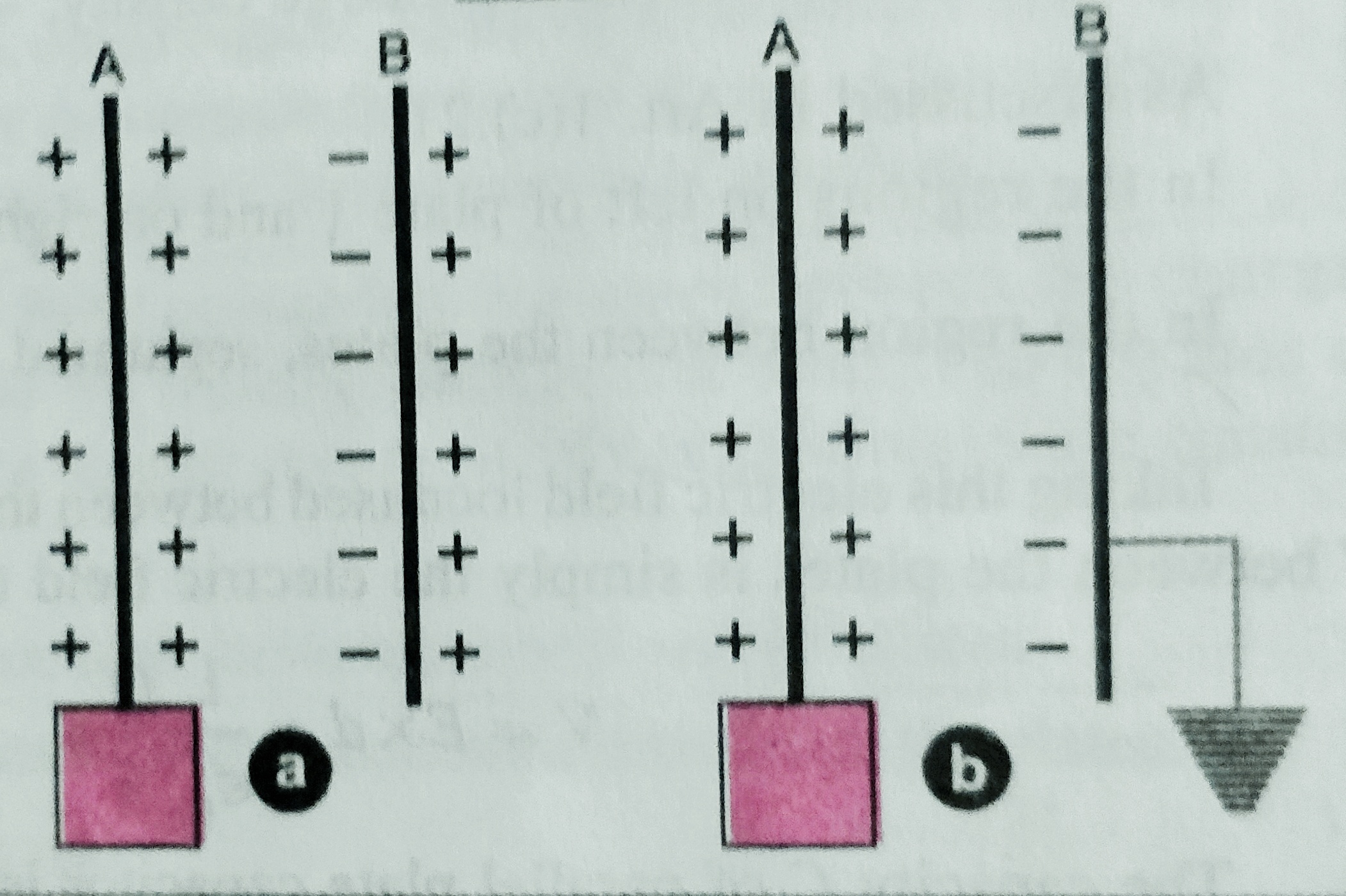
    Capacitor and its principle – It is an arrangement in which large amount of  electric charge can be stored and hence develop large potential difference in small space. A capacitor consists of a system of two conductors separated by an insulating medium. Often the two conductors are charged by connecting them to the two terminals of a battery.  Or we can say that the capacitance of an insulated conductor is increased considerably by bringing near it an uncharged conductor connected to earth.

     If the conductors are plane , the capacitor is called a parallel plate capacitor , when the conductor is spherical called spherical conductor , and if the conductor is cylindrical then the capacitor is called cylindrical capacitor .

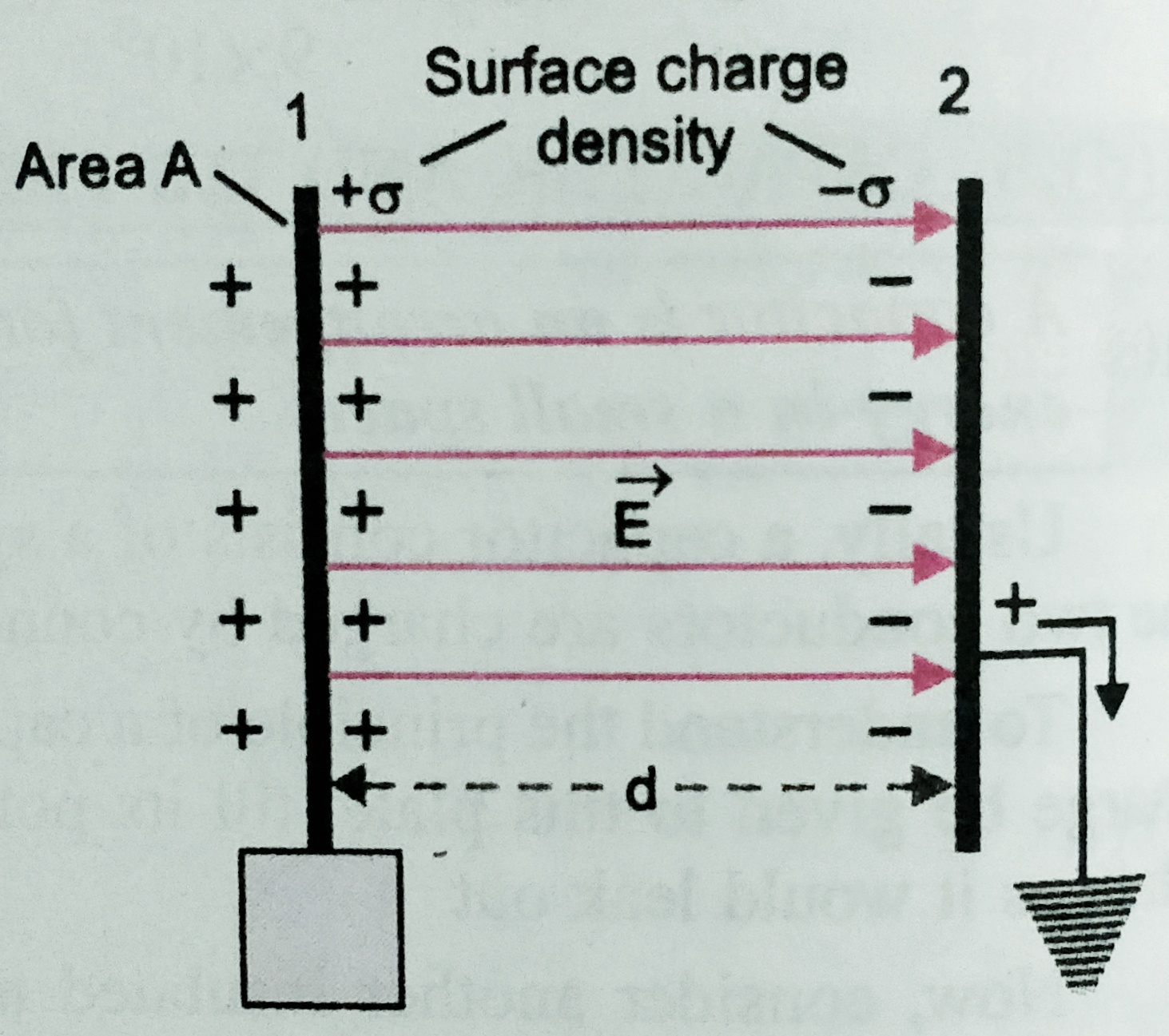
    Parallel plate capacitor – A parallel plate capacitor consists of two thin conducting plates each of plate area ‘A’  and separated by distance ‘d’ . One of the plate is insulated and the other plate is earthed .  When charge Q is given to one plate then the charge -Q is induced on the near face of the  second plate and +Q on the farther  face of the second plate , and +Q is flows to the earth .

    The surface charge density of the first plate is     +σ = Q/A

    And on the other plate is        -σ = -Q/A .

    So electric field between the plates is  E = σ/ϵ0 = Q/Aϵ0 ;

    Potential difference between the plates is V = E.d = Qd/Aϵ0 

    Hence capacity of the  capacitance will be C = Q/V = Q/( Qd/Aϵ0 ) = Aϵ0  / d   i.e . the capacitance of parallel plate capacitor is independent of the charge and potential .


  • Electrical capacitance

    Electrical capacitance

    Electrical capacitance

    In this topic we will discuss about the Electrical capacitance and electrostatics of conductor,electrostatic shielding  , and the capacity of an isolated spherical conductor .

    Electrostatics of conductor –

    As we know a conductor is a substance through which electric charge can conduct from one point to another . But there is some important results regarding  electrostatics of conductor which are follows –

    1. In electrostatic equilibrium , electric field is zero every where inside the conductor . Suppose a conductor ABCD is held in an external electric field of intensity E0 as shown in figure , the free electrons in the conductor moves from AB to CD . As a result , some net negative charge appears on AB . and the produced electric field Ep , which opposes the flow of free electrons from AB to CD . since Ep = E0 so net field inside the conductor is zero .

    1. The electric field just outside the charged conductor is perpendicular to the surface of the conductor at every point .
    2. Net charge in the interior of the conductor is zero .

    According to Gauss’s law  ∫E.ds =q/ϵ0 ];

    since inside the conductor E=0

    therefore q= 0 also ;

    1. Electric field at the surface of the charged conductor is given as E = σ/ϵ0 where σ is the surface charge density . and the surface charge density is different at different point for irregular shaped conductor .

    ELECTROSTATIC SHIELDING –

     It is the phenomenon to protect a space or an object from external electric field by covering it by conducting substance . as we know electric field inside a conductor is zero hence when an object is placed inside the conductor then there is no electric field connected to the object which is inside the conductor .

    Electrical capacitance –

    Electrical capacitance of a conductor is the ability of the conductor to store electric charge in it.

    When conductor given some charge then its potential increases . Let Q is the charge given to the conductor then its potential increases to V volt so , we can say,   Q α V  or , Q = CV ; where C is a constant called capacity of the conductor , we can write  capacity C = Q/V  , Using this expression we can write , capacity of a conductor is the ratio of charge given to the potential developed in the conductor i.e. C = Q/V ;


    In another way we can define , electrical capacity of a conductor is numerically equal to the charge required to increase the potential by unit volt .      Its unit is farad (F)

    Here 1 Farad =1 coulomb/1 volt and its dimension is [ M-1L-2T4A2]

    CAPACITY OF AN ISOLATED SPHERICAL CONDUCTOR –

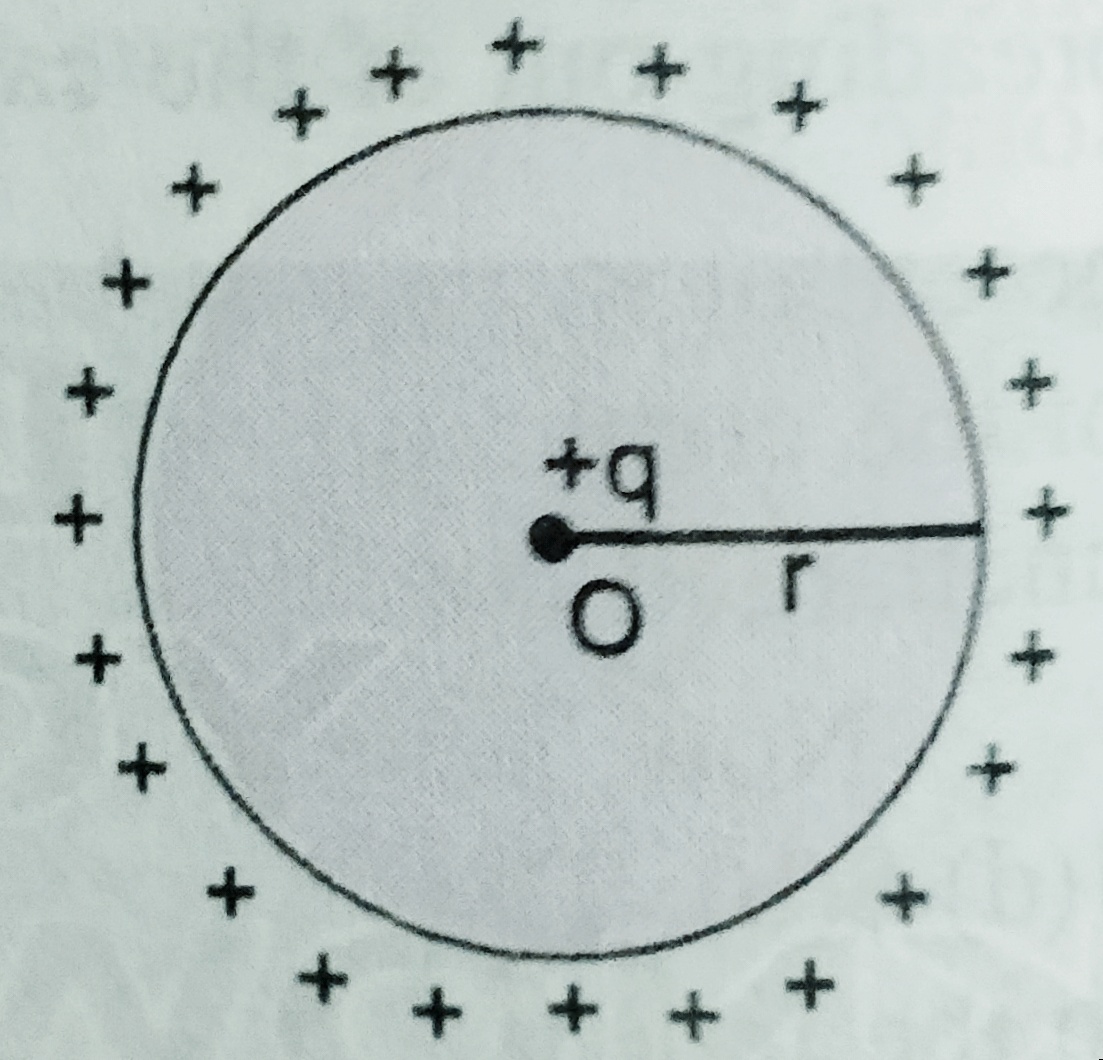
    Suppose a conductor of radius ‘r’ with centre ‘O’ has given charge ‘Q’  then its potential increases by ‘V’ . here potential V= q/4∏ϵ0r

    As we know capacity C = Q/V = Q/( q/4∏ϵ0r) Or. C = 4∏ϵ0r  ; Here r is in meter and  C is in farad .

    As we can see C α r i.e larger the radius of the sphere and larger will be capacity of the conducting sphere .

    Using this formula we can find the capacity of the earth which is given as

    C= 4×3.14 x(1/9×109) x 6.4x 106 = 711 x 10-6F  or 711μF .

    For next topic of electrostatics  which is parallel plate capacitor -click here –